
Classic albums from Pink Floyd's The Wall to Weezer's Pinkerton have zeroed in on how hard it is to be a famous musician. And singer/songwriter Greyson Chance is here to remind us how the touring lifestyle may lead to mental health challenges.
"The job of an artist is very, very loud, and then all of a sudden, it's quiet," Chance tells GRAMMY.com. "At the end of the night, it's just me, and it's something every musician has to wrestle with… I'm still working on it all the time." In 2020, the pop star dropped "Bad to Myself," a song about his struggles with drinking and anorexia, which he chalks up to twofold origins: his hurry-up-and-wait lifestyle and unresolved childhood trauma.
<style>.embed-container { position: relative; padding-bottom: 56.25%; height: 0; overflow: hidden; max-width: 100%; } .embed-container iframe, .embed-container object, .embed-container embed { position: absolute; top: 0; left: 0; width: 100%; height: 100%; }</style><div class='embed-container'><iframe src='https://www.youtube.com/embed//aZH_xQfkrrE' frameborder='0' allowfullscreen></iframe></div>
These demons followed Chance into the pandemic year of 2020, when the stage lights and hysterical fans vanished and he was left with only himself again. Luckily, because he opened up about his disorder, he was able to have the support of people around him. And with the fortitude to rise out of his doldrums, he wrote the boisterous "Hellboy," about getting in touch with his inner rock star. The single appears on his upcoming EP Trophies, which arrives June 25.
"I was thinking a lot about the energy I try to grasp when I'm getting on stage, which is this over-confidence," Chance describes. "'Hellboy' was my attempt to do that without a stage accessible to me."
GRAMMY.com spoke with Greyson Chance about the struggles that led him to come out about his eating disorder, the emotions that led to "Hellboy" and the advice he'd impart to a young person struggling with the same malady he does.
<style>.embed-container { position: relative; padding-bottom: 56.25%; height: 0; overflow: hidden; max-width: 100%; } .embed-container iframe, .embed-container object, .embed-container embed { position: absolute; top: 0; left: 0; width: 100%; height: 100%; }</style><div class='embed-container'><iframe src='https://www.youtube.com/embed//bPF76YMI5ms' frameborder='0' allowfullscreen></iframe></div>
This interview has been edited and condensed for clarity.
In the press release, you said "Not being able to play shows in over a year has been difficult and heart-wrenching." Some people just say they were bored in the house or got to spend more time with family or learned a new hobby. What brought on these visceral feelings?
As with anybody, the pandemic year was difficult. It was a time period for me where, all of a sudden, after 2019, when we had played 119 shows, I went from living on an airplane to staying in one place for a really long time. For me, as an artist, I think it was a big lesson in how much I need to be on stage and how much I survive off that energy of the venue and the connection with the fans.
It was a difficult year, but what I did was I just poured all my time into working in the studio when I could. It was a year in which I wrote a ton of music. But now, looking forward to the tour, I'm just ready to get back out on the road and get back to where I think I belong, which is on stage.
You don't just have a tour coming up; you have a world tour. Not very many people get to travel the entire planet. What's that experience like?
I've been fortunate enough that not only in 2019 did we have a world tour for my album Portraits, but I started when I was 12 years old. I'm 23 now, but that's when I signed my first record deal. I filled my first passport when I was 15 and it's been probably the biggest blessing in my life to not only travel but to experience so much culture—and also to just realize the impact of music.
I've played shows in places where I can't even really have a conversation with my fans because of the language barrier, but they are still able to sing out the lyrics to me every night. Being able to learn that at a young age and realize the impact of music and the importance of what I do, it's been such a blessing and probably, again, my favorite part of my career.
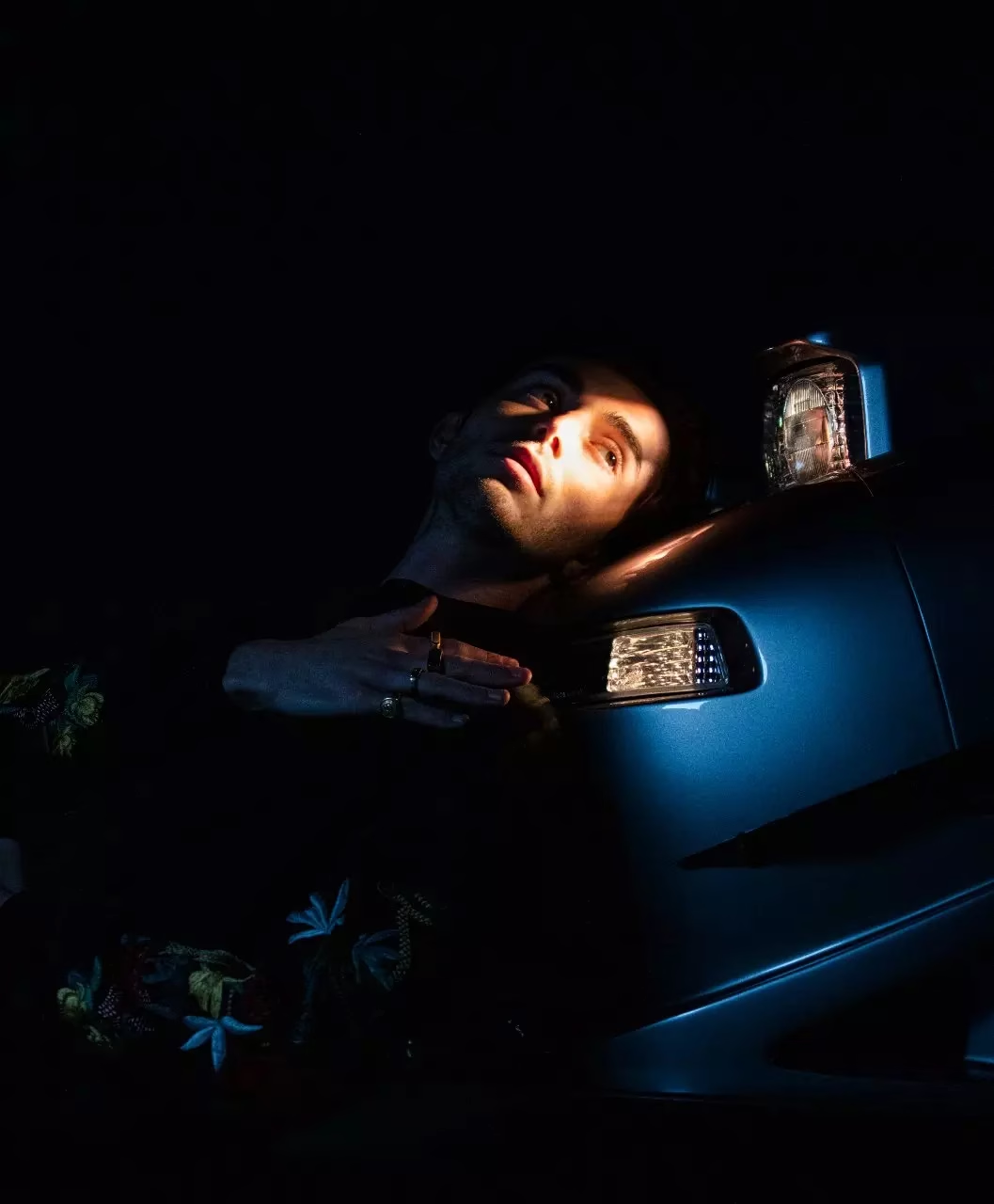
Greyson Chance. Photo: Broderick Baumann
I feel like the pressure cooker of such an existence is conducive to all sorts of maladies, like eating disorders, which you've been open about. Was that connected to touring life, or was it based on other causes?
I came out last year in a public statement talking about my battle with anorexia and my eating disorder. I do think a lot of it was lifestyle-driven, of course, living out on the road. But it's also something I noticed was a big effect of a lot of the trauma I had to go through as a kid in music.
A lot of things were suddenly unearthed in my 20s that I had unknowingly suppressed and said, "That's not a thing. That's not a real issue." All of a sudden, you wake up in the morning and you look at yourself in the mirror and say: "Wait a second. This actually is real. It's something I'm dealing with on a day-to-day basis."
The reason why I wanted to come out with my story and battle with anorexia was that eating disorders are something I feel society kind of pigeonholes to one demographic. We say it's very common for young girls, this kind of thing. A lot of people view it as a kind of phase. They say you'll grow out of it.
What I wanted to show to my fans—who I knew were probably struggling through this as well—is that this disease is not selective to one demographic. It affects a lot of people. I wanted to just show that even in my career and in my life, where I'm really, really blessed, I've still had to work through this thing, and it's been a really, really tough journey.
But upon coming out with my own story, I was so enlightened to hear from other individuals about their own battles. Overall, it felt like such a weight off my shoulders, and I was able to learn a lot through the comments and what people were telling me in response.
I appreciate that you're trying to bulldoze these barriers in people's minds. As you know, it affects all genders, not just women.
Yes. Very, very much so.
<style>.embed-container { position: relative; padding-bottom: 56.25%; height: 0; overflow: hidden; max-width: 100%; } .embed-container iframe, .embed-container object, .embed-container embed { position: absolute; top: 0; left: 0; width: 100%; height: 100%; }</style><div class='embed-container'><iframe src='https://www.youtube.com/embed//8f9TLevvXBo' frameborder='0' allowfullscreen></iframe></div>
What can you tell me about "Hellboy" and its video?
We talked about how dark the pandemic year was. I spent so much of 2020 in the studio, and for lack of a better term, I spent so much of it really deep in my feels. I was going into the studio and feeling kind of sad all the time not being on the road and feeling so isolated because of the pandemic.
"Hellboy" was an effort for me to reclaim my confidence. When I was writing the song, I was thinking a lot about the energy I try to grasp when I'm getting on stage, which is this over-confidence. I try to boost myself up and say "OK, I'm a performer tonight! Let's go! Let's show the crowd what I've got!" "Hellboy" was my attempt to do that without a stage accessible to me.
I went into the studio in Nashville and I was wearing sticks and shred-leather high-heel boots that I bought from a thrift store that day. I said, "Guys, it's time to write a confident song. It's time to write something that's going to make us feel joyous." The whole process helped me find footing from underneath me.
Is that a side you turn on at will? The confident exterior where nobody can mess with you, while the inside has that vulnerability?
Absolutely, and it's the side of myself I garner when I go up on stage. The spotlight is on me and I'm ready to go. I can live in that space. This is what that song was to me.
Is there a future where you can unite those two sides and reach peace with the stuff you've had to go through?
Every person wishes they could do that, right? That would be an absolute blessing and goal. That's probably my common life goal, to find that balance.
But if I'm being completely honest with you—and I think most artists would say this too—when we get offstage, I think a lot of people would be surprised as to how we feel and how we act. When you're done with the show, you have to look at yourself in the mirror again and step forward to all your truths and realize that we're maybe not as strong and powerful as our fans would assume us to be.
The job of an artist is very, very loud, and then all of a sudden, it's quiet. At the end of the show, I retreat to a hotel room and it's just me after playing for all those fans. At the end of the night, it's just me, and it's something every musician has to wrestle with. But as I said, I've been doing it for 11 years now, so I think I kind of know what I'm doing. I'm still working on it all the time.
Greyson Chance. Photo: Broderick Baumann
What would you tell a young person who suffers from an eating disorder but may not have the language or toolkit to address it?
The first piece of advice I would give anybody—and, of course, this is so much easier said than done—is to try to work toward not feeling embarrassed by it. That's another reason why I wanted to come forward with my story: There's such a stigma of weakness attached to eating disorders. People say, "Just stop doing that. You know it's bad, so don't do it anymore."
Or "Stop being so vain!"
Exactly. You feel this sense of weakness all the time.
That would be the first thing. The second thing is that I kept it incredibly private all my life, except I did tell one or two friends who were sort of trusted sources. [I told] them to watch out for me and keep me in check.
I recommend to anybody going through anything to have at least one trusted source. Somebody who knows there's something going on with you, whether it be a friend or a family member, so they can keep an eye on you. It's very, very important when you're at the peak of this disease, this disorder.
