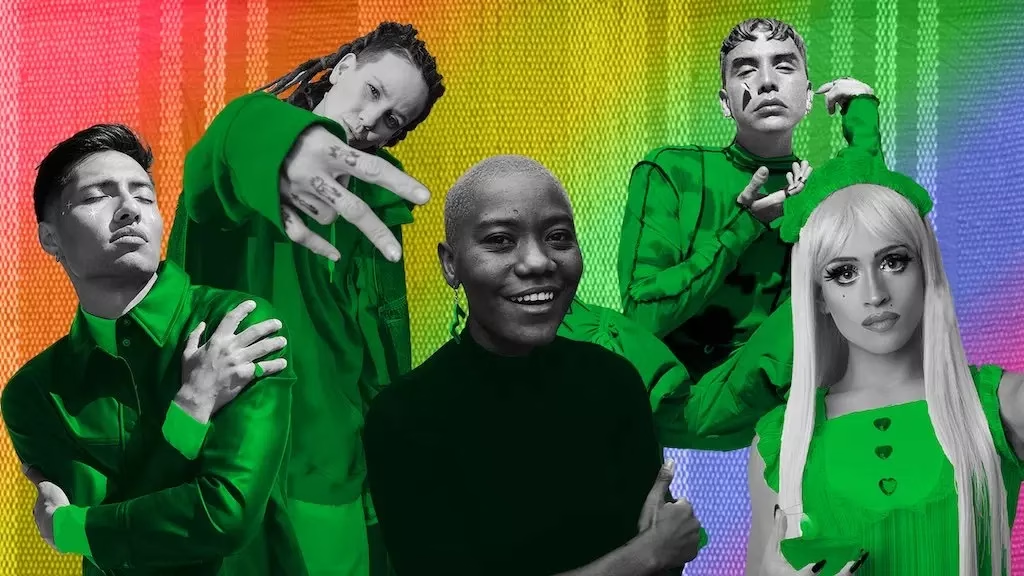
Artists in the LGBTQ+ community aren’t just continuing to break ground in pop music’s heavily heteronormative landscape, they are making moves towards the forefront. A turning point in the past decade was Lady Gaga, who is openly bisexual, taking her queer anthem "Born This Way" to the top of Billboard's Hot 100 chart in 2011. Lil Nas X is the latest artist to bring queerness to the masses through his performance on Saturday Night Live last month. The openly gay singer and rapper brought the unapologetically queer music video for "Montero (Call Me By Your Name)" to life onstage at Studio 8H with a stripper pole and a team of all-male dancers. Artists like Lil Nas X are helping queer representation reverberate through the music industry and it's something we're seeing within the Latin music world, too.
More Latin artists in the LGBTQ+ community are embracing the ways their identities intersect with their culture, despite the machismo embedded in its roots. A major cultural touchstone for the community was when Ricky Martin, a massive global pop star who began his career singing in Spanish with Menudo as a child, came out as a gay man in 2010. The GRAMMY and Latin GRAMMY winner has continued to crank out hits, including the Billboard Latin Top 5 smash "Vente Pa’ Ca" with Maluma, after that personal revelation, showing that Latinx communities may be becoming more open to the LGBTQ+ community. While more space is being created for LGBTQ+ folks within Latinx communities, there's still a ways to go for the culture and Latin music industry as a whole—more needs to be done to dismantle the machismo that has historically put down women and queer people and continues to inhabit the industry. Since Ricky Martin’s coming out, many more artists like Puerto Rico's Kany García, Jesse y Joy's Joy Huerta and Spanish pop star Pablo Alborán, have become public about their sexualities, and there seems to be much hope for a more inclusive future in the industry.
Case in point: it was incredible to see the big three categories, Album of the Year, Song of the Year, and Record of the Year, at last November's Latin GRAMMY Awards filled with entries from Martin, Huerta, García, and Alborán. The LGBTQ+ Latinx representation was strong and we're continuing to see more of it this year with younger artists like Demi Lovato, who intersects both the pop and Latin music worlds and recently came out as non-binary. In honor of Pride month, here are five more Latin music artists in the LGBTQ+ community to look out for.
Mabiland
<style>.embed-container { position: relative; padding-bottom: 56.25%; height: 0; overflow: hidden; max-width: 100%; } .embed-container iframe, .embed-container object, .embed-container embed { position: absolute; top: 0; left: 0; width: 100%; height: 100%; }</style><div class='embed-container'><iframe src='https://www.youtube.com/embed/DwifXH7oza0' frameborder='0' allowfullscreen></iframe></div>
Mabely Largacha, who professionally goes by Mabiland, is an emerging singer/songwriter and rapper from Colombia. She hails from Quibdó, the capital of Chocó region that has a predominantly Afro-Colombian population. Her breakthrough came in 2018 with the release of her debut album 1995 in which the lead single, "Cuánto Más," blends hip-hop, R&B and reggae, and tells the story of an intense romance that leads to heartbreak. There's no limit to the music that Mabiland makes as she gives reggaeton a soul music twist with the help of Colombian acts like Crudo Means Raw, Piso 21, and CIAN. In the highly male-dominated Latin hip-hop genre, Mabiland is representing intersecting identities in the industry as a Black, queer woman. And as a star in the MTV Latin America series Latin Flow, this month she will bring that intersectionality to the world.
Villano Antillano
<style>.embed-container { position: relative; padding-bottom: 56.25%; height: 0; overflow: hidden; max-width: 100%; } .embed-container iframe, .embed-container object, .embed-container embed { position: absolute; top: 0; left: 0; width: 100%; height: 100%; }</style><div class='embed-container'><iframe src='https://www.youtube.com/embed/ucrL1uIxWHU' frameborder='0' allowfullscreen></iframe></div>
In Puerto Rico's Latin trap scene, Villano Antillano is an emerging queer voice. The rapper from Bayamón identifies as non-binary, meaning that they don't subscribe to the gender binary of male or female. In the music video for "Pájara," Antillano can be seen presenting both masculine and feminine gender expressions and they look fierce doing it. In the queer trap anthem, Antillano reclaims derogatory Spanish terms like "Pájara" which are used to put down the LGBTQ+ community, turning those words into an empowering moment in rap. Making music in a genre that has a history of machismo, Antillano's breakthrough came in 2018 when they released the response song "Pato Hasta La Muerte" to a rapper that used a queer slur in their diss track. Expect Antillano to bring more color to Puerto Rican rap with their next single "Muñeca" that's due out later this month.
Niña Dioz
<style>.embed-container { position: relative; padding-bottom: 56.25%; height: 0; overflow: hidden; max-width: 100%; } .embed-container iframe, .embed-container object, .embed-container embed { position: absolute; top: 0; left: 0; width: 100%; height: 100%; }</style><div class='embed-container'><iframe src='https://www.youtube.com/embed/hvOBzQ5kHxA' frameborder='0' allowfullscreen></iframe></div>
With artists like Gera MX and Alemán, Mexican rap is making more noise around the world this year. Niña Dioz is a queer pioneer in Mexican rap who hails from Monterrey. Her career spans over a decade since making her live debut at South by Southwest in 2009. Dioz expanded her reach in 2018 when she teamed up with Nacional Records for her breakthrough album Reyna. In honor of Women's History Month in March, she released her latest LP Amor, Locura y Otros Vicios. With hip-hop's history of excluding women and queer people, Dioz more than makes up for that. With Mexican pride, she teamed up with Mexican rapper Hispana in "Mezcal" that gave the rap a ranchera music twist. In the music video for "Último Perreo," Dioz spotlights people in the LGBTQ+ community who are living their best lives in the club.
Georgel
<style>.embed-container { position: relative; padding-bottom: 56.25%; height: 0; overflow: hidden; max-width: 100%; } .embed-container iframe, .embed-container object, .embed-container embed { position: absolute; top: 0; left: 0; width: 100%; height: 100%; }</style><div class='embed-container'><iframe src='https://www.youtube.com/embed/pOhX3GO66GI' frameborder='0' allowfullscreen></iframe></div>
Along with Mabiland, Georgel is another queer artist who is pioneering the Latin R&B movement. The two collaborated on his song "Demasiado Bueno 2.0" for this year's Claro EP. He dropped his debut EP on Valentine's Day after a year of releasing R&B bops en español like the sensual "Adrenalina" with Colombian rapper Nanpa Básico and the serene "Casa" with indie artist Katzù Oso. In 2019, Georgel teamed up with Mexican act Raymix and Colombian singer Esteman and became a part of a queer summit of Latin artists. The trio of openly gay artists covered Mexican flamboyant icon Juan Gabriel’s classic track "El Noa Noa" with the late Celso Piña and the Mexican Institute Of Sound. Georgel recently teased his next EP Oscuro with his recent single "Desilusionándome" featuring Immasoul and Ferraz.
Jonah Xiao
<style>.embed-container { position: relative; padding-bottom: 56.25%; height: 0; overflow: hidden; max-width: 100%; } .embed-container iframe, .embed-container object, .embed-container embed { position: absolute; top: 0; left: 0; width: 100%; height: 100%; }</style><div class='embed-container'><iframe src='https://www.youtube.com/embed/sHjKuesL1gQ' frameborder='0' allowfullscreen></iframe></div>
Jonah Xiao is one of the newest artists in the LGBTQ+ community who is making a splash in Latin music. The singer/songwriter hails from Chile and on his father's side and also represents the Chinese community that's prominent in the northern part of the country. In his debut single "Inhala Inhala," Xiao blended '80s-inspired synth-pop with elements of Latin trap. In a major moment for queer representation in Latin pop, Xiao teams up with fellow queer Chilean singer Dani Ride for his latest single "California Santiago." The dreamy duet is accompanied with a music video that features Xiao and Ride sharing romantic moments along the coast of Chile’s capital. There’s no doubt sky's the limit for this recent Warner Music Chile signee.
Telling Our Stories: Mxmtoon, Tyler Shaw & Taku Hirano Talk Experiences In Music Industry