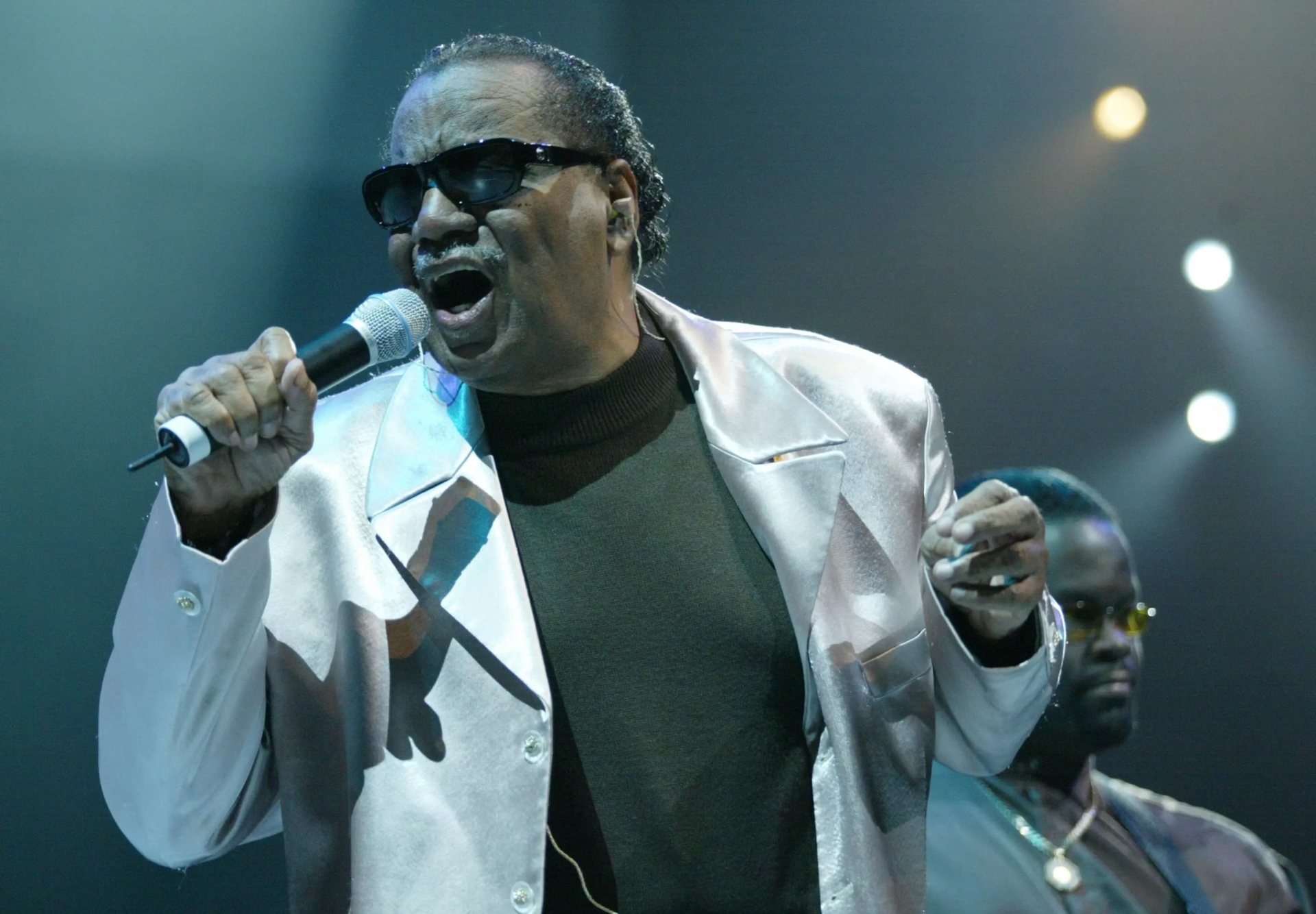
On June 3 founding member Clarence Fountain of the GRAMMY-winning gospel group Blind Boys Of Alabama died following a brief hospitalization in Baton Rouge, La. He was 88 years old.
<iframe width="620" height="349" src="https://www.youtube.com/embed/XZziAFvpFO0" frameborder="0" allow="autoplay; encrypted-media" allowfullscreen></iframe>
Fountain got his start singing with peers at the Alabama Institute for the Negro Deaf and Blind in Talladega under the name Happy Land Jubilee Singers. When they landed a billing in 1948 with the Jackson Harmoneers that was promoted as a show with the Five Blind Boys Of Alabama and the Five Blind Boys Of Mississippi, the new name stuck.
The group continued touring and recording, and their signature gospel sound caught the ears of many musical giants of the day, including Sam Cooke and Ray Charles, who wanted to bring the Boys over to pop and rock styles. Fountain, however, knew his path was gospel music.
"I was in the studio with Sam Cooke when he signed his contract," Fountain remembered. "The man offered me one just like he did Sam, but I turned it down because that isn't what I told the Lord I wanted to do. … When you promise God something, you don't go back on that."
Sticking to his gospel roots paid off for Fountain and the Blind Boys. They earned their first GRAMMY nomination at the 14th GRAMMY Awards for Best Soul Gospel Performance for their album The Five Blind Boys Of Alabama. They went on to win five career GRAMMYs and amass 10 nominations.
Notably, beginning at the 44th GRAMMY Awards with their Best Traditional Soul Gospel Album win for 2001's Spirit Of The Century, the group won the category four years in a row through the 47th GRAMMY Awards when There Will Be A Light, recorded with Ben Harper, took the category. The group received the Recording Academy's Lifetime Achievement Award in 2009.
Fountain's most recent GRAMMY nomination was at the 60th GRAMMY Awards for "Let My Mother Live" from the group's 2017 album, Almost Home, nominated for Best American Roots Performance. Though Fountain's diabetic condition prevented him from touring with the group beginning in 2007, he still contributed vocals to the album.
Thanks to his long career making the gospel music that fueled his creative soul, Fountain leaves a legacy that will inspire generations of musicians yet to come.
"My theory is do something good in the end and that will close out your longevity," Fountain is quoted at the band's website. "After that, you can go on home and sit down."