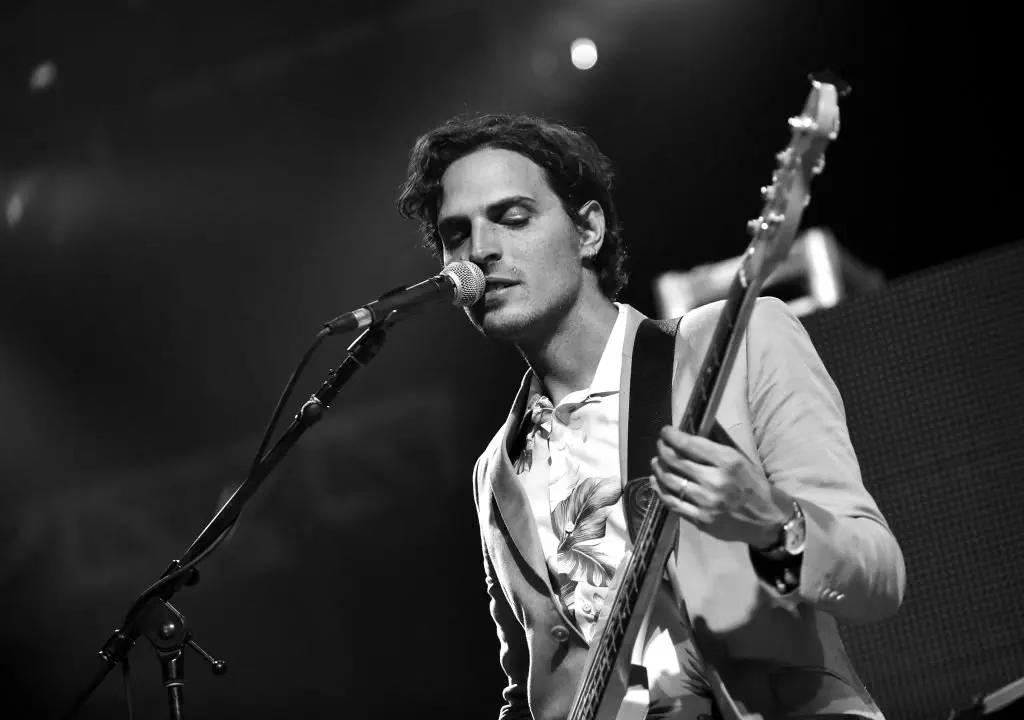
Los Angeles duo Michael David and Tyler Blake, also known as Classixx, have helped evolve dance music through their new wave disco, funk, indie-rock sound.
While remixes like their disco-infused take on Phoenix's "Lisztomania" show the duo's vibe in the electronic dance music realm, Classixx, who've known each other since they were young, have long established themselves as producers and songwriters via albums like 2013's Hanging Gardens and 2016's Faraway Reach.
The Recording Academy caught up with Classixx's Michael David at Corona Capital in Guadalajara, Mexico, where he covered everything from why he loves performing in Mexican cities, playing with his high school buddy for 20 years, and what makes a great remix.
<iframe width="620" height="349" src="https://www.youtube.com/embed/3twQwh4OJCg" frameborder="0" allow="accelerometer; autoplay; encrypted-media; gyroscope; picture-in-picture" allowfullscreen></iframe>
So, how does it feel to be in Mexico?
Very happy to be in Mexico. We love coming here.
How often do you come?
Quite often. We're from Los Angles so it's very close and we come, maybe twice a year, something like that.
How does it feel to be playing Corona Fest?
The line up is so spectacular, here that it feels like a privilege.
And Phoenix are here too—that's a fun coincidence, given your history remixing them.
It's amazing. Those guys are our heroes. I think, yeah, they're the best. Any time we're on a lineup with those guys it feels like a dream.
Corona Capital's mission is to bring more international artists to Mexico. To what extent do you yourself prioritize taking Classixx to new cities on a global scale?
Yeah, I think part of the appeal of being a touring musician is visiting new cities and cultures. It's the best part of the job. It's very interesting; I think when you come to Guadalajara or specifically throughout Mexico, but almost everywhere in the world, you find that everyone that we come across is sort of very similar to the people that we know at home. But there's different languages and the cultures, there are distinctions, but for the most part it's nice that everyone is very similar.
What about the crowd vibe?
Yeah, crowds in Mexico are great. Because we kind of like party music, I guess, and yeah, that sort of [fits in well] here.
Classixx is credited with helping introduce a "new wave" into dance music. How does it feel to be able to spread that all over the world?
Yeah, it's cool. I think between touring and maybe the internet has helped spread that sound. Yeah, it's amazing to see the little things that you kinda work on in your bedroom or in the studio and they have a global reach. It's sort of overwhelming to think about, even in a small way it's very cool.
What kind of music influences your sound?
A lot. I think we are very influenced by the sort of classic-traditional electronic production where you're influenced by soul music and house music. Influenced by the legacy of different dance music from the United States in places like Chicago and New York and Detroit. And yeah, it's hard to say exactly. We don't have a very specific reference, but yeah, all over the world.
You recently tweeted about your Fender collection. What about the Fender do you love?
The Fender has done a job of like they make a very beautiful product and they don't really worry too much about trends, so I like Fender because they have remained true to their own voice for many years. I'm not a guitar collector but the Fender is very respected by most people.
I'm curious, when you remix a song, How do you go about it?
Yeah. I think usually we would only remix a song if we think there is material within the song that is worth sort of elaborating upon. We try not to influence songs that are from the past that are very beloved over time, because it feels like almost sacrilegious or something. But, usually if we connect with the vocal and it sounds like something that will relate well to our production style, it's usually the main criteria.
The challenge is trying not to spoil anything that's already beautiful about the song. And be respectful to the artist. And it's also hard trying to make an arrangement for a dance floor. Sometimes it'll be a challenge if the song is originally structured like a pop song. Those are the main things that can be difficult.
What's next for you two after Corona?
We're going back to L.A. for Mother's Day. And then we have a few DJ sets. We're going back to New York and in Los Angeles. And finishing a few productions.
Do you ever feel pressured to release new music within a certain timeframe?
Yeah, there's definitely a pressure to do that. 'Cause we're very slow, but I think it actually doesn't matter. I think as long as you're working hard and putting out music that is of a certain quality that the people that listen to you appreciate, then I think people are patient. Yeah, it's impossible to keep up with some artists who are churning out music, so. We don't really worry too much about that.
You primarily operate in a duo, with Tyler Blake. How's it feel to have been together for something like two decades now?
It's interesting. We've been together for almost 20 years, so it's interesting. Sort of like working with a sibling. We have different ideas in that we work by ourselves and we work together and we try to refine it together over time. And we're actually pretty slow, but it's yeah, it's amazing.
White Lies Talk Touring Mexico, 'FIVE' & Why Friendship Is The Key Ingredient To Band Longevity
