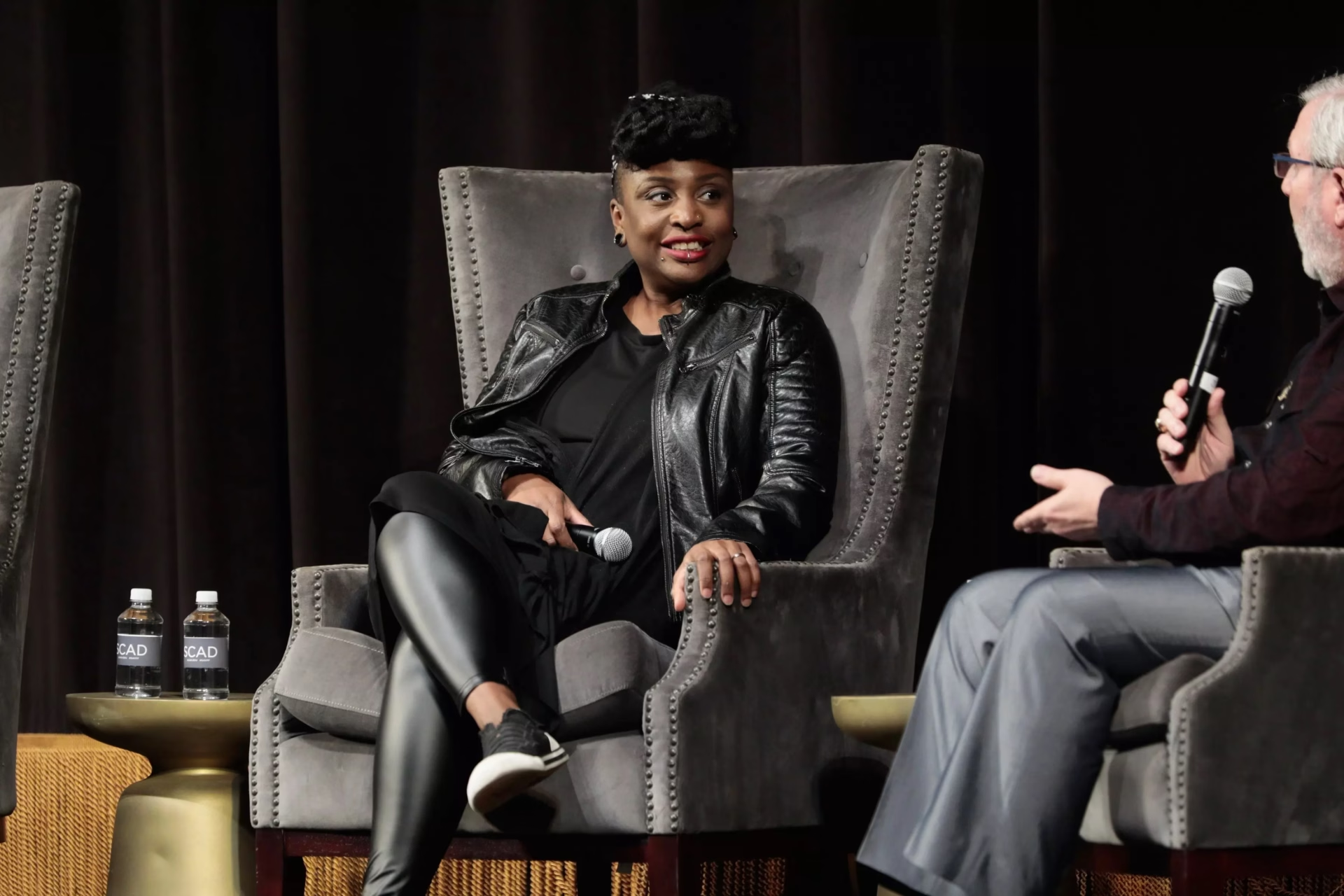
The half-dozen film composers brought together by The Hollywood Reporter for their Composer Roundtable, the latest in their Roundtables Series, discussed a fascinating topic: what it's like to create a musical reality that can transport audiences into the worlds of cinema.
<iframe width="620" height="349" src="https://www.youtube.com/embed/UKn5kFmPMh0" frameborder="0" allowfullscreen></iframe>
The roundtable comprised GRAMMY winners Michael Giacchino and Alexandre Desplat, GRAMMY nominee Philip Glass, Carter Burwell, Daniel Pemberton, and Tamar-kali.
"[Music is] like anything else in art. It's going to trigger an emotional response," began Giacchino. But then he noted the paradox of music's power, saying that "sometimes in order to feel something, you need the absence of music first."
The musicality of his upcoming Pixar film Coco is so effective that the GRAMMY Music Education Coalition has launched in conjunction with it.
Discussing what it was like to score her first project ever, the 2017 film Mudbound, Tamar-kali said almost everything flowed as she scrambled to pull together 40 minutes of final music in four weeks. The exception was a difficult cue for a climactic, violent scene. To bring her own honest emotional response to the challenge, she played along with the scene again and again until she knew she had it right. Finding that kind of authentic connection within themselves is part of the art of transporting an audience.
<iframe width="620" height="349" src="https://www.youtube.com/embed/xucHiOAa8Rs" frameborder="0" allowfullscreen></iframe>
Tamar-kali also made an important observation about avoiding a "numbers game" while trying to correct the gender imbalance in Hollywood hiring.
"Before you can get more [women], you have to find out what exists. So there needs to be a shift in culture," said Tamar-kali. "Horizons need to be expanded. How can you hire more women if you don't even know who the women composers or directors are?"
Another issue discussed during the event was how to communicate about music with professionals who live for film. Glass admitted that he enjoys being able to do anything he wants while writing opera but he acts more like a guest in someone else's home when writing soundtracks.
"It's a different vocabulary, words, grammar, everything," agreed Desplat. "You have to know what cinema is about. We're part of this collective artwork."
In Desplat's case that led to GRAMMY wins for The Grand Budapest Hotel and The King's Speech.