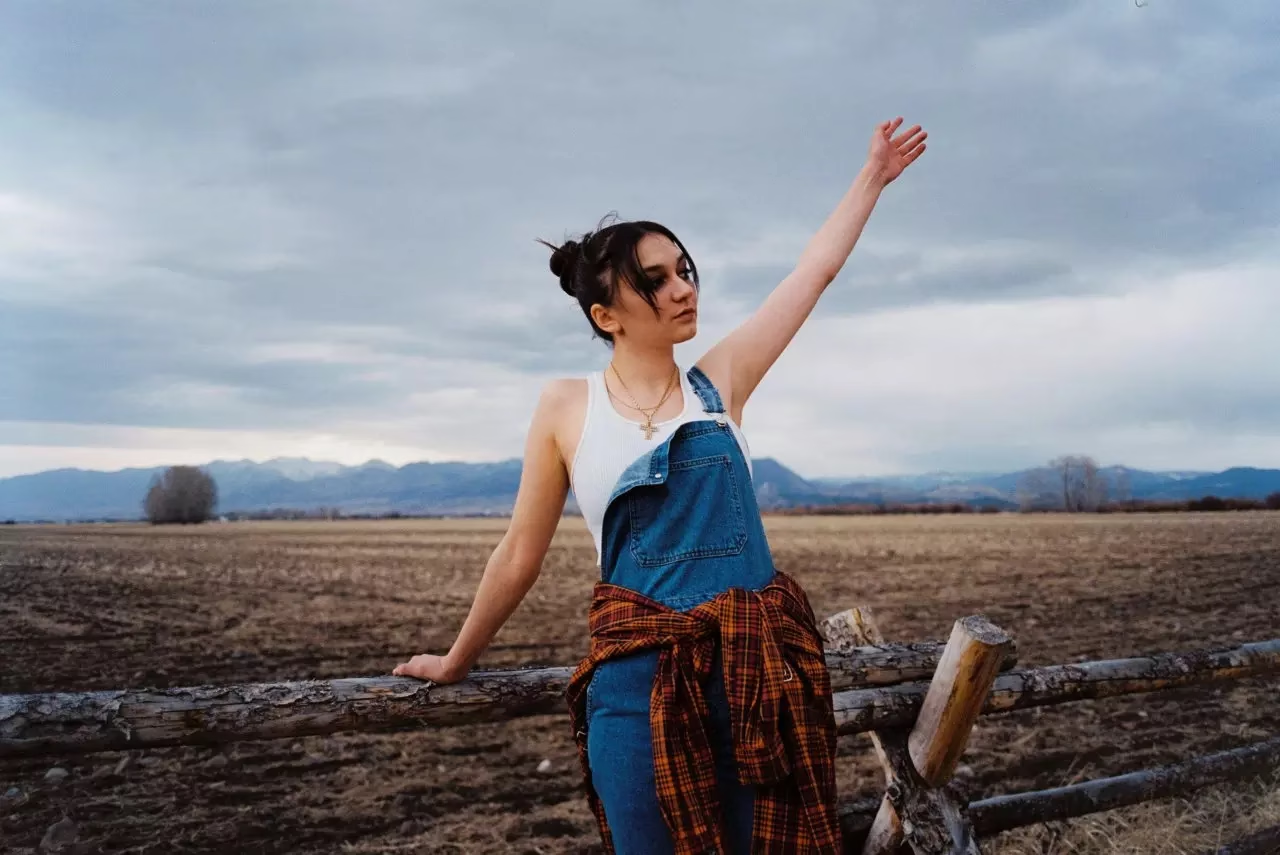
It can take a singer years to find their voice—both literally and figuratively. "When I started, I didn't have the voice I have now," singer/songwriter Daya tells GRAMMY.com over the phone. "It was really breathy and falsetto-y and didn't really have a tone to it." Now, at 22, she's a full-fledged pop singer without a hint of greenness or tentativeness.
What about the latter form of the word? During a pandemic year, the artist born Grace Tandon realized she didn't need to please anybody but herself with her work. "I just wanted to take a step back and focus on writing songs that felt really authentic and honest to me," Daya states. "That's been so crucial to my development as a songwriter—putting all those expectations aside."
This intertwining of vocal and creative development has resulted in The Difference, which was released in May. While "First Time," "Bad Girl," "Tokyo Drifting," "The Difference" and "Montana" comprise Daya's first body of work since her debut album five years ago, there isn't a hint of rust therein. Rather, the release represents her vision in full bloom.
And while she's stepping out as a singer/songwriter again, there's another dimension of Daya's career to consider—her work for other artists, including the world-dominating Chainsmokers, with whom she recorded "Don't Let Me Down"—and won a GRAMMY for Best Dance Recording in 2017.
GRAMMY.com caught up with Daya to discuss her earliest days as a singer/songwriter, how she came to work with the Chainsmokers and how she experienced a creative growth spurt on The Difference.
This interview has been edited and condensed for clarity.
Tell me about your background in combining words and melodies.
I started playing piano when I was three. I don't even remember—my mom just put me in lessons. I took to it really well and considered doing that for a long time. All around, I was really interested in music and instruments. I picked up the guitar and ukulele and started playing the saxophone in band.
It was my thing. My family was super academic, or whatever, and I took to music. Every day after school, I'd play instruments. I only started really singing to accompany myself on the instruments and do covers in that way. I [played] shows around the area where I grew up in Pittsburgh and was [introduced] to this voice teacher and sort of took lessons not too seriously. When I started, I didn't have the voice I have now. It was really breathy and falsetto-y and didn't really have a tone to it. I think she was [instrumental] in helping me adopt the tone I have now with my voice. I did theater for a long time and then transitioned to doing more straight-up pop covers.
Eventually, I started writing my music around 13 or 14—the first s***ty songs I wrote. I kept doing that for a while. When I was 16, I got connected to the writers I wrote "Hide Away" with in LA. Everything just kind of went from there.
Which tunes did you cover early on?
I was into alternative rock and pop singer/songwriters, badass female songwriters. So, my favorite artists were Alanis Morrissette, Amy Winehouse, I played a lot of Dido—I would play "Thank You" over and over again—I played Sarah McLachlan, too. I did a lot of piano covers growing up. My dad was super into that type of music as well. I loved Coldplay. I think they were one of the first concerts I ever went to.
At the first show I ever played, I think I played "Ironic" by Alanis Morissette, "Clocks" by Coldplay and "Time of Your Life" by Green Day. I remember those were the three songs because I was in this little band we had formed for this thing called Rock U University for this guitar store in town. I think I was nine.
When did you start not only writing for yourself, but for others?
Actually, the first time I was asked to go out to L.A. was by the songwriter I met through my voice teacher—they had gone to college together at the University of Pittsburgh—we had met a few times before and he would come and do camps with all her students, me included. He really liked my voice and I was interested in the writing world and wanted to see if that was a possibility. I was 16 and a junior in high school, so I was kind of figuring out what I wanted to do.
I flew out to L.A. to have this trial weekend with him and we wrote a few songs, "Hide Away" being the first one that we wrote, actually, which is crazy. "Back to Me" was this other song that I released on my first EP. We wrote those two songs and it was more for me to get introduced to the writing world. I worked with a few other writers he'd been working with to see if that was something of interest to me, and not necessarily for me to own these songs as an artist. Once I recorded the songs, they felt like my songs and they fit. I really love them a lot, and that was kind of a no-brainer at that point.
He introduced me to this manager I linked up with to release "Hide Away," and then my EP and debut album, [2016's] Sit Still, Look Pretty. It was a whirlwind of things. It basically went from me sussing out if I wanted to write for other people to exclusively writing for my own project. Now, I write for other people. I like being in sessions writing for other people and pitching songs to a few different people. I think for a while, when I first got here, it was just for me for a long time.
How do you tailor songs to specific artists?
I haven't learned how to do that yet! I feel like I've just written songs that don't necessarily fully feel like me while writing it. I feel like I usually have a pretty clear sense of whether or not it's really a song I love and want to own and put out or if it's a song that feels like—well, parts of me are still in it, but it still feels slightly off from who I want to be as an artist. At that point, we'll just pitch it to whoever.
I've never specifically written a song for anybody. I think that would be really hard, but I would definitely be down to try that soon.
How did you come to work with the Chainsmokers?
Yeah, we won the GRAMMY! They reached out to me when "Hide Away," my first single, was going up on the radio charts. They had their first single, I think, that went to radio, "Roses." They were just entering the mainstream consciousness, I feel like. They heard "Hide Away" at the same time and just liked my voice. They already had the song written, "Don't Let Me Down," and they decided to reach out and pitch it to me. I absolutely loved it.
How do you feel like your craft has developed over, say, the last year?
I definitely feel like I've come into myself a lot more. I feel like all the things I was pushing off—or was kind of skating the surface of—have really come to light this year. I guess it's a product of me spending a lot of time by myself and thinking about things, and also not touring all the time or having immediate busy work to do.
I've definitely learned about myself as a writer and artist and homed into what I want to be right now. I think it's taken me a while to get here, but I'm really confident in all the music I'm making and the people I'm writing with.
I feel really lucky to be at a point in my career where I feel supported and that there's been a lot of creative freedom with this new deal I'm with, which I signed back in August. So, it's almost been a year. Everything has kind of changed for me in this past year in really good ways, I think.
It seems like you've been reaching for something as a writer. What is that something?
I was, early on, introduced to the pop world—specifically, the radio pop world. I feel like with that comes a lot of expectations and parameters.
I just wanted to take a step back and focus on writing songs that felt really authentic and honest to me and weren't necessarily concerned with pleasing other people or pleasing a mainstream or radio audience. That's been so crucial to my development as a songwriter—putting all those expectations aside and just writing what feels really honest, authentic and intimate.
I've been lyrically coming into the stories I want to tell and not being so concerned with having it please a certain group of people or adhere to a certain formula, because I think that can be really toxic and not creatively stimulating.