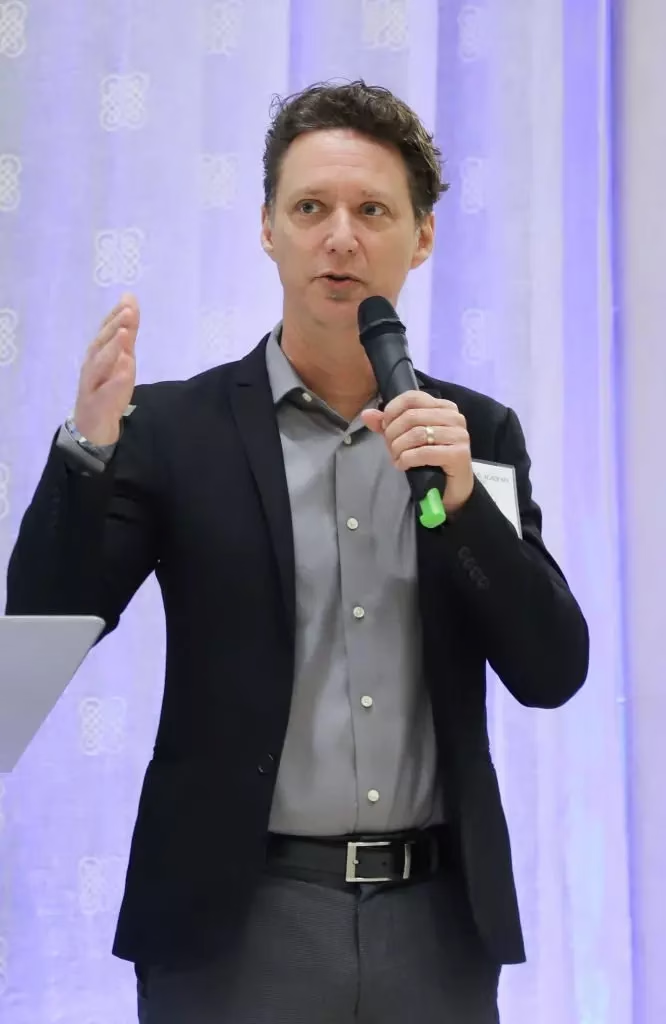
In a brand-new editorial series, the Recording Academy has asked its membership to reflect on their their career journey, the current state of the music industry and what we can do to collectively and positively move forward in the current social climate. Below, producer and Florida chapter member Doug Emery shares his open letter with GRAMMY.com readers.
We live in a time of dissonance. A time where we are pushed into corners, which makes it harder to hear the person on the other side. A time where the color of your skin, the language you speak, the person you love or the beliefs you may hold can make others at best uncomfortable or at worst fearful. Out of that fear, people react in ways that, in an otherwise peaceful and thoughtful moment, we would have never considered. Because of the democracy of the internet, we feel justified in our lack of restraint and compassion. Some of this, of course is nothing new, but we have allowed the bully pulpit and social media to fan the flames of this false narrative of "the other"—to the point where we leave no space for different points of view or cultural perspectives. Even in our organization, The Recording Academy, where passions run deep and, in an effort to be an agent of change and progress, we sometimes act as if we are of one monolithic thought. In reality, we are a reflection of an industry that is made up of a tremendous amount of diversity as a by-product of the many genres of music that make up our membership.
<style>.embed-container { position: relative; padding-bottom: 56.25%; height: 0; overflow: hidden; max-width: 100%; } .embed-container iframe, .embed-container object, .embed-container embed { position: absolute; top: 0; left: 0; width: 100%; height: 100%; }</style><div class='embed-container'><iframe src='https://www.youtube.com/embed/vFPL9U2z8Vg' frameborder='0' allowfullscreen></iframe></div>
We have a unique opportunity, however—because of the harmony of music. Not in the poetic sense that may invoke, but in a real way. We can take what happens in our creative sessions and bring that out into the world outside of the studio. We have the ability to peacefully listen to someone coming from a completely different perspective, and even when we stand up for what we feel is important, it’s in an effort to make the whole so much better than the individual parts. I know this is starting to sound a bit ethereal and utopian, but I mean it in a very practical way.
I recently found myself in a session with a client who is a local journalist and part-time songwriter and who happens to be Black. While working on his track, we ended up in a very enlightening conversation about his experience as a Black man where he talked about his experience with red-lining and being stopped in his own neighborhood. I was able to ask questions not only about his experience in the past, but also how he sees the Black community today. While we were talking, all I could think was that if we were having this conversation on social media, the potential amount of vitriol spewed from those feeling the need to respond would have turned this conversation into something completely different.
Read More: Latin GRAMMY Nominee Leslie Grace: How The Pandemic Has Changed My Creative Process
I left the session thinking what an opportunity we have as creators. We end up in these intimate moments with people willing to be vulnerable with not only their art but also who they are as people and the journey that brought them to this moment. This vulnerability allows for deeper connections that I think are unique to the situations we often find ourselves in. This opportunity is a unique gift: music doesn’t see the boundaries that exist in other realms. My client came to me not because of any cultural criteria but strictly due to my reputation as a music creator. When he called to work with me, he didn’t ask my political views or who I sleep with at night. Instead, he listened to my previous work.
Now, to be clear, I am not strictly talking about some liberal agenda. As I stated earlier, the music industry is a very diverse place with many points of view. What I am suggesting is that we don’t leave the skills we have learned as creators in the studio—we should take them with us out to the world. Not in an ethereal sort of way, but in a real-world, practical sense. We have interpersonal skills because of what we do. The process it requires when collaborating is a needed example to those outside of our industry more than ever. We don’t work in an echo chamber of music when creating, so why should we live in an echo chamber of ideas outside of music? Take advantage of the opportunity of music.