There was a time in the not so distant past when hip-hop was likened to disco. A flash in the pan genre defined by its hyperbolic expression of sound and style, disco fizzled out in the early '80s once the fashion and sonic trends attached to it expired.
<iframe width="620" height="349" src="https://www.youtube.com/embed/mcCK99wHrk0" frameborder="0" allow="autoplay; encrypted-media" allowfullscreen></iframe>
Hip-hop was presumably following in its footsteps, especially when so many break records were layered with disco samples to create the early framework of hip-hop's sound — think the Sugarhill Gang's 1979 hit "Rapper's Delight" (GRAMMY Hall Of Fame, 2014), which sampled Chic's 1979 No. 1 smash, "Good Times."
But hip-hop persevered and brought with it an evolution of the R&B genre as well. Combined, the two genres became unstoppable, eclipsing a flimsy stigma of being confined to an "urban" box. Now, four and a half decades since hip-hop's inception, the genre has seemingly taken the music industry over along with R&B, beating rock at its own game. How did we get here?
Theoretically, the move has been gradual, though 2017 marked a quantifiable shift leaning in hip-hop and R&B's favor. First, there are the sales figures: Hip-hop and R&B accounted for 25 percent of music consumption in 2017, with rock trailing at 23 percent. Add to that an uptick in audio streaming in 2017 by 72 percent — with 29 percent of music streamed online being hip-hop and R&B combined, matching rock and pop, which also combined for 29 percent of music streamed online. The two previously gigantic leaders in major genres are now neck-and-neck with the "underdogs" of R&B and hip-hop.
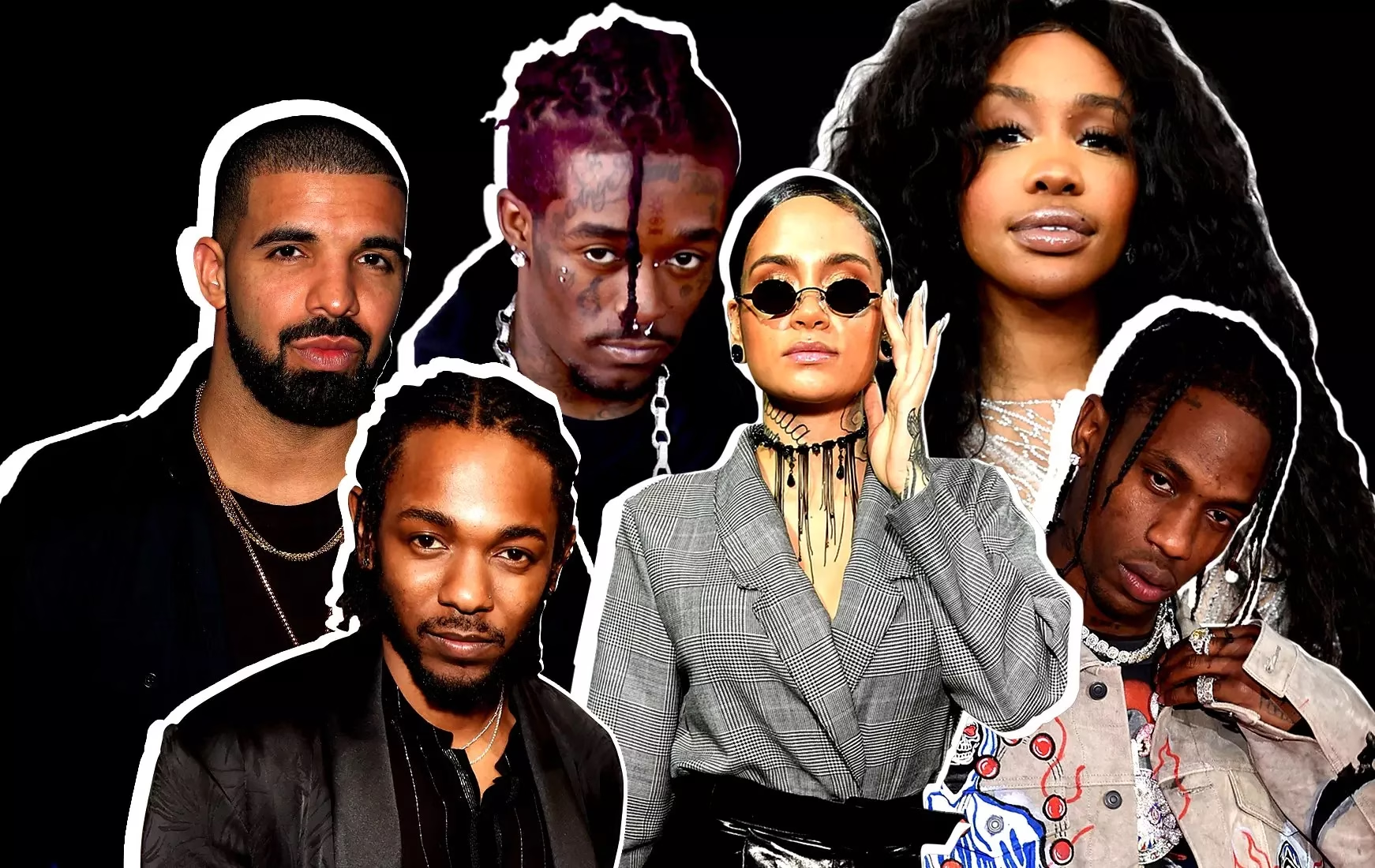
But per Nielsen's 2017 year-end report, eight of the top 10 albums were, in fact, hip-hop or R&B albums, including Drake and Kendrick Lamar for More Life and DAMN., respectively. Meanwhile, Drake and Lamar held down the top two spots on the list of most popular artists based on total consumption (sales and streaming), while Bruno Mars, Eminem, Future, The Weeknd, and Lil Uzi Vert were also among the other artists that proved hip-hop and R&B were the most widely consumed collective genres this past year.
The 60th GRAMMY Awards further punctuated that claim, as artists like Jay-Z and SZA found homes in the General Four categories, with Mars — who earned Record, Album and Song Of The Year — and Lamar sweeping wins across the board.
Phrases like "the death of rock and roll" have been continually tossed around since this cycle of news arrived. The latest strike against rock came when Coachella announced that for the first time in its 19-year existence there wouldn't be a rock act headlining the festival. The three headliners for the 2018 installment will be Beyoncé, Eminem and The Weeknd.
"I think it speaks to the strength of the music and the strength of the fan base," explains Jeriel Johnson, Executive Director of the Recording Academy Washington, D.C. Chapter. "The fans dictate who shows up on those stages."
While the 2017 tallies may suggest that sales and streams have finally caught up, industry insiders have seen the trends shifting over the last 5 to 10 years.
"Now so, even more than ever, music can be created and put out so much more quickly so when something is happening, urban music is reflecting that really quickly."
"R&B and hip-hop have always had a huge influence and impact on our culture, regardless of the time period — from fashion to slang to our tastes in music [and] cars," says GRAMMY-nominated producer Harvey Mason Jr.
However, with rap artists growing into cross-cultural icons, hip-hop poured into rock and vice versa.
"I immediately think of artists like Run-DMC, Lil Wayne, Jay-Z, Kanye West, and Kid Cudi. These are a few of the pioneers who helped lay down the foundation for artists like Post Malone, Lil Uzi, [the late] Lil Peep, and Lil Pump to become the new generation of artists to continue the push forward the borders of hip-hop," explains Matthew Bernal manager of media for Republic Records. "From their trend-setting fashion, genre-bending sounds and riot-like live performances, millennials grew up watching these icons and the influence is clear in their music today."
<iframe width="620" height="349" src="https://www.youtube.com/embed/b8m9zhNAgKs" frameborder="0" allow="autoplay; encrypted-media" allowfullscreen></iframe>
Artists such as Rae Sremmurd, who released the groundbreaking "Black Beatles" with Gucci Mane in 2016, extended that aesthetic — the music video for the hit single showed the duo breaking TV sets with electric guitars.
"Post Malone's 'Rockstar,' which was the No. 1 song on the Billboard Hot 100 for eight consecutive weeks last year, is a strong indication of how today's hip-hop artists view themselves: as rock stars," continues Bernal.
"Urban culture is the new rock," adds GRAMMY-winning producer Rodney "Darkchild" Jerkins. "[In] every era there's a change that takes place, and right now Migos, Kendrick Lamar — they're the new rock stars."
"I feel like it was bound to happen," says Nicole Johnson, industry relations at music streaming service Pandora. "Back in the day, rock and roll was started by an urban genre and urban people. But then it became 'sex, drugs, and rock and roll' and, now, isn't that what these hip-hop [artists] are now talking about? Here are rappers just living their best lives, being themselves, tattooing their faces if they feel like it, wearing dresses on the cover of their album if they feel like it. It's all about self-expression."
Johnson adds that Pandora's Next Big Sound has been driven by hip-hop and R&B as of late, leading to the service's launch of the weekly urban station, The Sauce. "There are now so many [sub]genres within hip-hop, of course, it's gonna take over.”
<iframe src="https://www.facebook.com/plugins/video.php?href=https%3A%2F%2Fwww.facebook.com%2FPandora%2Fvideos%2F10154873724326344%2F&show_text=0&width=476" width="476" height="476" style="border:none;overflow:hidden" scrolling="no" frameborder="0" allowTransparency="true" allowFullScreen="true"></iframe>
But in the wake of hip-hop and R&B's takeover, so was the digital boom. Urban music jumped onboard streaming services early, with platforms like SoundCloud birthing its own scene, SoundCloud rap, which has given way to artists such as Chance The Rapper and Rico Nasty who have equally dominated the space as other hip-hop artists.
"I think R&B/hip-hop is benefitting from changes in technology," says Mason, underscoring how today's fast turnaround in music creation has placed hip-hop and R&B at a unique vantage point, especially when it comes to topical music. "R&B and hip-hop really seem to have their ear to the ground culturally and in society with everything our country is going through.
"It just seems to be such a transparent outlet for people with feelings and opinions, and now so, even more than ever, music can be created and put out so much more quickly so when something is happening, urban music is reflecting that really quickly."
So where will we go from here? Is rock really fading away? And, if so, can it come back? While the cyclical nature of music would reflect an inevitable return, perhaps rock will have to once again evolve the way hip-hop and R&B had to in order to rise up.
"It'll rebound in a different kind of way, I believe," says Jerkins. "Someone will come along and do it in a newer and cooler way. But right now? Hip-hop, R&B — that's pop. Because pop music is anything that's popular."
(Kathy Iandoli has penned pieces for Pitchfork, VICE, Maxim, O, Cosmopolitan, The Village Voice, Rolling Stone, Billboard, and more. She co-authored the book Commissary Kitchen with Mobb Deep's late Albert "Prodigy" Johnson, and is a professor of music business at select universities throughout New York and New Jersey.)