The blues genre is many things to many people: a sound, a style, a spirit.
It's emotion expressed in musical form, hollered and wailed by generations of singers and instrumentalists. Nearly every form of American popular song, from jazz to rock to hip-hop, has its roots in blues music and lyricism. And while its earliest innovators might not recognize the contemporary interpretations today, the blues genre remains as alive and relevant as ever.
Some musicians preserve the blues via recordings that draw upon the genre's rich heritage. Other artists take a modern-day approach, updating the established blues canon in unique ways. When it comes time to award them both, it's important to differentiate according to how the blues is presented.
That's why The Recording Academy decided to create two distinct categories for blues artists beginning with the 59th GRAMMY Awards in 2017. Here's a deeper look at the criteria for each category:
Best Traditional Blues Criteria
Traditional blues includes blues recordings with traditional blues song structures, harmonic structures and rhythms, including traditional blues instruments such as acoustic and electric guitar, piano, organ, harmonica, horns, acoustic and electric bass and drums. Includes subgenres such as Delta Blues, Piedmont Blues, Jump/Swing Blues, Chicago Blues, and Classic/Southern Soul.
Best Contemporary Blues Criteria
Contemporary blues includes blues recordings that vary from traditional blues song and harmonic structures. May employ non-traditional blues rhythms such as funk, hip-hop, reggae and rock. May include both traditional blues instruments and non-traditional blues instruments such as synthesizers. May include programmed tracks, loops and other contemporary production techniques. Includes sub-genres such as funk blues and blues-rock.
This more precise categorization empowers the blues community to celebrate a wider variety of artists for their accomplishments, and gives both new and legacy artists a chance to compete with their peers.
Below, last year's nominees in each blues category discuss what their nomination means to them, the importance of passing on blues traditions and where the genre is headed. Here's what they had to say:
<iframe src="https://open.spotify.com/embed/user/grammy.com/playlist/27jcvNZImuZ4ftFBdi1p6y" width="300" height="380" frameborder="0" allowtransparency="true"></iframe>
Best Traditional Blues Album
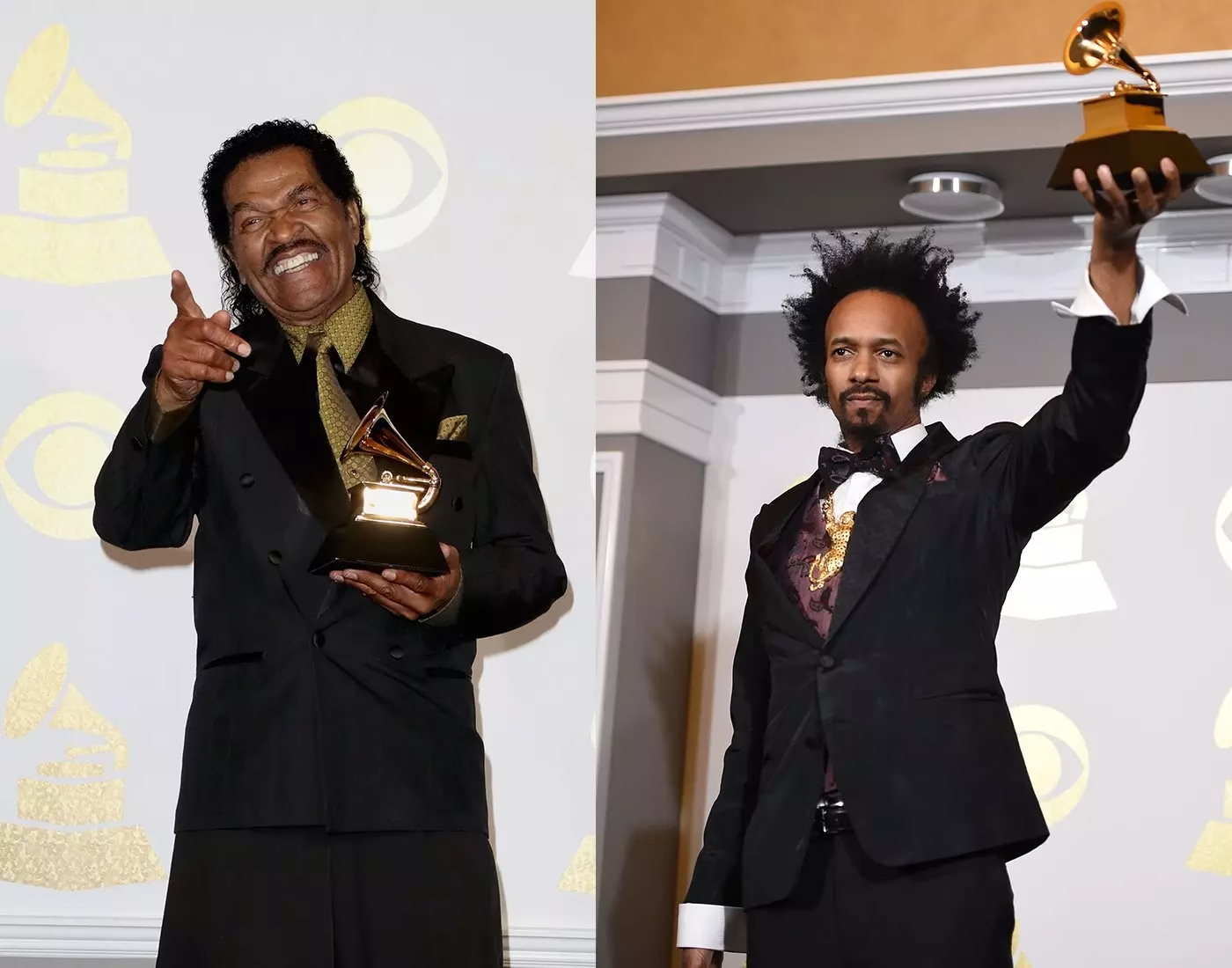
Bobby Rush (WINNER)
Blues Hall of Fame inductee Bobby Rush has been performing for more than 60 years and shows no signs of slowing. To record his GRAMMY-winning album, Porcupine Meat, the singer and multi-instrumentalist returned to his home state of Louisiana and recruited a star lineup of musicians, including fellow GRAMMY nominees Vasti Jackson and Joe Bonamassa. Winning his first GRAMMY "means everything in the world," Rush says. "It's like getting a diploma: you can be smart as hell, but if you didn't graduate, what does it mean? Now, it's like I graduated."
Lurrie Bell
There's no mistaking Lurrie Bell's hometown for any other. The singer and guitarist's GRAMMY-nominated album, Can't Shake This Feeling, is pure Chicago blues – full of gritty shuffles and barroom piano boogies. When Bell sings about being "born with the blues," he isn't joking. His father was famed harmonica player Carey Bell, who accompanied Chicago-based greats such as Muddy Waters and Willie Dixon. First appearing on recordings with Carey in the late 1970s, Lurrie has garnered acclaim from critics. Can't Shake This Feeling follows 2013's Blues In My Soul, which won a Blues Foundation Blues Music Award for Song of the Year.
Joe Bonamassa
One of the blues' most poetic surnames is King. Freddie, Albert and B.B. — collectively known as the "Three Kings" — helped popularize electric blues in the 1950s and ''60s and inspired countless young guitarists. Joe Bonamassa is one such disciple, and his Live At The Greek Theatre pays homage to the King trio with scorching covers of tunes by each player. "It's always nice to be recognized," Bonamassa says of his GRAMMY nomination. "I'm more proud of the fact that the music of Freddie, Albert and B.B. King, as well as that world-class band, was behind me during those gigs."
Luther Dickinson
On Blues & Ballads (A Folksinger's Songbook Volumes I & II), Luther Dickinson approaches the music of the rural south like an anthropologist. A lifelong collector of songbooks and sheet music, the Memphis, Tenn., native wrote and transcribed each track using ideas passed down orally from older folk musicians. Dickinson believes performing the blues is a necessary act of preservation. "Roots music is a tradition and a trade, best learned face to face, passed down from generation to generation like quilting, woodworking or cooking," he says. "We owe it to the elders that taught us to pass what we learned to the youth."
Vasti Jackson
There's plenty of musical DNA connecting Vasti Jackson and Jimmie Rodgers. Both Mississippians who move between blues and country idioms with ease, the pair also share an affinity for the music of railroad ramblers. Rodgers sang dozens of traveling songs, including "Train Rollin' Blues," "Waiting On A Train" and "Hobo's Meditation." Jackson covers all three on The Soul Of Jimmie Rodgers, along with other songs by the country legend Jackson says represent a childhood spent riding the rails. Jackson writes on his website that hearing a Rodgers tribute album inspired Jackson to make his own musical time capsule. "It brought back so many of these memories," he says. "I went back and listened to Jimmie Rodgers' originals and they touched a deep place within my soul."
Best Contemporary Blues Album
Fantastic Negrito (WINNER)
Success has been a long time coming for Fantastic Negrito. The singer/songwriter grew up selling drugs before signing to Interscope Records in the 1990s, only to be dropped after a car crash left him in an extended coma. Negrito returned to music in 2014, winning NPR's Tiny Desk Contest and recording his breakout release, The Last Days Of Oakland. The GRAMMY-winning album chronicles the social and cultural changes Negrito's hometown has undergone since his youth. "Winning a GRAMMY is an achievement of a lifetime," Negrito says. "[An artist's] goal is always to communicate something very special to the world, and I am grateful that my contribution was recognized."
Janiva Magness
When Janiva Magness found out her eleventh album, Love Wins Again, was nominated for a GRAMMY, she felt "completely stunned, then giddy, then stunned," she says. But while the honor may have surprised her, the singer/songwriter's talent has been recognized time and again by the Blues Music Awards and the Blues Foundation, the latter of which named her B.B. King Entertainer of the Year in 2009. Love Wins Again reunited Magness with GRAMMY-winning producer Dave Darling, and features songs that blend blues, rock, soul, and country. "[They're] all branches of the same tree," Magness says. "All come from the blues."
Kenny Neal
Louisiana native Kenny Neal called his GRAMMY-nominated album Bloodline for a reason. No fewer than eight members of the Neal family appear on the record, the most prominent of whom is Neal's father, blues singer and harmonica player Raful Neal. Songs such as "Ain't Gon' Let The Blues Die" concern themselves with keeping the blues relevant for a new generation of fans, a cause Kenny himself hopes to aid. "When I was growing up as a kid, I watched the blues nearly die," he says. "Now it's bigger than ever all over the world. The blues will live on."
The Record Company
Influenced as much by John Lee Hooker as by bands such as the Stooges and the Rolling Stones, the Record Company are one of blues rock's rising stars. The trio's debut album, Give It Back To You, swings and shuffles through high-energy grooves drawn from post-war blues and early rock and roll, which has turned songs such as "Off The Ground" into radio hits. A GRAMMY nomination capped a year of high-profile exposure for the band. "In our experience, the nomination shines a powerful light your way and makes people more curious to hear what you are doing," the Record Company says. "It's a busy world out there, so having the gift of getting the ear of a new listener is one of the single greatest things that can happen to a new artist."
Joe Louis Walker
Boasting a career spanning more than 50 years, Joe Louis Walker has performed with a who's who of blues, rock and R&B. His GRAMMY-nominated album, Everybody Wants A Piece, is a musical melting pot that reflects Walker's wide-ranging tastes, from gospel balladry to Hendrix-style guitar theatrics. That openness to outside influences extends to up-and-coming blues acts from around the world who Walker sees as the genre's future. "There's blues bands and musicians now performing who've come from so many different countries, races, cultures, and lifestyles," he says. "Some are finding their own voice and mixing their cultures with the blues. I think that's one of the most interesting and significant developments."
(Julian Ring is a music journalist and critic. His work has appeared in Rolling Stone, NPR Music, The Wall Street Journal, and Consequence of Sound, and he has written for The Recording Academy since 2010. As a curator at Pandora, Ring reviews independent music, programs blues stations and produces creative editorial. He graduated from Oberlin College, where he edited his college newspaper and worked as an audio engineer. Ring is also an avid podcaster and has edited an e-book about the music industry. He enjoys playing the guitar and hiking near his home in Oakland, California. The views expressed in this article are the author's own and do not necessarily reflect the views of Pandora Media, Inc., nor was the article written on Pandora Media, Inc.’s behalf.)