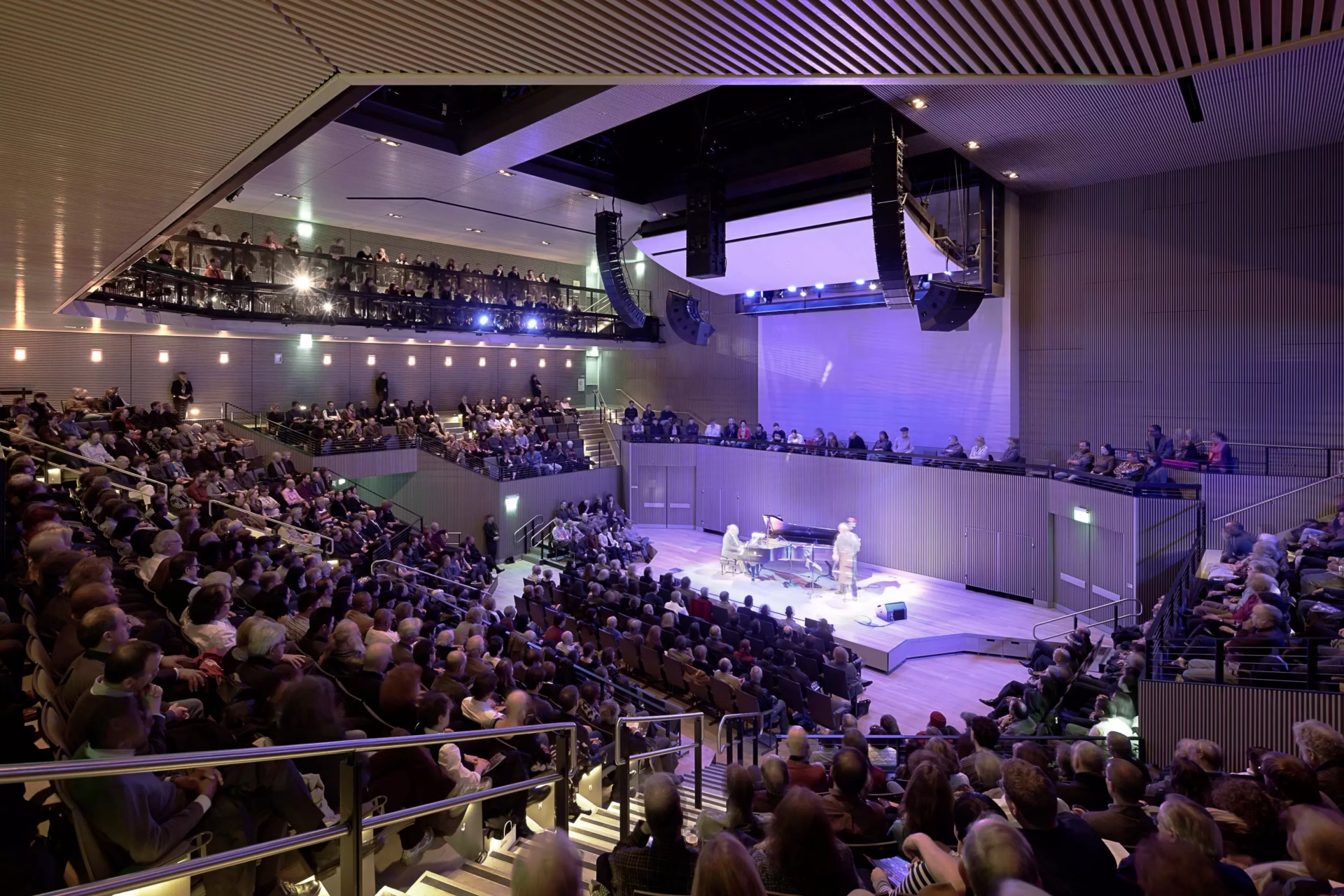
When the SFJAZZ Center opened its doors in January of 2013, in the heart of San Francisco’s cultural district, it made a huge impact. Now recognized nationwide as a premier center for jazz, it has totally changed the cultural landscape of the city, and has established jazz as an essential, significant and legitimate art form. In addition to almost 500 shows a year by local and worldwide jazz luminaries, SFJAZZ offers extensive educational outreach, training, activities and performing programs for young musicians.
"We have helped put jazz on a similar level to the fine arts around us, so people talk about SFJAZZ in the same way they talk about the ballet or the opera," said SFJAZZ Founder and Executive Artistic Director Randall Kline, as we chatted in his office. Using the San Francisco Symphony as their model nonprofit, Kline had considered that, "If they could do that for symphonic music, why couldn't somebody do that with jazz? And now after six plus years in this building, we are considered a cultural institution and a vibrant one."
Kline, who grew up in Massachusetts, originally aspired to be a professional string bass player. He moved to San Francisco in 1975, and began producing concerts and working at various clubs, eventually forming his own marketing and publicity company. Fortuitously, he hooked up with the City of San Francisco's arts granting program, Grants for the Arts for the San Francisco Hotel Tax Fund, that was interested in promoting jazz, and in 1982, Jazz in the City was launched. A series of jazz concerts in small venues around the city, it became incredibly popular, doubling and tripling in size every year.
<iframe width="620" height="349" src="https://www.youtube.com/embed/jAMGVB8A0Hk" frameborder="0" allow="accelerometer; autoplay; encrypted-media; gyroscope; picture-in-picture" allowfullscreen></iframe>
"I had a marketing and publicity business for the arts, Kline & Associates," said Kline. "But after six years, I had to make a decision, because Jazz in the City was growing and growing and it was going to be impossible to do both." Following his heart, Kline chose the non-profit path.
Although the series did not initially do well, through hard work and careful programming, Kline worked out the kinks. By the early '90s, the series started getting national attention and major accolades like "best festival in the country," and "the crown jewel of American festivals," from major publications like the New York Times and the Chicago Tribune.
Although at times Kline said he was almost ready to "toss it," by the 10th anniversary, things started to really break loose. He changed the name to the San Francisco Jazz Festival, and began bringing in some big names like Tony Bennett. "We were slowly developing a loyal audience of people who understood how we programmed, and our position as a cultural presenter and purveyor here in the Bay Area," remarked Kline. Thus, the fertile seeds were sown for the eventual creation of the SFJAZZ Center, and after many nomadic years, the decision was made to break ground for a permanent home for the festival.
The idea was that the center should be "transformational," a new model that was a cross between a club and a concert hall. "We realized that we had to get everything right," said Kline. "There was a lot of thought about this building not only being reflective of the art form, but also being welcoming." He and his accomplished design team spent a lot of time researching and analyzing the elements necessary to create what Kline describes as a "transcendent moment" in a musical performance, for the audience, as well as the musicians. Their extensive and innovative planning resulted in an impressive, state-of-the-art structure, featuring floor-to-ceiling glass windows, reflective of current architectural trends for performing arts centers.
The center includes a spacious lobby, a casually elegant café and two performance halls—the 700-seat Robert N. Miner Auditorium, and the smaller, more intimate Joe Henderson lab that faces the street, allowing passersby to catch a glimpse of the performances. "At night, all that glass disappears and people can see in from the street, and understand that there's something happening. That’s a real 21st century idea—the idea of openness."
One of the factors that has contributed to the success of SFJAZZ is the creative and diverse programming, done by a team of five people, including Kline, and Director of Programming Lilly Schwartz. Kline explained that he believes that there are jazz influences in many kinds of music, including hip-hop, world music, contemporary classical and even country music. The extensive brochure attracts a culturally diverse audience of all ages who often plan as much as a year ahead when buying tickets.
<iframe width="620" height="349" src="https://www.youtube.com/embed/D9dMml34Tyk" frameborder="0" allow="accelerometer; autoplay; encrypted-media; gyroscope; picture-in-picture" allowfullscreen></iframe>
"SFJAZZ has had a tremendous effect on our local jazz scene. It’s such a beautiful venue to see concerts, and every year their lineup has a great blend of legendary jazz artists—those who are currently making waves in the genre, and also local musicians who are doing great things," said pianist, emcee, producer and bandleader Kev Choice via email. He is currently a governor and the secretary of the board of the San Francisco chapter of the Recording Academy, and has been involved with SFJAZZ for a number of years, both as a performer and an educator.
"I also appreciate SFJAZZ for their dedication to educating the next generation of great jazz musicians," he added. "They host jazz education presentations to students at the venue that expose youth to musicians performing and engaging them about jazz, the tradition, and it’s importance to our culture. They also host the SFJAZZ High School All-Stars Band, which some of my students have been a part of. It provides them with an amazing opportunity to play with other top young musicians in the Bay Area, have great instruction, and perform and travel around the world."
Kline said there are several new projects underway at SFJAZZ. Research and planning is currently in progress to launch a digital campaign, a subscription-based, on-demand series for people who aren’t able to attend the live concerts. They are also looking at ways to do more creative things with the lighting in the hall, and are in the process of designing an immersive AI-designed system done with laser projectors that works in real time, so the music itself will create the colorful patterns.
But most important, Kline and his team are passionate about making the experience at SFJAZZ as enjoyable and memorable as possible, for both the audience and the musicians. "Jazz washes away the dust of everyday life," said Kline, quoting jazz legend Art Blakey. "The music has a chance to really move you—you can go on a journey with somebody and have that transcendent moment. That's what the artist wants, that's what the audience wants, and if you can do that together, what a great thing."
Save Club Mezzanine: Inside The Efforts To Rescue San Francisco's Iconic Music Venue