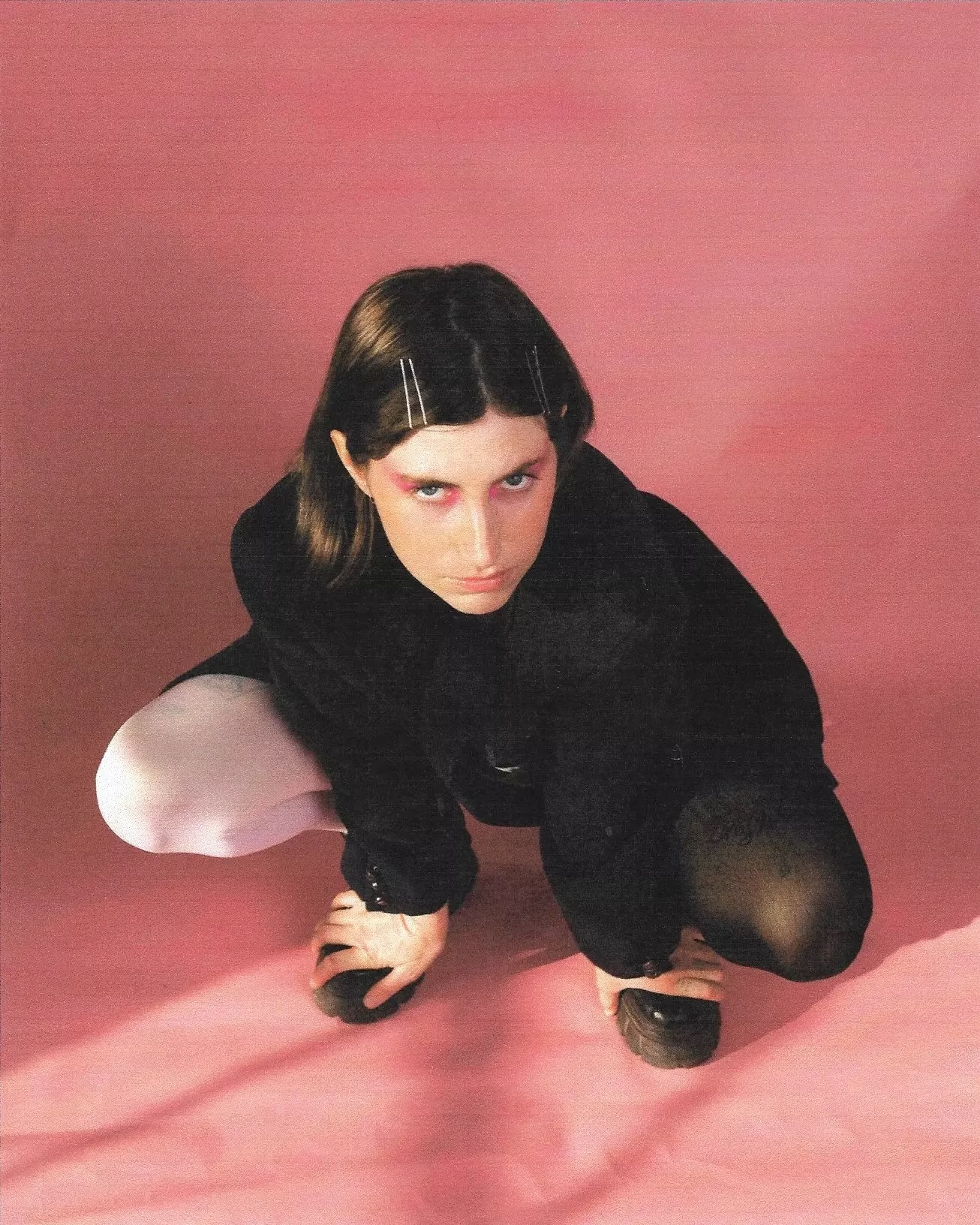
"Thought I could swim, but I thought wrong," goes a pivotal line on Show Me How You Disappear, the latest album from singer/songwriter Jillian Medford, aka Ian Sweet. In the line, Medford encapsulates the pride that comes with trying to cope with mental health challenges—something she knows extremely well.
Much of the new album, released in March, was written following her intensive outpatient treatment for anxiety and depression in January and February 2020. Six-hour days of journaling, mantra-based, Emotional Freedom Technique tapping and other forms of therapy helped formulate 33 minutes of self-examination far beyond a passive, New Year’s resolution-style declaration.
<style>.embed-container { position: relative; padding-bottom: 56.25%; height: 0; overflow: hidden; max-width: 100%; } .embed-container iframe, .embed-container object, .embed-container embed { position: absolute; top: 0; left: 0; width: 100%; height: 100%; }</style><div class='embed-container'><iframe src='https://www.youtube.com/embed/4u0ls7bfrhI' frameborder='0' allowfullscreen></iframe></div>
"I didn’t really plan or set out to write music during [the treatment]," she told GRAMMY.com. "But as I was starting to heal and learn the tools from the program, I was like, 'I need to make a record about this.'"
And on the album, she sounds renewed, with the pains of the past not forgotten but not permeating as they might’ve before. The heart-on-its-sleeves lyricism, blasts of noisy guitar, and Medford’s poignant delivery make the project the kind of album best-suited for decompression in one’s bedroom or vehicle, alternating between singing along to anthemic choruses and just basking in the comfort of someone understanding what you’re going through. Unsurprisingly, Medford says she is eager to return to the stage and share these songs with an appreciative audience.
The indie artist spoke with GRAMMY.com about her time in treatment, the writing of the album, and the artists who have helped and inspired her.
This interview has been edited and condensed for clarity.
<style>.embed-container { position: relative; padding-bottom: 56.25%; height: 0; overflow: hidden; max-width: 100%; } .embed-container iframe, .embed-container object, .embed-container embed { position: absolute; top: 0; left: 0; width: 100%; height: 100%; }</style><div class='embed-container'><iframe src='https://www.youtube.com/embed/73kS4pjZcgA' frameborder='0' allowfullscreen></iframe></div>
What sort of anxiety were you experiencing when you started writing these songs?
I’ve always struggled with depression and anxiety and it’s just been a part of my life since I can remember. But, specifically, going into writing these songs, I had been through something kind of traumatic in the last years regarding a pretty abusive relationship I was in. And it had sort of caught up with me, as well as unfolded a lot of the other anxieties I was going through just my whole life and things sort of unraveled all at once. And then I decided to check myself into a treatment facility for it, to get more support, more therapy. But I was dealing with all sorts of things: panic attacks, depression, just really severe social anxiety, PTSD. Mostly PTSD, I would say, was the cause of everything else trickling down, and just causing a lot of issues for my mental health.
Was there a breaking point where you realized you needed to get help?
Definitely. I was trying to get help for a few months, but I was struggling with my insurance, which is just a terrible situation, and things were getting worse and worse. I knew that there was something wrong. I definitely felt like I could not get out of bed. I couldn’t really focus. I couldn’t make eye contact with people and was just struggling to even, like, form sentences. Even day-to-day things that should be easy and come naturally were just seeming like the biggest tasks for me. I was like a shell of a human being, and I missed myself a lot. And I missed my life, and I knew that I wanted to get back there; I just missed that, definitely was having some suicidal ideations. I wouldn’t say I was planning anything else or being really serious about it. But I just didn’t know how to go on feeling that way. And that’s when I knew I absolutely needed to get help.
How was it balancing being in outpatient treatment with your day-to-day life?
It was a lot. I kind of had to put everything on pause in order to really dive into the outpatient program. So, I moved back to my parents’ house because the treatment center was close to them. I wasn’t seeing any friends, anybody. I didn’t really plan or set out to write music during it. But as I was starting to heal and learn the tools from the program, I was like, "I need to make a record about this." But it definitely was really hard to balance my personal life. It was like six hours a day, five days a week. So, it was really just my full-time job, and I was accepting that. And I wasn’t longing to really see anybody or even interact or socialize because I just knew I wouldn’t be fun to hang out with or anything like that.
<style>.embed-container { position: relative; padding-bottom: 56.25%; height: 0; overflow: hidden; max-width: 100%; } .embed-container iframe, .embed-container object, .embed-container embed { position: absolute; top: 0; left: 0; width: 100%; height: 100%; }</style><div class='embed-container'><iframe src='https://www.youtube.com/embed/mN8uO5GAGcY' frameborder='0' allowfullscreen></iframe></div>
What was the first song that you wrote for the record?
"Dumb Driver," actually. But I wrote that before I was in treatment. There was a batch of songs that I wrote before treatment: "My Favorite Cloud," "Dumb Driver" and "Power." And I think those, they’re just like the lead-up to the breakdown. I was like, really yearning for something, I was wanting help, I was stumbling to get over something. So, I kind of wrote those in kind of a frantic moment. Those three songs kind of came all together at once, like in a week or two. But then, the majority of the other record is written surrounding being in treatment.
Were there any moments in treatment that especially resonated with you and influenced your songwriting?
There was so much I learned and was processing when I was there. We would go around and share what we were journaling about. That was a big, big process, at least in lyric writing. I was [leaving] the journaling sessions being like, "Actually, I want to make a song out of this. It’s like begging to be a song." That’s just normally how I’m used to writing. I never really write down linear thoughts. I more so just write lyrics.
A lot of the songs have a very propulsive energy to them. How did that relate to your state of mind?
I have always sort of written in that way, but I was doing a lot of mantra-based practices with therapy and wanting to sort of reach goals, and, like, yearning [for that]. There’s a lot of yearning to get better, to get help, to heal. And not only do the lyrics reflect that but, obviously, the music reflects that, too. I think of both of those things following each other. Also, I’ve always been inspired by bands that "ramp it up" (laughs). I’m a big sucker for Coldplay, and [their] big finale— each song is trying to reach that moment.
The song "Get Better" seems to be about sacrificing your own happiness for another. Is that something you’ve been able to figure out?
I wouldn’t say I’ll ever have that figured out. But it’s something that was very specific to a relationship I was in, the one that caused me a lot of grief and pain and anguish. I think specifically, in that scenario, that’s something I was doing. And I think as I move forward, and I’m in new relationships and new friendships and everything, I’m learning to not sacrifice my own health and well-being for others. As much as I might care about them, it’s important to draw a line and see when it’s toxic. You can care about someone. You can do everything you want for them, but if they’re just taking advantage, it’s time to let go.
I really love the contrast between clearer sounds and distortion you have on some of these songs. How did the production reflect your mindset?
I think just like that (laughs). There are moments of clarity in my thought process, but they’re very fleeting. At least in this time of writing music, it was like, I’d have glimmers of hope or glimmers of clarity, but it was always fleeting. And it’d be overtaken by anxiety and depression, and that’s where the distortion and saturated sounds come in. It was like, overtaking me. Not really am I consciously [aware] that my music is doing that, but that’s just how it ends up. It just makes sense to me; it reflects how I’m feeling.
What was your perception of mental health treatment when you were growing up?
Actually, very good. My mom is a big believer in therapy and getting help when needed. She’s always been a supporter of me getting help. I’ve seen therapists since I was, like, 12, on and off. So, as a kid, I struggled with depression and anxiety, as well. My mom made sure I had somebody to talk to and got help for that. So, it’s always been a very prominent part of my life, which I’m very lucky for ... [and am] so grateful for.
I feel extremely [fortunate] to have had that opportunity since I was young. I know a lot of people aren’t fortunate enough, or it’s not something that’s discussed in their household. For my record, a lot of the early-bird profit sales went to the Loveland Foundation. It helps young girls and non-binary people of color get therapy resources. So, I’m really passionate about that.
What are some unexpected benefits from treatment that you’ve noticed?
Being grateful for little things, like water and food. I just feel much more grateful in general. I was surrounded by a lot of people in treatment who didn’t have a privileged life like I grew up having. And it just made me feel a lot more present and aware of where I come from and the things I have. I definitely didn’t expect to be rocked in that way. I knew I was going there to get help for myself, but I didn’t think that everybody else would affect me so strongly. I think that’s so important, that we all were able to share our stories with each other and have some perspective.
Who are some artists who have helped you through difficult times, either past or currently?
Well, I’ll say it again: I love Coldplay. As cheesy as that may be, they’re, like, my favorite band, and I always go back to listening to their music. It’s got this hopeful sadness to it, and I think that’s kind of how I try to approach my music, in a way. Like, it always has this tinge of "It’s going to be okay," even though it’s a dark time. And I really appreciate that.
Björk always helps me through anything. She’s just such an angel, and her voice is like a guiding light. When I was in high school, I listened to a lot of Bright Eyes. Even though it’s, like, the saddest music ever (laughs). There’s something about listening to sad music that brings me into a lighter place. It really attracts me. You’re not alone in those moments. So, I just like listening to music that makes you feel less alone and makes you feel comforted.
What makes you happy?
Well, I got a dog during quarantine. My dog makes me so happy. I find myself laughing so much more. That makes me happy, being around an animal. It’s just pure love, and I love that. I feel the happiest being outside, being around my dog, being with my family. And also, just playing music so I need to get back out there and play (laughs). I am a very happy person. That’s why I was struggling so much, ‘cause I was like, "I know when I’m happy, I’m so happy" and I wanted to get back to that place. So, things have been good since.