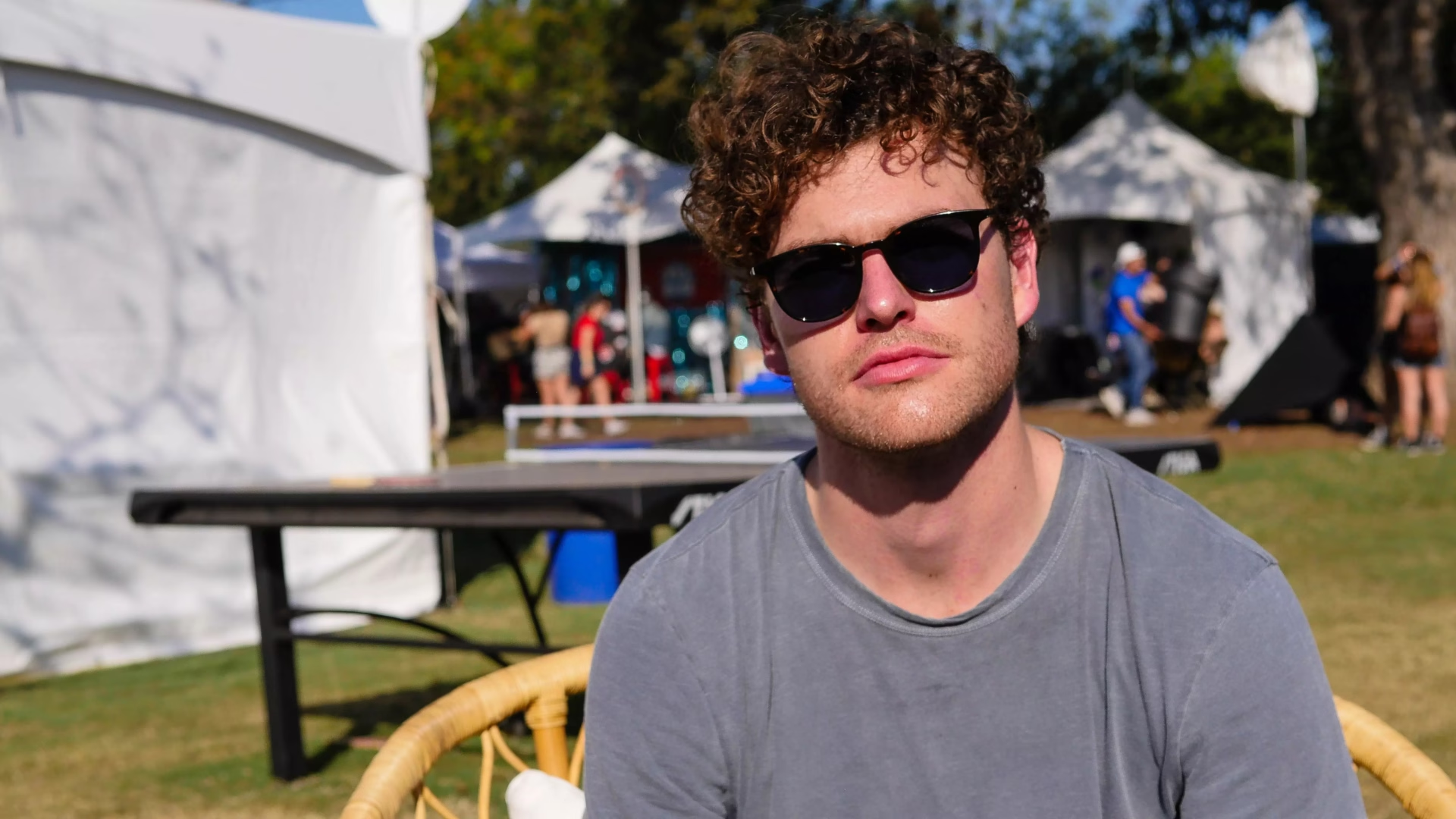
Australian-born singer/songwriter Vance Joy (real name James Keogh) exploded onto the scene in 2014 with his smash-hit debut single “Riptide,” which bested Lady Gaga’s “Poker Face” record for most weeks atop the ARIA Singles Top 100 chart, with 120 weeks at No. 1. The song also won Keogh the grand prize at the 2014 International Songwriting Awards. “Riptide” was soon followed up by another successful single, “Mess Is Mine,” both of which are featured on his debut full-length album Dream Your Life Away.
Keogh is now wrapping up a very successful 2017, with his latest single “Lay It On Me” having climbed the charts to No.1 on U.S. AA radio and No. 5 on Alternative.
He sat down with the Recording Academy backstage at Austin City Limits 2017 to share the story behind his newest single, how he spends his days off on tour, and how life has been treating him since we were first introduced to “Riptide.”
How many ukeleles do you think you’ve signed since “Riptide” first came out?
It’d be over a hundred. The more the better — I know there are a lot of ukeleles out in the world, but the more instruments out there the better, because they're an easy, fun instrument to play. I heard they George Harrison had a car with a boot [trunk] full of ukeleles and he’d just give them out to people - I want to be able to do that.
<iframe width="620" height="349" src="https://www.youtube.com/embed/VXXD1Qxpisw" frameborder="0" allowfullscreen></iframe>
You’re going to premiere your new single “Lay It On Me” on Jimmy Kimmel this week. Tell us a bit about the song — can you share a bit about the writing or inspiration? Should we expect any other surprises from your Kimmel appearance?
It was great to be able to play it on television, I’m a fan of Jimmy Kimmel’s show. It’s a fun song to play, it’s got a horn section, it’s kind of upbeat. I wrote it in Malibu. I worked with a guy called Dave Basset, who’s a really great songwriter and a really great guy. I went into the songwriting session with a bunch of notes. There was a lyric that I really wanted to use, “everything starts at your skin.” I found a place for it in this song, and I feel like that lyric is the lyric I’m most proud of in that song. Then the guitar riff, which is the basis of the song, is a riff I’d had since 2012, and I like the riff, but I could just never write a song with it. I remember being here in Austin in 2013 and trying repeatedly to write a song with this riff, and I just couldn’t find a home for it, which is frustrating. So I gave up on the riff. But when I went into this songwriting session with Dave Basset, he sang a melody over this riff, and I had this other idea for a chorus and we glued it all together. I feel like I never could have gotten to a place where I could use that riff had I not done a collaboration with Dave. We just had a really good two days — we wrote two songs in two days. It doesn’t always work like that, you do a bunch of songwriting sessions and you might get a song, but these two songs I felt really great about. It’s fun to play a new song that’s upbeat, especially when you’re playing festivals. The crowds have been recognizing the song, and I’m enjoying playing it. I’ll play it today.
<iframe width="620" height="349" src="https://www.youtube.com/embed/1C816p-KTNk" frameborder="0" allowfullscreen></iframe>
“Riptide” was the song that introduced you to the world, and obviously it has that instantly recognizable ukelele sound. I thought “Mess Is Mine” was a great follow-up single to that; one because it’s a great song, but also because it made it clear that you had a wide breadth of writing talent. The way alt radio was going at the time made it easy for people to write off what they thought were on-hit wonders, and you clearly were not that. Do you feel at all as though you’ve had to compete with the success of that first single, and did that play any conscious role in your writing process as you set out to prepare some new music?
Thank you. I think you don’t have too much control when it comes naturally, in terms of what ideas just come to you. With “Mess Is Mine,” it just came along, this riff, and it felt like “oh, this is something — this feels like it could be something.” And I just recorded it in my phone. I think, with a lot of the songs that I’m most proud of, it just kind of comes along naturally in its own way, and you follow it. You get like a little thread, and you pull it until you get a whole song. You follow your intuition as a songwriter.
I saw you a few years back at the Fonda in LA, and you got a really awesome welcome from the crowd there — was that level of popularity unexpected or difficult to take in? Can you name a place where you’ve seen the most surprising crowd reaction so far in your career?
I remember that show. I played there again recently, and it was just really great energy. I think there’s just all different types of audiences, even if it’s like a quiet theater show. Sometimes you can just have a really great connection. I was surpassed the first time I played festivals over here — Bonnaroo festival, then Lollapalooza in 2014, and also [Austin City Limits] in 2015 — the crowds have been enthusiastic and they know more songs than I’m expecting them to. They sing deep songs, songs that don’t expect people to know. When they do that you know, it’s like, “alright, this is good.”
What’s your favorite thing to do when you have a day-off on tour?
I’ve got a skateboard in my suitcase, so I like to go for a skate every now and again, but I’m pretty average. I saw people on the river today, kayaking. I like to see people doing activities, then imagine myself doing those activities, and then I think about doing those activities and then I think, “I’m too tired to actually — I’m not actually going to go kayaking tomorrow, I’m just imagining doing it. I think I’ll just go and get a massage.”
So a lot of vicarious enjoyment, it sounds like?
A lot of vicarious enjoyment, a lot of hotel rooms, watching movies. Yeah, my life is just a ball of fire. (laughing)