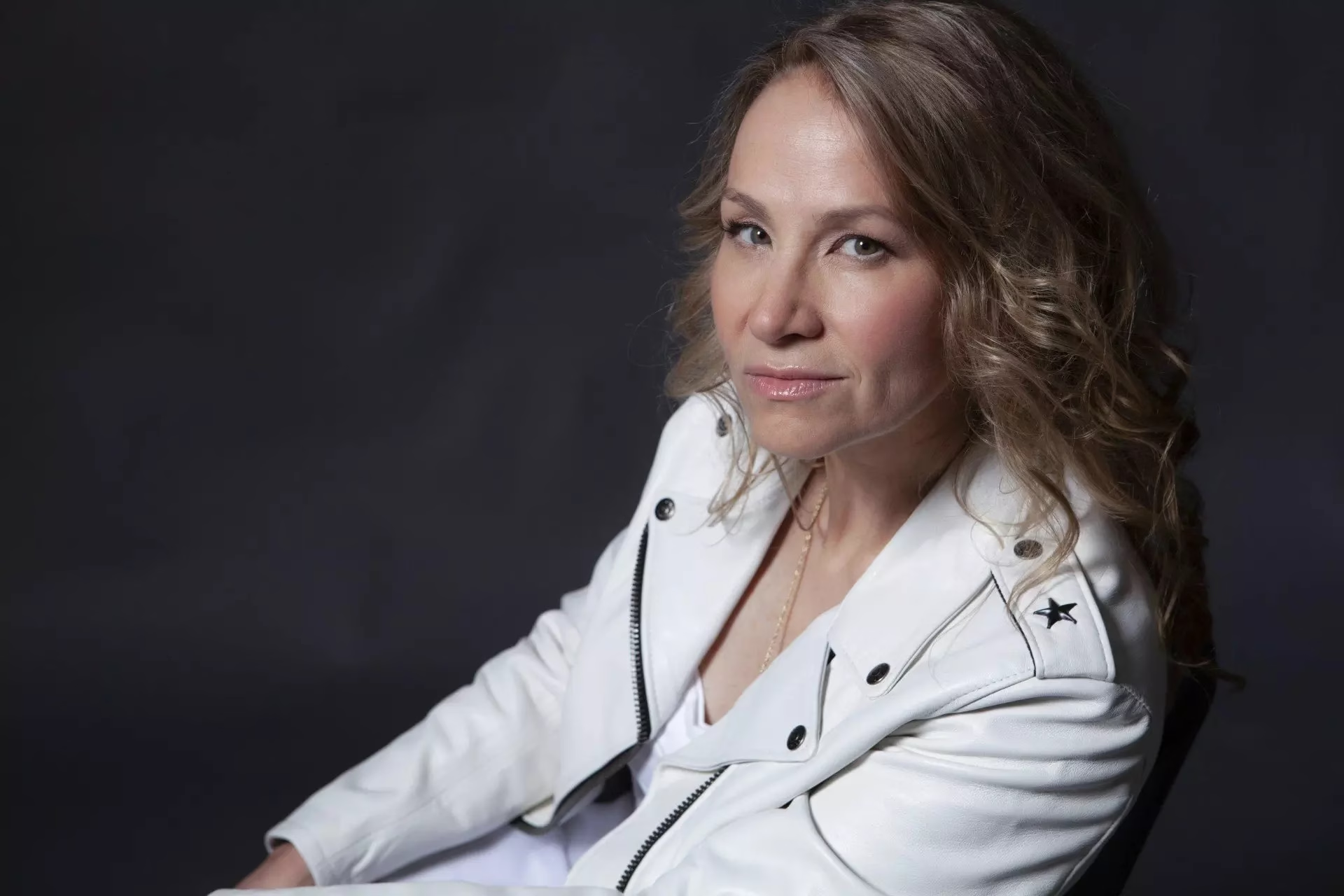
Joan Osborne is one of those artists you’ve heard before even if you’ve never actively searched for her music. Her song, "One Of Us," written by collaborator Eric Bazilian, is one of those songs that transcends time, space, and individuals. It’s catchy and powerful, and landed Osborne three GRAMMY nominations. Not bad for her first single from her debut LP. Though Osborne, born in Kentucky but residing in New York, has never penned a song as culturally captivating as "One Of Us," her career is a sterling example of craftsmanship and dedication to superior songwriting.
Osborne plays with a number of genres, and on her new LP, Trouble and Strife, she bounces from Americana to bar rock to pop with ease and style. Though the album is her boldest political statement to date, she wanted to blend the serious moments, like the powerful immigration tale, "What’s That You Say," with moments of optimism and celebration. "I really wanted to make this record a fun and joyful album and something you could dance to," she explained to GRAMMY.com. "It's about staying connected with your joy and allowing that to lift you up," she added. As the world continues to crack and we fall under the weight of it, Osborne hopes to be a source of positivity and hope. Though songs like "Hands Off" deal with the prevalent corruption of our modern era, "Never Get Tired (Of Loving You)" is a heartwarming ode to her daughter, and "Boy Don’t You Know" wraps themes of female empowerment and misogyny in society around warm piano chords and silky guitar runs.
Though Osborne's songwriting is subtler and more nuanced than her defining hit, her voice continues to be a revelation. From her days of singing Jerry Garcia songs in the Grateful Dead after the legend passed away to her Bob Dylan covers album from 2017, Osborne continually displays why her vocals are some of the most iconic in modern rock ‘n’ roll. Trouble And Strife is another example of her power and dexterity, a beautiful encapsulation of our times, warts and all.
<style>.embed-container { position: relative; padding-bottom: 56.25%; height: 0; overflow: hidden; max-width: 100%; } .embed-container iframe, .embed-container object, .embed-container embed { position: absolute; top: 0; left: 0; width: 100%; height: 100%; }</style><div class='embed-container'><iframe src='https://www.youtube.com/embed/xpiVSMq89ck' frameborder='0' allowfullscreen></iframe></div>
What is it like releasing a political (and fun) album in this particular cultural climate?
Because of the pandemic, the process that we would normally be going through to release a record and support a record is, of course, different because we can't do any live shows. We can't go to any radio stations in person, and we're limited with the amount of stuff that we can do to promote the record. We're, of course, doing a lot of phone interviews and Zoom interviews and things like that remotely to be safe, but it's not the same as going on a tour and playing your songs in front of audiences and stuff like that. It feels a little weird, a little abstract in that way.
This is not a good thing, but I feel like the record, being a very political record or at least the most political record that I've ever released, it feels like there's an audience that's going to be receptive to it. That's the response that we're getting. People are saying that they're happy to have music that is addressing what's going on in the world. It makes them feel less alone and it can be a useful thing to help to navigate this particular moment. That's gratifying. I'm not happy for the reasons behind it being so relevant, but I'm happy that people are responding to it in that way.
When you are interacting with moments to inspire your songs, like "Hands Off," is it draining being inundated by negativity and awful things happening all around us?
It can be very difficult to navigate a time like this. Every day seems to bring some new crisis and some new disaster. If you have kids, you're thinking about the world that you're going to leave to them. That's a difficult thing just as a person and as a citizen. But as a writer, it lights a fire under you and gives you a lot of energy to put the things that you're thinking and feeling into your music. There's a real urgency that I've felt about having songs like this that address this current moment. It gives you a real push in that direction of trying to wrestle with this moment in a creative way.
Having the platform to be able to illuminate a story like on "What's That You Say," is so important, too. Can you talk about how that song came about?
I'm dismayed by the immigration conversation that's going on in this country right now. I believe that America is great because it's a country of immigrants and because of the mix of all the different cultures and artistic traditions that different groups of immigrants have brought with them. That's why American culture is so fascinating. People bring their different traditions with them and then those different traditions and styles have mixed together and created brand-new forms of art in this country. I think that's part of what makes us an amazing country.
I wanted to write something about a person who has come here and brought the best of themselves to this country and really contributed. And so I wrote this song, "What's That You Say," about this character. There were these moments in the song that were instrumental passages that didn't have lyrics and there wasn't singing. I kept hearing a spoken voice in those passages. I thought, well, why don't I turn the mic over, so to speak, to someone who has actually lived this immigrant journey? That's another thing that frustrates me so much about this issue, is that we talk a lot about immigrants and immigration, but I don't hear a lot of people listening to actual immigrants. I don't hear their stories that much. That's very frustrating for me.
<style>.embed-container { position: relative; padding-bottom: 56.25%; height: 0; overflow: hidden; max-width: 100%; } .embed-container iframe, .embed-container object, .embed-container embed { position: absolute; top: 0; left: 0; width: 100%; height: 100%; }</style><div class='embed-container'><iframe src='https://www.youtube.com/embed/qe8bmOENjaU' frameborder='0' allowfullscreen></iframe></div>
I felt like this would be an opportunity to allow somebody to talk about their experience, someone who's actually lived this experience. I can come at it from an artistic perspective and try to have some connection to someone else's story, but no one's going to tell it like someone who's lived it. That's when I approached this organization called RAICES. I've been aware of the work that they're doing at the southern border, trying to help people who are attempting to immigrate to the U.S. from Central America and Mexico and people who are trying to navigate this really dehumanizing system that is in place at the border and helping them with their legal applications for asylum and things like that.
I called them up and I said, "I'm really a fan of the work that you're doing," and I told them about the song and I asked them if they knew someone who might be interested in telling their story to become a part of this song. They introduced me to Ana Maria Rea-Ventre. She is very much the kind of person that this song is written about. She's someone who came to America as a child and has lived the rest of her life here and has been someone who's contributed to her community. She's this shining light to the people around her. She agreed to tell her story.
When your songs began to take a political angle, did you watch what was happening in the world and think to yourself, "I need to make my next album a certain way"? Or had you already started writing and that's just the way that the songs were taking shape?
It's a little bit of both. I wrote these songs in a big rush in 2018. It was before the most recent disasters, but this has certainly been a rough four years. These things were on my mind and a lot of ideas for songs about the current state of our country and of the world kept coming to me. I feel a responsibility as a citizen, a parent, and an artist to try to do what I can to effect some positive change. As they say, "It's an all-hands-on-deck moment." None of us, I don't think, have the luxury to just sit back and watch it unfold. We have to participate.
There’s a cautious optimism that prevails over the entire album. Is that something you really had to work towards? Or is that your MO as a person?
I've been reading a lot of this writer, Sarah Kendzior. She was one of the people who believed that Donald Trump was going to win the presidency. She's an expert on authoritarian governments and she's brilliant. I don't think I can quote her directly, but she said something about, "I'm not an optimist and I'm not a pessimist. I believe that we have to do the work that we have to do, whether we know what the outcome is going to be or not. There's no guarantee that the work that we have to do is going to bring about the change that we want, but we have to do it anyway."
With the revitalization of the Grateful Dead in this modern era, your time playing with Phil & Friends is particularly relevant. Do you have any fond memories from that era?
I was able to work with the Dead after Jerry Garcia passed away and went on a big tour with them. Then I went on a bunch of tours with Phil Lesh & Friends since then and have a real lengthy connection with those guys and with that music. It's a really interesting phenomenon because you have the Grateful Dead and you have their fan base and then you have this larger jam band scene that has spun off from the Dead and from that world.
I have so many memories. I think I was very nervous before my first handful of shows because I sang a lot of the Jerry songs and I felt like, "Wow, is this audience going to accept me? This girl singer doing these songs or are they not going to accept me?" But the audience was very welcoming. I remember it was my birthday and we were playing part of a five-night stand at Red Rocks in Colorado. I got to sing "Stella Blue" in that beautiful setting. There was this gorgeous moon and it was a clear night and it was just one of those moments where you could have heard a pin drop. The song is so delicate and so emotional and it was this moment that's now frozen in my mind. It's this pure, beautiful moment of being on stage with those guys and performing that song in front of that audience in that beautiful space. It was really transcendent.
"Hack The Planet!" An Oral History Of Hackers' Soundtrack & Score