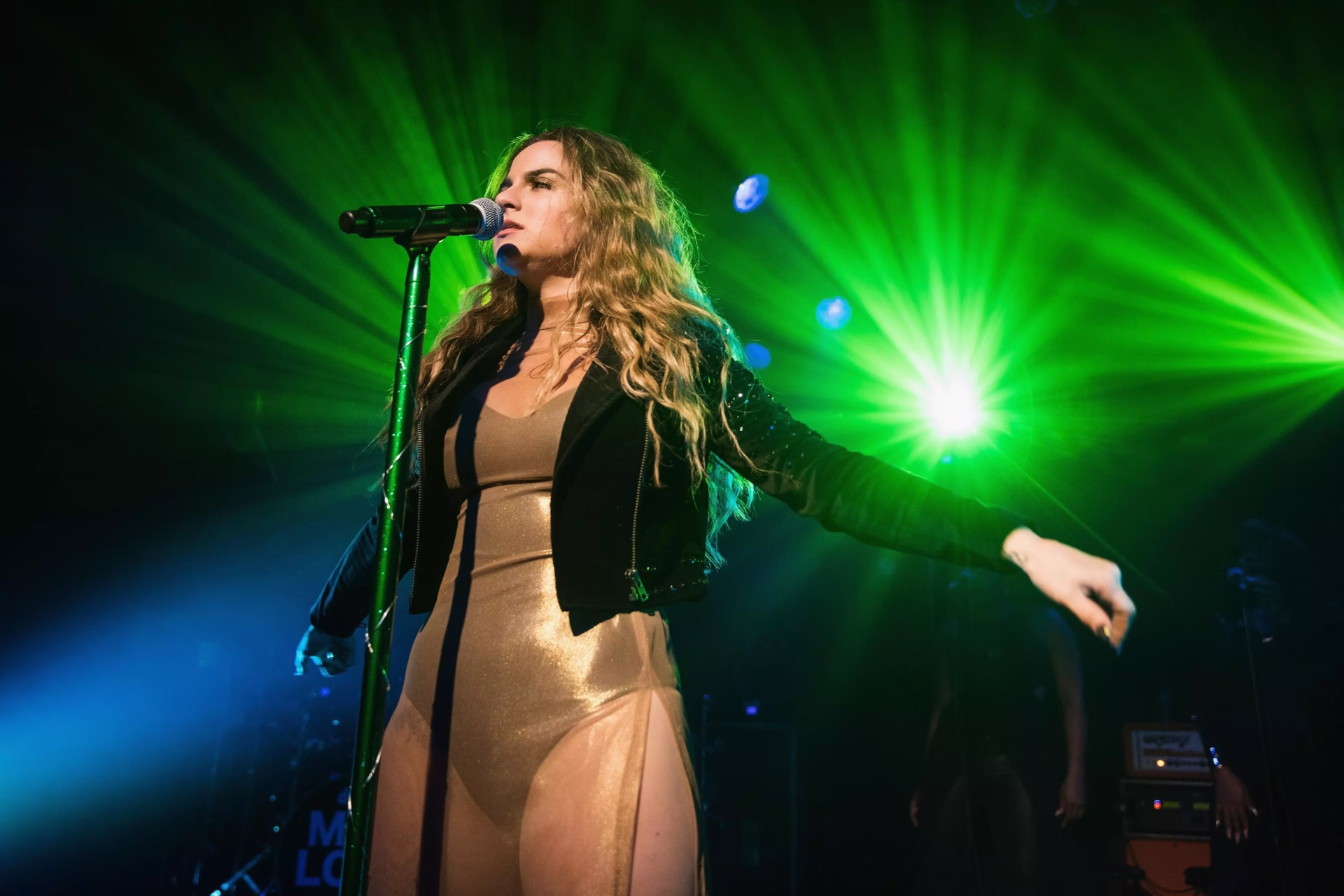
"There are things that just cannot be taken away from me," says JoJo. "And that's my history, my voice, my spirit."
Over the years, that's exactly what the pop star has reinforced, though her approach—always using her voice, her spirit—took a lot of strength and resilience. In an age in which seemingly everything is available at the tap of a finger, JoJo’s first two albums remained absent from the world, as if lost in a patch of quicksand in the music streaming universe. And while dedicated fans of the 28-year-old pop star’s 2004 debut, JoJo, and 2006 followup The High Road, certainly felt their absence, the voice behind them, unable to share her music with the world, felt that loss more deeply.
JoJo signed with record label BlackGround at the age of 12, after having already turned down contracts elsewhere at a younger age. The label was co-owned by Barry Hankerson, ex-husband of Gladys Knight and uncle of Aaliyah, whom he also managed at a point. Hankerson also managed R Kelly and Toni Braxton. The label's output included records from Aaliyah and Braxton, super-producer Timbaland, and R&B singer Tank, among others. But all of those beloved records have been held away from any and every online streaming or purchase outlet. The reasons behind that decision remain unclear, despite many reports attempting to dig into the issue. Many of the artists behind those hostaged records have settled out of court, with confidentiality agreements involved.
After years with her records suppressed, JoJo and her team came to a settlement with BlackGround in 2014. A deal with Atlantic followed shortly thereafter, but the master licensing for the original recordings for her first two albums remained under BlackGround control. Instead of allowing her songs to remain locked away, JoJo decided to record new vocal takes to slightly altered production. Diehard fans finally able to hear those songs rejoiced, but no one’s spirit was as unfettered as JoJo’s.
On the eve of Women’s History Month, JoJo spoke with the Recording Academy about her fight to control her own voice, the process of re-recording songs she first released as a young teenager, and the music that comes next.
<iframe width="620" height="349" src="https://www.youtube.com/embed/4_4b9ZcewYI" frameborder="0" allow="accelerometer; autoplay; encrypted-media; gyroscope; picture-in-picture" allowfullscreen></iframe>
Did you always have a sense that you would be an artist or a musician of some kind?
Always. I was such a creative child! I'm so thankful that my mom nurtured that in me and allowed me to be free and to express myself through various different kinds of art—visual, music, dance, and acting. She didn't stifle that in any way. I always knew that I wanted to live a creative life, to not go a traditional route. And I always loved music more than anything. It made me feel so whole, so understood. And when I sang, I felt like I had found something that made me special, and I felt that from a really young age.
What made you start writing? What was the cause of that urgency?
Even at six years old, I would just be inspired to try and put my own lyrics into melodies that already existed. I started writing at school. I was really lucky to have teachers who fostered my creativity and encouraged me to do extra assignments for creative writing and poetry. That writing turned into songs because I'd like to model what I was doing after songs that I really liked, whether they were Mariah Carey's, Whitney Houston's, or Aretha Franklin's. I was a strangely precocious little girl; I would look at the advertisements in the back of the newspaper for auditions. Somehow I knew that's how you got famous—you had to audition for things. So I was looking for auditions and saying, "Mom, can you take me to New York for this audition? They're looking for kids who can sing and dance and I really want to do that!" I'm just lucky that I had a mom who listened and was willing to take me to those things.
<iframe width="620" height="349" src="https://www.youtube.com/embed/ALvYb4QARzs" frameborder="0" allow="accelerometer; autoplay; encrypted-media; gyroscope; picture-in-picture" allowfullscreen></iframe>
It’s especially influential to have that maternal support in making that dream feel very realistic as well.
There's honestly no other way I could've been so successful so young. I had been offered record deals from the age of nine years old. It was just that precociousness, that old soul. Nothing about the industry, the music itself, or the expectations scared me, nothing. I was very excited by it all.
How rapidly do you feel your perceptions of the industry changed as you got older?
The more experiences that you have with human beings, the more that you learn, whatever industry you're in. Life is all about relationships. So the more you engage in various kinds of relationships, the more perspective you can take into the next situation. As I got older, I got a little bit more conscious of people. My consciousness evolved and I was less naive.
At this point in your career, do you have a typical way that you like to work? Do you have your own studio, or a place in your home where you like to write, or are you needing to constantly adjust?
I do my best to create an environment wherever I am where I can be free, comfortable, and confident. I really like to live a life that's open and to be inspired by conversations and experiences. Something interesting might happen at any moment, and I'll jot it down. I have tons of notebooks, tons of notes in my phone, tons of voice notes with melody ideas. But over the years, I've really learned to love collaboration. I love getting with a co-writer or a producer, coming to the table with certain ideas or influences and seeing what they have as well. That's really special and valuable to me, especially if we're talking about an experience that we can both relate to. It's cool to see different sides of the same coin and to be able to explore it a little bit. I love the humanness that connects us all. I just try to stay open and keep myself in the flow as much as I can, not being closed off, or afraid, or ashamed, or self-conscious.
"I feel like I've got my power back and I'm stepping into the fullness of myself."
You've been through hell with your former label, which makes what you said about the importance of relationships so meaningful. I can only imagine that was such a life-changing experience.
It was definitely frustrating to feel like my history was just being swept under the rug. I've been building this career since before I was 12 years old. I feel like I've got my power back and I'm stepping into the fullness of myself. I spent a lot of years feeling like there was nothing I could do, feeling unempowered. It was fulfilling to find a solution—taking action, going back into the studio, re-singing the songs, collaborating with producers to have them remix these tracks, and re-releasing my first two albums. It’s amazing to have my fans understand what that meant and what the time commitment was, and amazing to have them be received the way they were. It made me feel like it wasn't in vain. It was crazy that it got to this point, but I like solutions, and instead of being overwhelmed by what I can't do, I wanted to focus more on what I can do and move forward, because I'm tired of looking backwards.
I wanted to take control of my narrative in a tangible way, and this enabled me to do that. I wanted to put this out before I put out any new music so I could really get in touch with that carefree spirit that I had when I first started recording my first album, before things got really difficult for me in my professional life and personal life. I found my voice again through this process. I've been having conversations with other friends who are also in their 20s, and it seems like there's a similar theme going on: we're all wanting to get in touch with that inner child and to remember how we felt before life got in the way of who we truly are: that fearlessness and that true inner essence.
Recreating any sort of magical artistic moment is so tricky. Did you just jump right into it?
I just put my head down and did it, and with each song I went back and I had vivid memories of being in the studio the first time. I didn't try to recreate it exactly because I don't sing today like the little girl that I was back then. The voice changed and has more body now than it did back then. I wanted to take where I am now and relate to the songs in a natural way. I really just tried not to psych myself out about it. I tried to be as true as possible. Sometimes it felt like I was covering another person's songs. It was kind of trippy to remind myself that we're one and the same, and to bridge that gap. This is really for my fans, because I saw that people were asking where they could hear my first two albums, and I didn't want it to come across like I was holding them back, or any weirdness like that. I just wanted to feel in control again.
And as a woman in the music industry—or sadly any industry—you must have felt countless pains. But it’s inspiring and energizing that you were able to reclaim that music. How much of your strength was attached to that identity of being a woman in the music industry?
So much! I really needed to go through this in order to get some strength back and to feel like I'm firmly standing on solid ground. There are things that just cannot be taken away from me … and that's my history, my voice, my spirit. In any industry where there's money involved, and ego, I think that it can get very convoluted and challenging. I wanted to remember why I love this, and it's because of how music makes me feel, how I can connect with as many people as possible. It would have been really hard for me to move forward because my spirit was broken through the process of feeling like I was losing my identity.
"I wanted to remember why I love this, and it's because of how music makes me feel, how I can connect with as many people as possible."
Where did you mine the courage from to achieve that?
Well, I certainly don't think about it as being courageous. I just refused to give up. I wanted to choose to see obstacles as opportunities—and that's what my team and I have done for the past 10 years. Now that I'm free, making a new album, and working on a joint venture with Warner Bros., I'm more empowered and excited than ever. It's constantly checking your mindset, and saying, "Do I want to be depressed about this, or do I want to find a better way to perceive my circumstances?" We have to check ourselves and ask those questions every day, because we're more in control than we think we are. That's what I needed to come to terms with. There were certainly moments where I was in a dark headspace, but that's why you can't do it alone. My fans' support, the way that we are engaged with each other, is invaluable to me. And I wouldn't have continued on in the way that I have if it weren't for them.
<iframe width="620" height="349" src="https://www.youtube.com/embed/YJfyinq35Xk" frameborder="0" allow="accelerometer; autoplay; encrypted-media; gyroscope; picture-in-picture" allowfullscreen></iframe>
Were there certain things about the process that you were surprised to learn, things that you wish someone would have told you when you were younger?
When I signed my first record deal, I was 12 years old, and my mom read a book called All You Need to Know About the Music Business. I think she learned a lot of valuable stuff in there, but there were also things that were not included in that book. I know that we trusted the people that I was signing business contracts with, and we trusted that they had my best interests at heart and that we were truly like a family. It's important to separate business from family and friends and knowing that you can't trust what somebody says—you need to get it in writing. We didn't understand that I didn't own my voice. I had to get permission to do anything with my voice that could possibly make money for the record labels that I was signed to. They chose many times not to let me do certain things because they wanted more money. I wish we had known to go over contracts with a fine-tooth comb. But to be honest, I don't live my life that way, where I'm looking backwards and thinking what if, thinking in retrospect, because it's just not constructive. So I think about how I can move forward and have more ownership and more empowerment, and encourage young people to think about how much they want to give away of themselves and to be protected.
You're working on new music, pushing forward, focusing on who you are, who you can be. What does that music look like?
It's really eye-opening to dive deeply into myself and connect with myself in a way that I really never have. I'm stepping out of my comfort zone, sonically, even in the way that I'm singing. I just want to continue to grow. I feel like if I'm not growing I'm dying. That's what's exciting me right now. I have nothing to hide. I want to tell all my stories so that I don't feel ashamed of anything. I've had a lot of experiences as a woman—some good, some not so good. I want to control that narrative because I think a lot of times as women we feel ashamed for things that we've done, and instead of feeling that, I want to connect with others because I think there's strength in being vulnerable. And I want to find that.
Is there something creative that you haven't done yet that you'd still like to do?
I'm really interested in directing. I would really like to start shadowing directors and getting more involved in that. I'm really inspired by how a lot of artists are being hands-on in that way and have been for a while. I just bought a place in L.A., and I'm really interested in the curation of making that a home and how developing a personal style and an aesthetic is something that can carry you through different areas of your life.