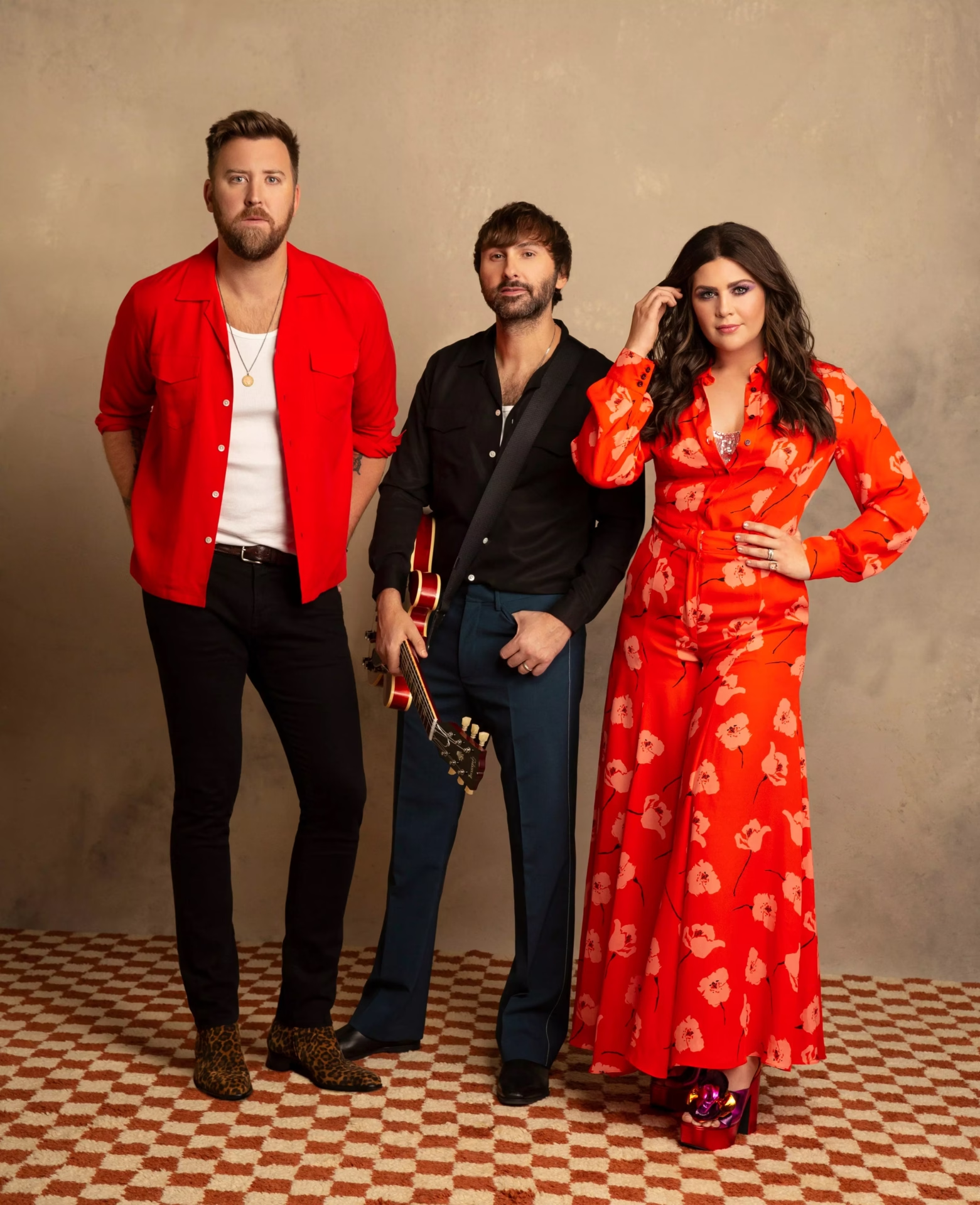
Like many artists, Lady A had plans derailed in 2020. The country trio had released their eighth album, Ocean, in late 2019 and had a four-month summer tour planned before the coronavirus pandemic hit. Despite having a new album in tow, the group decided to use their unexpected downtime to write more music — and it turned out to be the best thing to happen to them.
<style>.embed-container { position: relative; padding-bottom: 56.25%; height: 0; overflow: hidden; max-width: 100%; } .embed-container iframe, .embed-container object, .embed-container embed { position: absolute; top: 0; left: 0; width: 100%; height: 100%; }</style><div class='embed-container'><iframe src='https://www.youtube.com/embed/daKOnOFBh4c' frameborder='0' allowfullscreen></iframe></div>
Not only did the band end up with a whole album worth of new songs, but they also found a deeper meaning to what they do. Those developments combine on "What a Song Can Do," the title track from their first project under their new shortened moniker. (Originally Lady Antebellum, Lady A changed their name in light of the Black Lives Matter movement last year because it has associations to the slavery era. The name change resulted in a controversial lawsuit with soul singer Anita White, who says she has performed under the stage name Lady A for decades. As of press time, the artists have not reached an agreement, but the band has suggested in recent interviews that their "intentions were misunderstood.") The trio released the first half of the album with a 7-song collection on June 25.
"It was a transformative year for all of us," singer Charles Kelley says. "It only brought us stronger and closer. We have more purpose now because of this past year."
GRAMMY.com caught up with Kelley and his Lady A bandmates, Hillary Scott and Dave Haywood, about how their perspectives have shifted throughout the past year and the meaningful music that came out of it.
I imagine that this project is mostly a result of the downtime you've had in the past year or so?
Haywood: We had Ocean, and we were gearing up for the whole tour for Ocean when the pandemic hit. So that was just a bit of whiplash. We really hadn't written since we put out Ocean. So we went back to the drawing board. It’s pretty much our collection from 2020.
Kelley: We wanted it to be a reflection of where we are right now. Songs like "Fire" and "Worship What I Hate" are such an autobiography of how we were feeling during this time — trying to assess our addiction to social media or drinking too much, or unhealthy habits. It's a very hopeful record as well, with songs like "What a Song Can Do." It does feel like a very authentically Lady A record.
<style>.embed-container { position: relative; padding-bottom: 56.25%; height: 0; overflow: hidden; max-width: 100%; } .embed-container iframe, .embed-container object, .embed-container embed { position: absolute; top: 0; left: 0; width: 100%; height: 100%; }</style><div class='embed-container'><iframe src='https://www.youtube.com/embed/t_oMxYitTms' frameborder='0' allowfullscreen></iframe></div>
What have you taken from the past year?
Kelley: I think we learned a lot about ourselves and what we want to represent as a band — the message we want to send and the example we want to be for our kids. We want our music to be a place that everyone feels they can be a part of. This year has put so much of that into perspective and only made us even more determined to grow our philanthropic efforts, and just grow as human beings.
When you selected "Champagne Night" on Songland, Hillary said it was "what we need in our catalog right now." The vibe of this collection fits what “Champagne Night” brought — do you feel like that song kind of ignited a fire in you?
Scott: It definitely did. And we've had to kind of grieve the fact that we never got to really perform it in front of anybody. [Laughs]. That experience was really incredible. It stretched us creatively in a way that we've never been stretched before. When we heard ["Champagne"], we were like, "This is gonna fit so great in a live show."
Kelley: I keep being reminded that we have two number ones that we haven't really gotten the tour on. It’s going to be interesting to see where we can put that into a setlist and see that reaction.
I think "What A Song Can Do" is going to have a great reaction live because of how the message will resonate with fans. Is there a song in your catalog that you’ve felt the most impact from?
Haywood: "I Run to You" stands out as a song that's provided a lot of hope, encouragement, and inspiration to people.
Kelley: The lyric: "This world keeps spinning faster to a new disaster, so I run to you." It’s funny, that song was almost meant for this time. We leaned on each other so much. We leaned on our spouses so much. That one is probably even ahead of "Need You Now." Lyrically, it’s the song I'm most proud of being a part of.
Scott: There was another song on our [first] record called "One Day You Will." I see a lot of pictures of people with that [phrase] tattooed on their body. It’s one that’s just struck a chord. That is one of the most special parts of what we get to do — seeing how we're being invited into people's most personal moments in their lives through our music. That's a gift.
<style>.embed-container { position: relative; padding-bottom: 56.25%; height: 0; overflow: hidden; max-width: 100%; } .embed-container iframe, .embed-container object, .embed-container embed { position: absolute; top: 0; left: 0; width: 100%; height: 100%; }</style><div class='embed-container'><iframe src='https://www.youtube.com/embed/wY2GLITkUyw' frameborder='0' allowfullscreen></iframe></div>
Does anything feel different now that you're kind of in this new, fresh chapter of your career?
Scott: We're all having a bit more nerves than we've had in years past, just because we're entering back into these environments. We’ve said it a lot, but it feels new again. That can be a little scary — and also really beautiful — for something we've done together for so long to feel new again. More than anything, we're just excited to get into some good, lengthy rehearsals, get our lungs back and envision the show.
Kelley: We're closer than we've ever been, too. We leaned on each other so much during this time. In a weird way, we kind of grew confidence by sharing all those fears and insecurities, and then coming out and going, "Alright, we're still here, we're still doing this, let's make some music and do what we feel like we were called to do."
Haywood: Just a lot of gratitude. I think that's just the keyword for us. The respect we have for each other, and the validation in what we all bring to the band.
Speaking of what you all bring to the band, do you ever get blown away by your own harmonies? There are so many haunting moments on this project — you must feel it too sometimes.
[All laugh]
Haywood: When we're in the studio and we get to the finishing stages when all of the harmonies are together, there's definitely moments that give me chills. Like, Ooh, there's that duet thing I remember from "Love Don't Live Here." Or There's that harmony that hit on "All We'd Ever Need" from our first record." [Sometimes] it's like, when our three voices [are] together, they sort of sound like one voice, right? So there's just a neat texture and thing that happens when it's all together. It's exciting.
February marked 10 years since your huge night at the GRAMMYs with "Need You Now." When you think back to how you were feeling that night, do you remember thinking anything about what the future held for you as a band?
Haywood: I mean, it was one of the biggest moments we've ever had. There was kind of life before that night and then life after that night. I remember I was out to lunch at a random restaurant the next day, and people were commenting like, "Oh my gosh, y’all we're awesome last night!" And it was like, "Wow, a lot of people know our music now because of that night and what Need You Now was able to do." It was a total life-changing, career-changing moment. It still feels surreal 10 years later.
What are you looking to accomplish in this next chapter of Lady A?
Scott: I think it's just continuing to rein in our own personal growth. The music, the relationship, the friendship we have. It's wanting to just continue to deepen as people and together as a band, and to forge ahead in the message that we want to leave this world with — which is that our music is unifying and hopefully makes people feel welcome. And helps them process their emotions. [Laughs]
Kelley: I just think there's so much more that we want to accomplish as a band, and not necessarily from a success standpoint, but just from a musical standpoint and on a human level. I'm feeling more hopeful and purposeful now than we had in the past. There's a responsibility to where we are as human beings and parents and all that stuff.
I wonder if that's maybe why this project feels so powerful because you are more hopeful as a group and there’s more purpose behind it.
Haywood: I hope people feel that we've lived some life in these 15 years as a band, and there's more wisdom and more perspective that we can share in our music. That's our goal, to continue to show where we are, what we've learned and the type of people we are.
Would you say this is the most Lady A that Lady A has ever been?
Haywood: Absolutely. It starts and ends with the three of us. If we're excited, happy, and pouring our hearts into this music, that's where we feel the success and where we feel the most fulfilled — when things feel like they're working between us creatively. I feel like we’ve found a sweet spot with that.
Kelley: Watching other artists kind of go through what we did, [realizing], "Okay, we're not new. How do we kind of redefine ourselves?" Sometimes you lose sight of songs that are truly your core, and I do think there were times that we were chasing radio a little bit, trying to predict what would be a hit instead of just doing what we do.
Our first single with this new label, "What If I Never Get Over You," was a prime example of [realizing] that this is what the fans want. They want you to be you. This album is taking that one step further. Songs like "Talk of This Town," "Fire," "Worship What I Hate" are some of the most present songs we've ever written. They're very much about where we are right now. I think that's definitely going to continue to be our approach moving forward.
What hints can you share about what's coming in chapter two?
Haywood: There's a really exciting collaboration on chapter two. It's going to be a really fun, summer country song that we've never done anything like before. There are definitely some more upbeat moments on the next one, some more personal parts. The rest of the story is coming up.