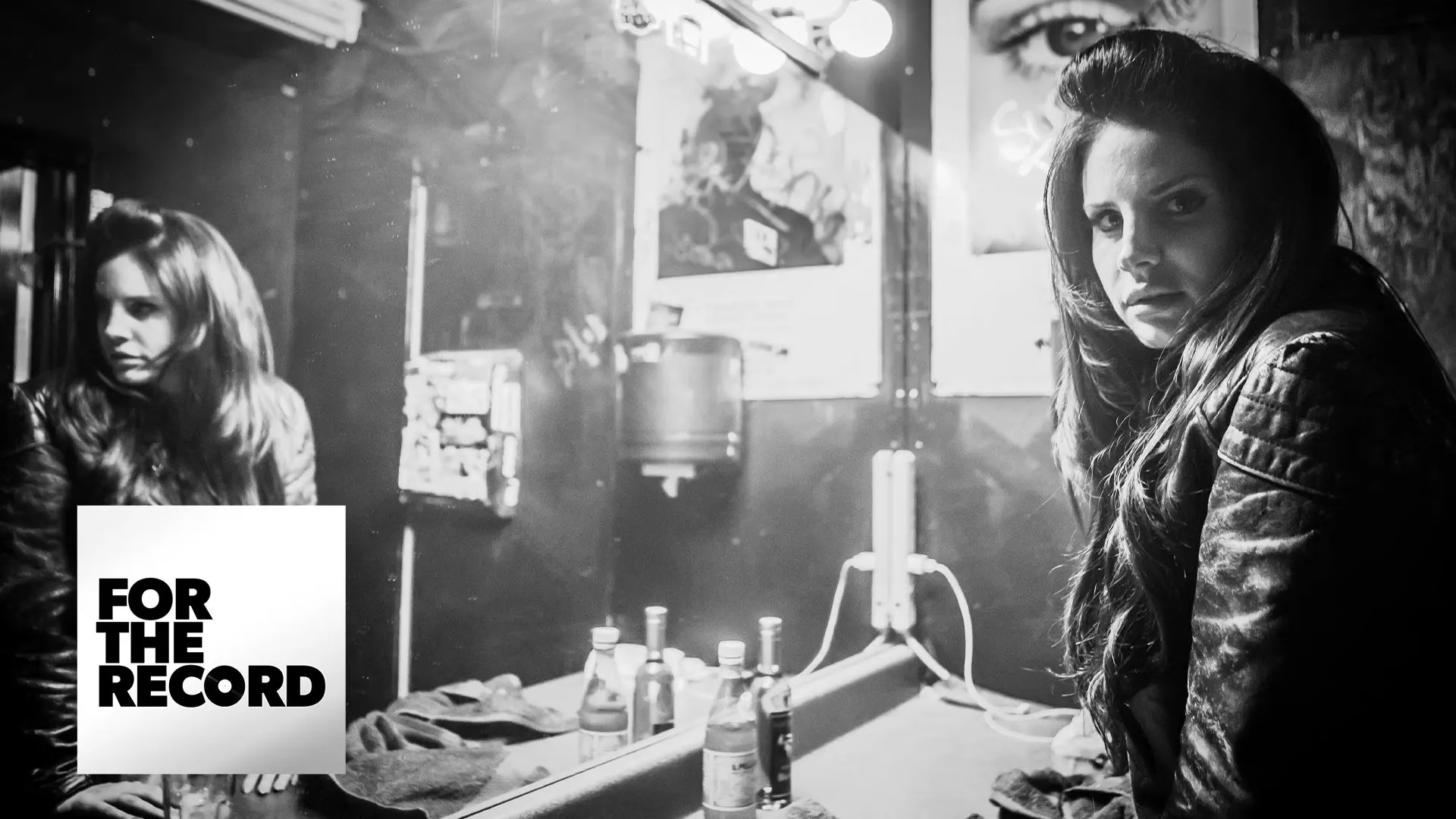
When Lana Del Rey released her sixth album Norman Fucking Rockwell! in 2019, it felt like a coronation. Beyond the immediate critical approval, the album was nominated for a number of GRAMMYS, including Album of the Year, and appeared on major publications’ “Best of the Decade” list. It was a fitting reward for a pop mainstay, but it didn’t happen in a vacuum — and it doesn’t quite capture just how influential she has been for an entire decade.
Upon the release of her major-label debut, Born To Die — released 10 years ago today, on Jan. 27, 2012 — Lana Del Rey arrived as a game-changer for pop and music as a whole. With an orchestral production flair and a deep sense of melancholy in her lyrics, she planted the seeds not only for her own success, but for the sounds that would guide some of the decade’s biggest pop stars.
While it’s not Del Rey’s first album (she digitally released a self-titled album under the spelling Lana Del Ray in 2010), Born To Die did serve as her sort of formal introduction to the world. At the time, though, the pop landscape wasn’t exactly ready for her gloomier vibe: Dominated by the likes of Katy Perry, Lady Gaga, a young Justin Bieber, and a newly minted One Direction, early 2010s-era pop was defined by brightness in sound and optimism in spirit. Sure, they sometimes sang of heartbreak and pain, but the pain was temporary, and usually backed by uptempo beats and bright, open synths. The stars and their music might have been sad for fleeting moments, but they were not necessarily sad at their core.
In comes Lana Del Rey, who was freshly signed to a deal with Interscope Records, and wasted no time shifting the perspective of pop music with the Born To Die lead single “Video Games.” The slow, sparse intro of chimes and harp — which opens into a symphonic flood — was unlike anything happening in pop at the time; there’s not even percussion until a snare drum comes in over the second half of the track. And while Del Rey’s voice has undeniable power, she lets it shine through a controlled and steady march, never belting.
The rest of Born To Die sticks to this sound, never straying from Del Rey’s vision of baroque pop. The title track begins the album with prominent strings, a common thread throughout the album — from the crescendoing roar of “National Anthem” to the eerie, haunting “Dark Paradise.”
It was a bold and unexpected choice in the context of pop music at the time. What’s more, it wasn’t just done in a single song: Here was a full album that could embrace the trends of where pop was headed, drawing more from hip-hop than rock — deftly weaving hip-hop’s influence into the record with ad-libs and perfectly placed beats — while still making it sound like a full orchestral suite.
Beyond sounding different, Born To Die felt different. There was no veneer of melancholy layered amongst danceable beats; all 12 tracks radiate a deep, profound sorrow. More than just mourning superficial breakups, Del Rey’s anguish reaches farther, whether it’s a world designed to pit women against each other in the name of “love” (“This Is What Makes Us Girls”); the commodification of beauty and womanhood (“Carmen”); or a profound nihilism and loneliness (“Summertime Sadness”).
The latter track introduced Lana Del Rey to a more mainstream audience 18 months after Born To Die's release, when French DJ Cedric Gervais dropped "Summertime Sadness (Remix)." The GRAMMY-winning remix amped up the downtempo original with synth-laden production and punchy beat drops, ultimately turning the track into a sleeper hit — and Del Rey's biggest to date — by landing at No. 6 on the Billboard Hot 100.
Yet, the albums that followed Born To Die showed that tasting commercial success didn't steer the singer away from her unique stylings. And even if the "Summertime Sadness" remix had something to do with listeners catching on, Del Rey's sad-to-the-core music clearly made an impact: Born To Die went platinum in January 2014, five months before its follow-up, Ultraviolence, debuted at No. 1 on the all-genre Billboard 200 albums chart. (Not only is BTD now certified 3x Multi-Platinum by the RIAA, it has also spent 400 weeks — more than 7 years' worth — on the Billboard 200.)
The truth that Del Rey unveiled has pervaded throughout pop in the decade since. It's hard to imagine something like Lorde's intimately vulnerable Melodrama or the divorce-inspired tales of Kacey Musgraves' star-crossed or Adele's 30 resonating quite as deeply without Born To Die coming first.
Sonically, it hasn't been uncommon for some of the biggest pop stars on the planet, from Kesha to Ariana Grande, to incorporate string arrangements into their tracks. Del Rey herself continued to pioneer the symphonic sound over the years, most heavily on 2015's Honeymoon.
Taylor Swift herself, whose sister albums folklore and evermore share a similar somberness to the softer moments on Born To Die, has acknowledged Del Rey's monumental place in the world of pop. While accepting the Billboard "Woman Of The Decade" award in 2019, Swift called Del Rey "the most influential artist in pop," adding that her vocal stylings, lyrics and aesthetics have "been repurposed everywhere in music."
Born To Die also ushered in plenty of cultural influence, too. As Tumblr sees a resurgence, so does the sad-girl persona that is "Tumblr Girl," largely a mirror of Lana Del Rey's aesthetic. In fashion, flowing dresses, frilled jackets and flower crowns (which are now festival staples) can all be traced back to Born To Die's single art and music videos.
Though turning West Coast Americana into an art form is not a new phenomena, Del Rey popularized it on an unprecedented scale while also utilizing it to further her lyrical message. She flipped symbols of the American Dream — flags flowing, muscle cars speeding down the highway — from images of triumph into portrayals of sadness, like the male protagonist carrying Del Rey's bloody body from the wreckage in the "Born To Die" video.
Del Rey adds to those themes within her lyrics, smartly criticizing the rose-colored glasses that have tainted American history. Take Born To Die single "National Anthem," whose patriotic imagery builds up a dream relationship before revealing the pitfalls of a manifest-destiny mindset in the bridge. "We're on a quick, sick rampage/ Wining and dining, drinking and driving/ Excessive buying, overdose and dying/On our drugs and our love and our dreams and our rage," she sings.
The singer/songwriter has refined this approach since Born To Die, eventually perfecting it on Norman F****** Rockwell!, an album named after one of the most recognizable American artists and searing in its cultural criticism. Del Rey first continued her Americana disillusionment with 2021's Chemtrails Over The Country Club, which sonically delved into sparser folk elements. Her second 2021 LP, Blue Banisters, brought back the emotional intensity of her early Born To Die days with even greater maturity and lyrical flair.
Ten years in, Lana Del Rey has gone from boundary pusher to trendsetter within music and culture. She allowed pop to be sad, further pushed it towards its future of hip-hop and orchestral sensibilities, and crafted powerful imagery as poignant as it was memorable.
As she charted a path for something different, she also cemented herself as a critically and culturally adored pop star. Born To Die didn't just introduce the world to Lana Del Rey — it allowed her to mold it for years to come.