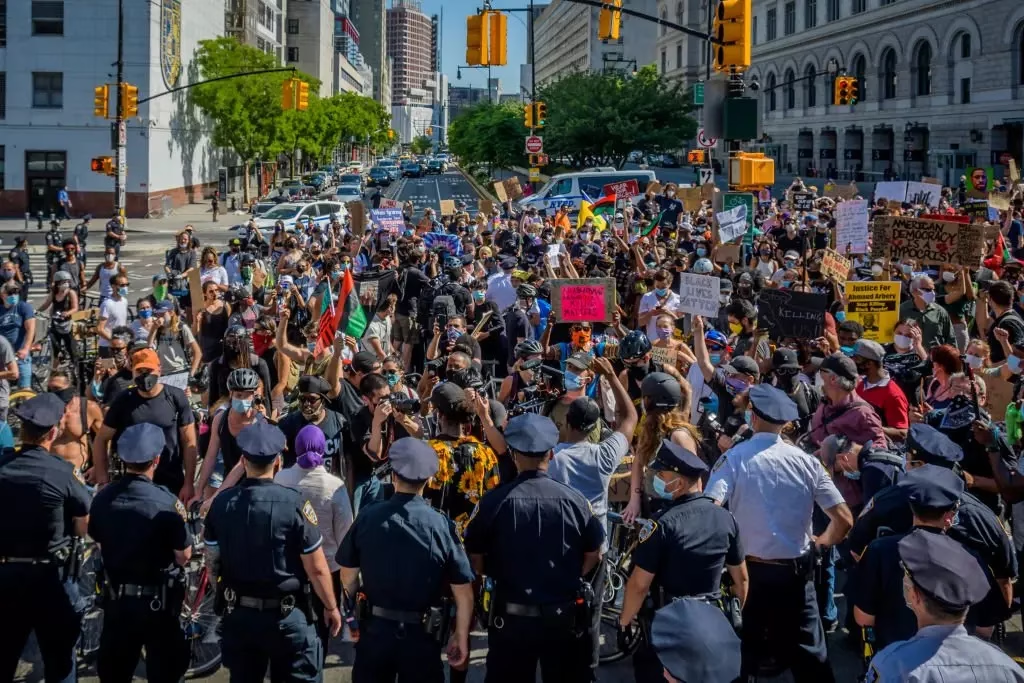
Over the past few weeks, protests have been staged across the nation in response to the deaths of George Floyd, Breonna Taylor, David McAtee and many other Black people at the hands of police. Due to increased police presence and the deployment of the National Guard to several major cities, thousands of protesters have been arrested, and many violent incidents involving the police have been filmed and subsequently gone viral.
Palika Makam, who works at the human rights organization WITNESS as senior U.S. program coordinator, writes in Teen Vogue: "Using the camera in your pocket can be a valuable way to ensure the world bears witness to abusive policing and systemic racism, help hold authorities accountable, and advocate for the real safety of our communities."
As protests continue amid the coronavirus (COVID-19) pandemic, the Recording Academy has compiled a list of ways to safely and ethically film incidents involving police misconduct.
Record With The ACLU Mobile Justice App
Depending on which state you live in, you can download the ACLU’s Mobile Justice App (for example, in California, the app is called “Mobile Justice CA”). The ACLU’s app lets you record and report interactions with law enforcement, and all footage and reports submitted are sent immediately to your local ACLU affiliate.
Understand Your Rights
As WITNESS explains on its website, laws around filming authorities vary by country, so it helps to understand your rights before you hit “record.” In the U.S., you have a 1st Amendment right to record law enforcement in public spaces as long as you don’t interfere. Check out these tips from Makam:
- Whether or not you are interfering is totally up to the police officer in the moment (and later up to a judge or jury), so it’s best to keep at least six feet of distance (or a car’s length) between you and the incident while filming, especially during social distancing.
- If the police officer tells you to back up, comply with their orders. You can even film your feet as you’re backing up and say aloud, “I’m complying with orders.”
- If the police officer tells you to stop filming, you can assert your right to film if you feel comfortable doing so.
- You can stay safe and still film critical footage from a distance, like from a window, balcony, rooftop, or fire escape.
Verify That You Are The One Recording, And Where You Are
WITNESS recommends speaking into the camera to verify that it’s you doing the recording. “Alternately,” they write, “keep a written record with the original video file. If you need to be anonymous for security reasons, use a code name.”
WITNESS also recommends that you document where and when the incident is occurring. “Your media is easier to verify if you capture the date, time and location of your footage. If possible, turn on automatic date, time and GPS location capturing features. Alternately, film newspapers, intersections, street signs and landmarks.”
Prepare Your Device
If your phone does not have a six-digit passcode, it would be wise to set one up—in addition to a touch ID, face ID and/or pattern lock. As Makam writes, “You have a 5th Amendment constitutional right to not give up your cell phone passcode during a legal search. But that right is murkier when it comes to touch ID, face ID, or pattern lock, and courts have ruled both ways in the past. So it’s safest to just stick with a six-digit passcode for now.”
Also, Makam recommends that you set your phone to automatically back itself up to the cloud, be it Dropbox or Google Drive. Therefore if you were to lose or break your device, anything you record won’t be lost.
Know The Right Tools To Bring
WITNESS recommends a checklist of tools for capturing your surroundings, should you be out at a protest: an external microphone to potentially record interviews, extra memory cards, headphones, a tripod, a notebook and pen for recording dates, times and locations, and an extra battery and charger.
Have Help Readily Available
WITNESS also recommends bringing a partner or friend with you to protests to help keep you safe and watch out for important situations to document. “Memorize emergency contact information, or keep it written in a secure location,” they write on their site. “Use a camera strap or tie your camera to your wrist. Know your equipment. If you can’t run with it, don’t bring it.”
For more information for how to safely and ethically film police misconduct, visit WITNESS’ site, the ACLU or read Makam’s Teen Vogue piece in full.
Want To Support Protesters And Black Lives Matter Groups? Here’s How