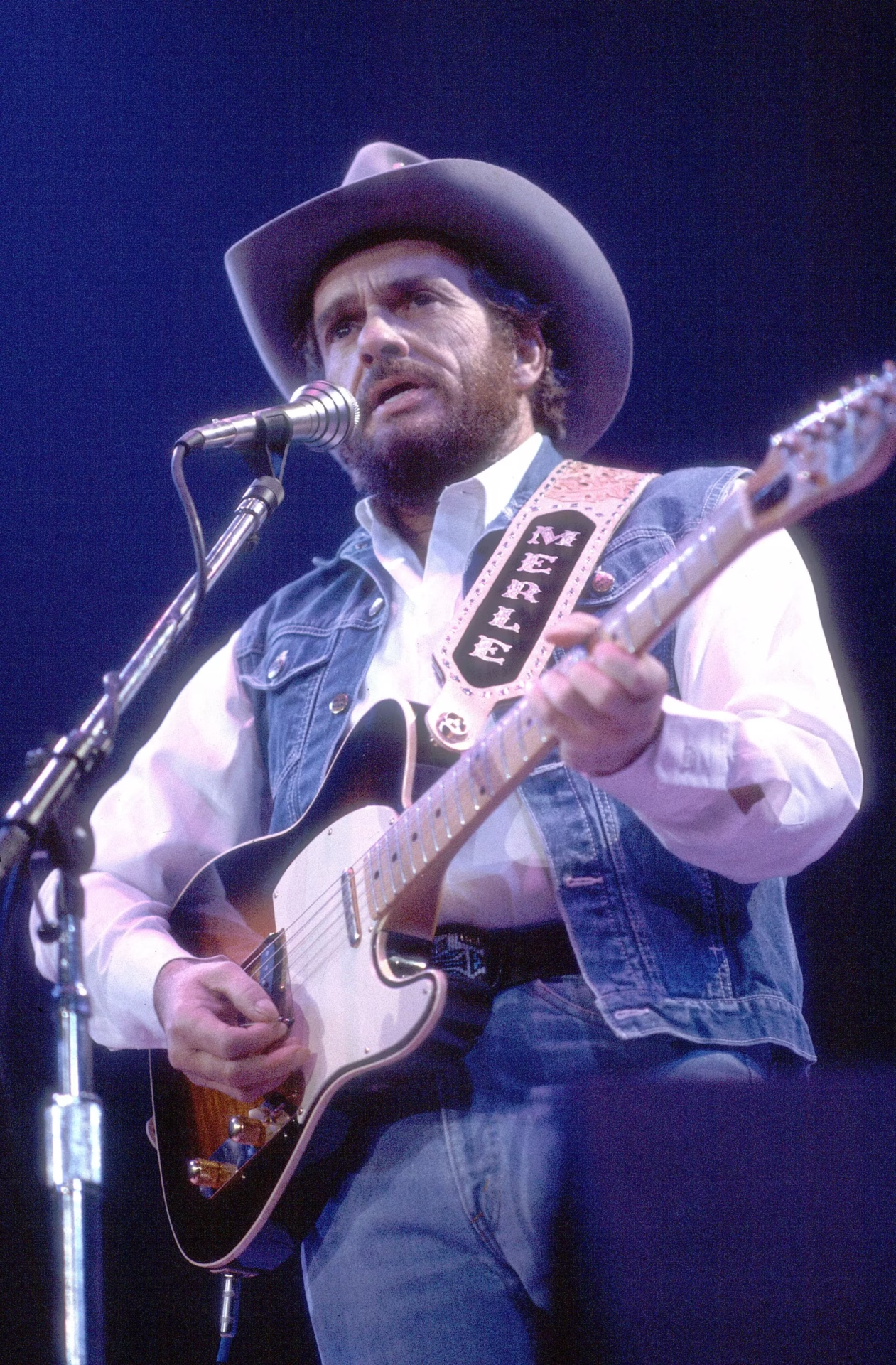
Two-time GRAMMY winner and country music legend Merle Haggard died April 6 after a battle with pneumonia and a history of lung cancer. He was 79.
Haggard was born just outside Bakersfield, Calif., and after a troubled youth that would inform many of his greatest songs, ultimately helped put the California city on the country music map by creating the "Bakersfield Sound" alongside such contemporaries as Buck Owens. Hits such as "The Bottle Let Me Down," "Okie From Muskogee" and "Mama Tried," which was inducted into the GRAMMY Hall Of Fame in 1999, often told the story of a recalcitrant anti-hero in music that brought elements of rock, blues and folk to straight honky-tonk. Unlike the legend that sprang up around Johnny Cash, Haggard really did do time at San Quentin prison, and he put his experiences into songs that would touch millions.
Haggard won the Best Country Vocal Performance, Male GRAMMY for 1984 for "That's The Way Love Goes" and won Best Country Collaboration With Vocals for 1998 for "Same Old Train," on which he was joined by numerous artists, including some he influenced, such as Dwight Yoakam. He was presented with a Recording Academy Lifetime Achievement Award in 2006. On that occasion, in an appreciation for the GRAMMY program book, Yoakam wrote: "His voice and words were at once so succinctly pure yet racked with an emotion that was so devastatingly honest it defied comparison or categorization. What Merle Haggard did for me, and no doubt millions of others, was ease the feeling of being a stranger to love and a fugitive from life."
Haggard was inducted in the Nashville Songwriters Hall of Fame in 1977 and the Country Music Hall of Fame in 1994, and was among the honorees receiving the Kennedy Center Honors in 2010.
"Merle Haggard was an uncommon hero in country music," said Recording Academy President/CEO Neil Portnow. "Merle's massive success was rooted in his masterful ability to celebrate the outlaws and the underdogs."
