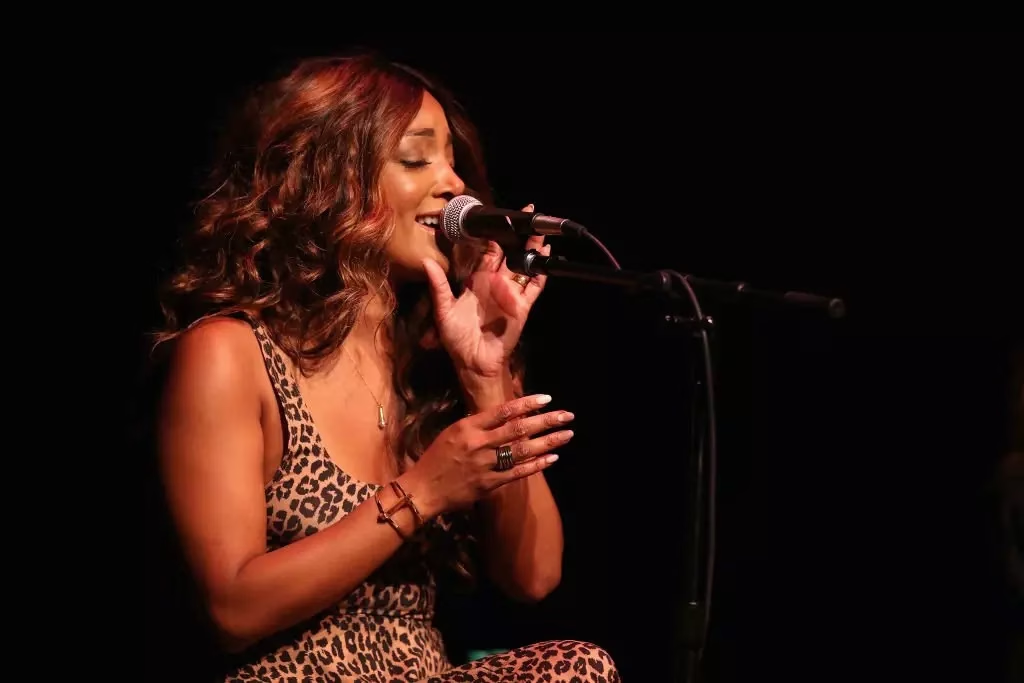
Country performer Mickey Guyton is a self-acknowledged rarity in the predominantly white, male-dominated Nashville music scene. To that end, the Texas native, who grew up loving Dolly Parton and Whitney Houston in equal measure, recently released the piano-driven "Black Like Me" on the music industry's Black Out Tuesday. The song details her experiences as a black woman working toward a life and a career in country music.
With Black Lives Matter protests being staged across the nation in response to the deaths of George Floyd, Breonna Taylor, David McAtee and many other Black people at the hands of police, GRAMMY.com checked in with Guyton to get her perspective on the Black Lives Matter movement, being a Black woman in country music and how the music industry at large can contribute to real change.
<style>.embed-container { position: relative; padding-bottom: 56.25%; height: 0; overflow: hidden; max-width: 100%; } .embed-container iframe, .embed-container object, .embed-container embed { position: absolute; top: 0; left: 0; width: 100%; height: 100%; }</style><div class='embed-container'><iframe src='https://www.youtube.com/embed/BKximTk8JCM' frameborder='0' allowfullscreen></iframe></div>
How would you describe our current situation?
Our current situation feels extremely chaotic. It seems like there is so much confusion for everyone.
How do you feel we got to the current state of affairs in our country ?
I believe our country got used to complacency. We got too comfortable. What we don’t know doesn’t hurt us. But it actually hurt us a lot. We just didn’t realize it until now.
As a Black woman in country music, how would you describe your professional journey?
My professional journey has been very difficult. It was hard trying to find my footing in a predominately white male-dominated industry. I had to really become comfortable with who I am and find my own voice and way in an industry that seemed to have a specific path that you had to follow in order to make it.
How can the music community at large contribute to creating change?
The country music community can first contribute to creating change by showing their fans that racism has no space in this country, as well as within the country music community.
What are you doing to activate/advocate?
First, I am speaking truth in love. I am openly talking about the issues I’ve seen and experienced within the industry. I am actively advocating not only for women of color but white women in this industry as well. I am on the ACM's diversity task force working to diversify the ACM Awards. I am also mentoring young Black and brown talent. I didn’t really have a mentor in this industry coming up and I believe it is important to lift up other women even as I strive for my own success.
How are you coping?
There are good days and there are bad days. It’s hard getting constantly attacked for fighting for what is right. Because Covid-19 has us all inside, I have spent time with my husband and two cats and two dogs. I'd be lying if I said I was OK all the time. This has all been heavy. I just pray a lot. Because I have had so much down time, I have really taken the time to write as much as I can and focus on music to heal my heart and hopefully yours as well.
In your opinion, what should non-Black people be doing to support the Black community?
Support Black-owned businesses during this time.
The COVID-19/coronavirus pandemic has undoubtedly rocked the music industry as a whole. How has it affected you personally?
When Covid-19 first hit the U.S., I had just released a new song ["What Are You Gonna Tell Her?"]. And when the lockdown happened, all the plans for that single abruptly halted. It has honestly been pretty devastating. How do you promote music when people have lost their jobs or don’t know how they are going to buy food? It just doesn’t seem right. There doesn’t seem to be any end in sight and there are still so many unanswered questions. I’m also asthmatic, so I’m honestly really scared. I’m not always OK, as I’m sure most people aren’t really OK.
What has this moment taught you?
This moment has taught me that family and human relationships are the most important, tangible thing that we have and we should cherish that with all of our hearts.
Moments like this can be a springboard for creativity or innovation. Has that been your experience?
Actually, it has been my experience. I have gotten more done and made more progress stuck in my home, than the eight years I spent living in Nashville full-time. I guess I have been so afraid of being left behind that I have worked that much harder to establish my place here in the industry.
Want To Support Protesters And Black Lives Matter Groups? Here’s How