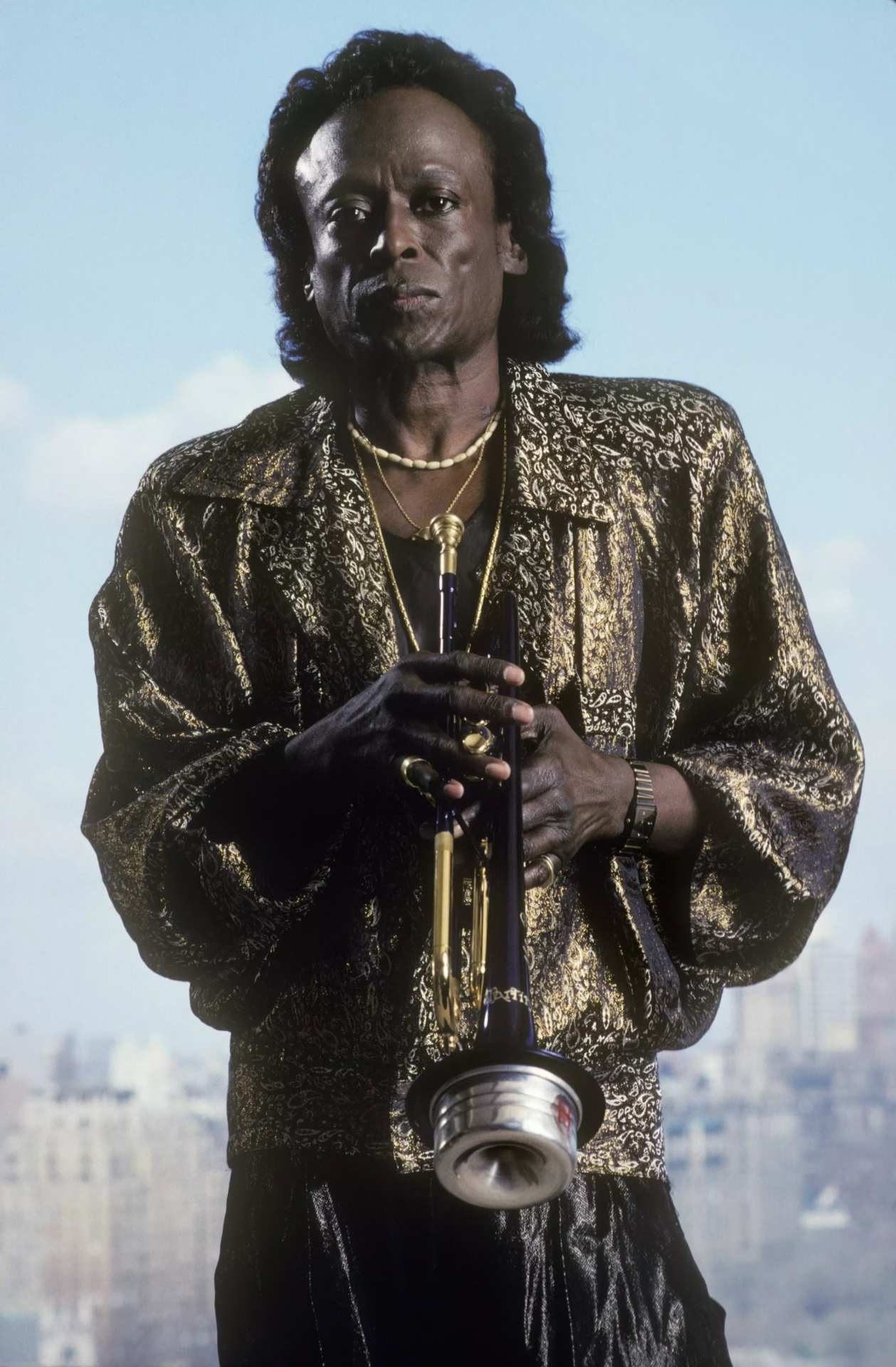
An international team of researchers has added to the many ways Lifetime Achievement Award recipient Miles Davis will be remembered. One might think having 10 albums in the GRAMMY Hall Of Fame means his explorations of new dimensions in jazz will always be preserved — but now his legacy has been encoded on DNA.
Leading Swiss polytechnic EPFL has been working with the Montreux Jazz Festival to address the long-term digital storage of its archive. Joined by researchers from Microsoft, Twist BioScience and the University of Washington, Davis' performance of "Tutu" at the festival has been recorded in DNA and played back with complete accuracy. Deep Purple's "Smoke On The Water" was also encoded in synthetic DNA.
Now, inspired by fossils, experts are confident that musical data recorded as artificial DNA — the data storage medium used by every protein-based life form — has the potential to literally last for ages, even geological ages.
<iframe width="560" height="315" src="https://www.youtube.com/embed/mILu11yqtG8" frameborder="0" allowfullscreen></iframe>
As to why researchers would conceive of storing music in DNA, it has to do with the quality of storage DNA offers.
"The amount of DNA used to store these songs is much smaller than one grain of sand," said Microsoft Senior Researcher Karin Strauss, Ph.D. "Amazingly, storing the entire six petabyte Montreux Jazz Festival's collection would result in DNA smaller than one grain of rice."
How's that for preservation?
GRAMMY Museum Grants Program Supports Music Archiving And Preservation