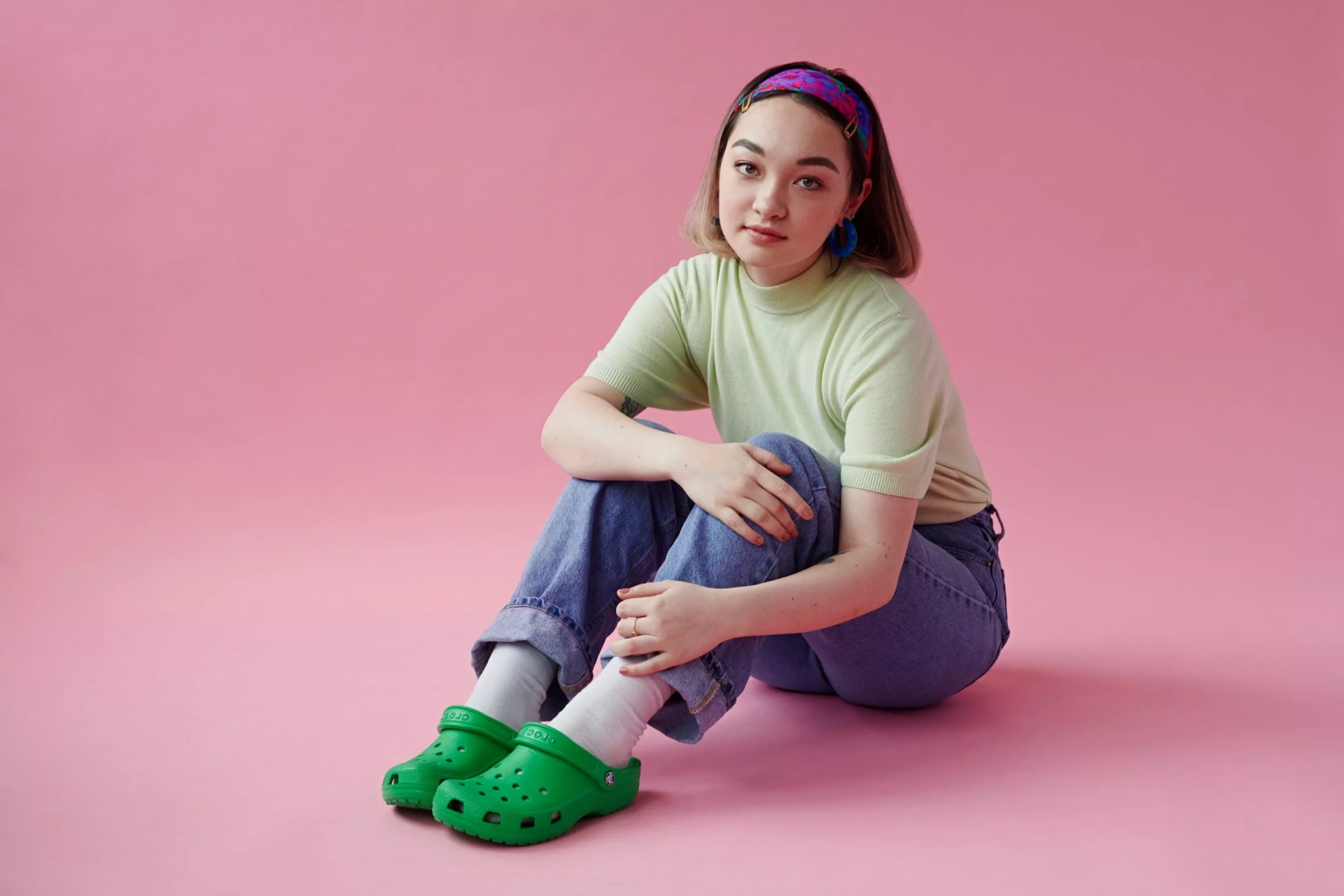
Autumn is almost here, and even in this pandemic-altered year it symbolizes a transformative mindset and mood. As the blossoms of spring give way to the sunshine of summer and finally to the brisk breeze of fall, it gives people a chance to reflect on where they’ve been and where they’d like to go. It’s a calmer, more introspective time. That makes it the perfect season for 19-year-old mxmtoon's new projects to arrive.
mxmtoon, who also goes by Maia, has already had a busy 2020. On the heels of debut album the masquerade dropping almost exactly a year ago in Sept. 2019, she wowed again with the bright, pop-driven EP dawn this April. The EP was some welcome positivity as the hardships of the year fully began to settle in for all of us, including Maia. She continued to utilize her sizable social media reach to keep in touch with fans across Twitter, Twitch and TikTok. The isolation and time for thought also contributed greatly to the sound and feeling of upcoming EP dusk, out Oct. 1. A companion to dawn, dusk is a more subdued, melancholy collection of tracks, as evidenced by lead single "bon iver." Maia has also been thinking about the more general past, leading to the launch of her new podcast "365 days with mxmtoon" on Sept. 14, which will find her recounting stories from the history of the world, music, and herself.
Maia spoke with GRAMMY.com in August to discuss how dusk and dawn are related, how she made the EP in isolation, what working with Carly Rae Jepsen meant to her, and how all the time for reflection inspired her music and podcast.
<style>.embed-container { position: relative; padding-bottom: 56.25%; height: 0; overflow: hidden; max-width: 100%; } .embed-container iframe, .embed-container object, .embed-container embed { position: absolute; top: 0; left: 0; width: 100%; height: 100%; }</style><div class='embed-container'><iframe src='https://www.youtube.com/embed/RjE3egXFUTw' frameborder='0' allowfullscreen></iframe></div>
You had the EP dawn come out in the spring and you have dusk coming out in the fall. When you started writing for this did you know it was going to be two EPs?
I did know that it was going to be two EPs, and it was still open-ended on what thematically the two were going to be about. At that point, dawn started forming itself and just making a piece of work that was going to be more optimistic and more outward facing in the way the lyrics would be written and more just classical pop production in a sense. The second EP, I was trying to work around how are we going to think about this and what will pair up with doing something that feels so different than anything I’ve done before? Why don’t we just go to the opposite end of the spectrum and do something that feels a little sadder and more melancholy in its tone and more introspective?
Was it difficult making that big of a shift right after writing dawn?
I mean, the world kinda turned itself on its head so it wasn’t entirely too hard for me to be sad about what was going on. [Laughs.] But it was definitely difficult to go from a co-writing situation where I was traveling and going to write with people inside other studios and spaces to all of a sudden being in quarantine and being by myself and not having anybody to bounce ideas off of other than my own brain. That was the hardest part, but definitely thematically I think we were all in the space of wanting to write sad music whether or not we were musicians.
<style>.embed-container { position: relative; padding-bottom: 56.25%; height: 0; overflow: hidden; max-width: 100%; } .embed-container iframe, .embed-container object, .embed-container embed { position: absolute; top: 0; left: 0; width: 100%; height: 100%; }</style><div class='embed-container'><iframe src='https://www.youtube.com/embed/puJwapI7-JY' frameborder='0' allowfullscreen></iframe></div>
You wrote most of this alone because of the pandemic. At what point did you start bringing people in and how did it feel after this extended quarantine period?
Oh my god, it was really crazy. I only started co-writing last year in August, so I’ve only been co-writing with other people for around a year now. I love doing it, there’s something about in-person collaboration you just can’t emulate even if it’s over FaceTime or Zoom, so it was really daunting to go into the writing rooms and my own studio spaces during quarantine to be like, "Okay, I hope my own brain is well-equipped enough in order to make music for this project." That’s how I originally started writing–by myself–so it was a big challenge for me to go back into that headspace and get used to it again. But I think it was a really good challenge too because it helps you understand what are the pros and cons of both situations, of working with people and then also working by yourself. And bringing back people into the production of these songs after I finished writing them at the end of working on dusk was really exciting too. I was just really proud of myself for the fact that I still felt capable of being able to write by myself after doing so much collaboration. [Laughs.]
Getting into dusk, it is a little sadder, a little more subdued. A big theme of it is still finding the light in those scenarios. Why was it important for you to include that message?
That’s something I am constantly reminding myself, even beyond the era of COVID-19 where I think we all have to do that anyways. It’s just really important for me to hopefully champion the message that sadness is not something to be afraid for shy of, and you can still feel hopeful even in the dark. Even if you have a project like dusk where it’s about the darker, sadder elements of our experiences as humans, you can still relish in the sadness and the whole negativity, but at the end of the day come out of it and understand that I can take this moment for now, but I also understand there is still good things that wait for me at the other end.
<style>.embed-container { position: relative; padding-bottom: 56.25%; height: 0; overflow: hidden; max-width: 100%; } .embed-container iframe, .embed-container object, .embed-container embed { position: absolute; top: 0; left: 0; width: 100%; height: 100%; }</style><div class='embed-container'><iframe src='https://www.youtube.com/embed/Owvji3p7kB0' frameborder='0' allowfullscreen></iframe></div>
Writing that contrast, was it more a general contrast in mood or did you go back and refer to dawn to specifically make dusk play off of it?
I naturally followed an arc of the more negative thoughts that are swirling around in my brain? How can I approach those? But I didn’t actually go back to dawn while I was writing dusk to make something that felt different. I think that the two naturally came to be really interconnected without having to be very on the nose about what sort of themes I was touching on and the progression from one to the other.
So Carly Rae Jepsen is on the track "ok on your own." What was it like working with her?
It was insane, oh my god. When I got the email that Carly Rae Jepsen wanted to feature on this song, I literally almost fainted on the ground. [Laughs.] I have been a huge fan of Carly for as long as I can remember. I remember dancing to "Call Me Maybe" in my middle school dances growing up, and I texted my best friend when I found out about this and she called me immediately. I had like 10 missed calls on my phone just like "you have to tell me more information about this." I was freaking out, because I am in awe of her and I just think she’s such an empowering figure for female artists in the music industry and I adore everything she’s done. It was super cool to just have a FaceTime with her and meet her for the first time and hear her thoughts on the track and just be mutually excited about working on something together. My mind is just blown.
<style>.embed-container { position: relative; padding-bottom: 56.25%; height: 0; overflow: hidden; max-width: 100%; } .embed-container iframe, .embed-container object, .embed-container embed { position: absolute; top: 0; left: 0; width: 100%; height: 100%; }</style><div class='embed-container'><iframe src='https://www.youtube.com/embed/drBfabXnWYg' frameborder='0' allowfullscreen></iframe></div>
Growing up, you had classical training in cello and violin, and it feels like dusk really draws on the style of that. Was that intentional?
Totally. I love classical music and any kind of element I can add into my own music is super exciting for me because I just love the sound of string instruments. It was really exciting for me to work on dusk because in a lot of ways the production on this project is the way when I first started writing music just me and my ukulele. These songs are the way I wish I could have made my earlier music sound. Just making it sound really pretty with all the strings and the piano and the synths. I now have the ability to do that with producers and people that I work with. I wasn’t able to do that early on so it’s super exciting for me to take elements of things that are important to me and put them into this newer project.
Talking about classical segues us into the podcast about history. At what point during all this did you decide to start this podcast?
It’s something that’s been on my mind for awhile. The first podcast I ever worked on was called "21 Days with mxmtoon" and was in collaboration with Spotify, and I made it last year when I was working on my first ever album and documenting that whole process. My team and I were like, how can we continue this thread of "'something' days of mxmtoon," but make it something that’s completely different? And we thought about this podcast, "The Daily," from the New York Times where it talks about topical things that are happening in the world at this moment. What if we made the Gen Z version of that, and instead of talking about current day issues, we just talk about historical events that are really funny and totally out of the blue? Like, party facts that you can just listen to for 10 minutes and then you’re knowledgable about a subject all of a sudden. History’s always been something I really enjoy, and to think about doing some form of daily content, especially in the format of podcasting was super exciting for me and it’s been super cool to see it come into reality and being able to think about all the stuff we get to talk about.
<style>.embed-container { position: relative; padding-bottom: 56.25%; height: 0; overflow: hidden; max-width: 100%; } .embed-container iframe, .embed-container object, .embed-container embed { position: absolute; top: 0; left: 0; width: 100%; height: 100%; }</style><div class='embed-container'><iframe src='https://www.youtube.com/embed/3VPe3jus2fY' frameborder='0' allowfullscreen></iframe></div>
The podcast focuses on more of the personal side of history. What made you want to focus more on that?
I think history is so often, I think the best word is Euro-centric. We only focus on the same set of events that happened in the course of our American history or whatever it is, even when we look at the world there’s very few things we actually know about what else happens inside of our universe. It was really exciting for me to work with my team to work on these episodes that feel like they pinpoint really specific facts about things that are even interconnected with my life, like growing up in the Bay Area and having Alcatraz Island be right next to my house. I just like learning about things in ways that feel ultra specific and that feels more intriguing to me and hopefully other people like to learn that way too, otherwise I might be screwed. [Laughs.]
In recent press material you’ve mentioned this work is some that you’ve been very proud of and proud of your own growth making it. What are some of those things you’re most proud of through this process?
I feel really proud of myself whenever I finish a project in general because I think that’s always a huge step to put yourself into a position where you’re pouring your soul into a piece of work and sharing that with the world. In that sense, I’m proud of the general process of doing that. But I think the reason that these EPs stick out to me the most is probably because of the exact same reasons that I don't always believe that I am in this world of the music industry and being an artist for a living and a creative and I am the person on the screen at the end of the day that people are paying attention to. I think when I was listening to dawn and when I was working on dusk, I had these very real moments where I was listening to these songs and being able to finally connect the dots with the fact I was like wow, I’m making music I can recognize finally as good enough in the greater context of the music industry and being able to think about if I heard this on a playlist on Spotify amongst all these other artists I look up to personally, I wouldn’t be weirded out by my presence on the playlist. I’m like, "this is a really good song and it deserves to be here." I think there’s a level of understanding that I am finally having with my own music when I listen to it that has also been able to feel more proud of the work I’ve put in.
<style>.embed-container { position: relative; padding-bottom: 56.25%; height: 0; overflow: hidden; max-width: 100%; } .embed-container iframe, .embed-container object, .embed-container embed { position: absolute; top: 0; left: 0; width: 100%; height: 100%; }</style><div class='embed-container'><iframe src='https://www.youtube.com/embed/NY__uAZtZZ8' frameborder='0' allowfullscreen></iframe></div>
Doves On Their First Album In A Decade & Why They’re Still Trying To Stay Patient