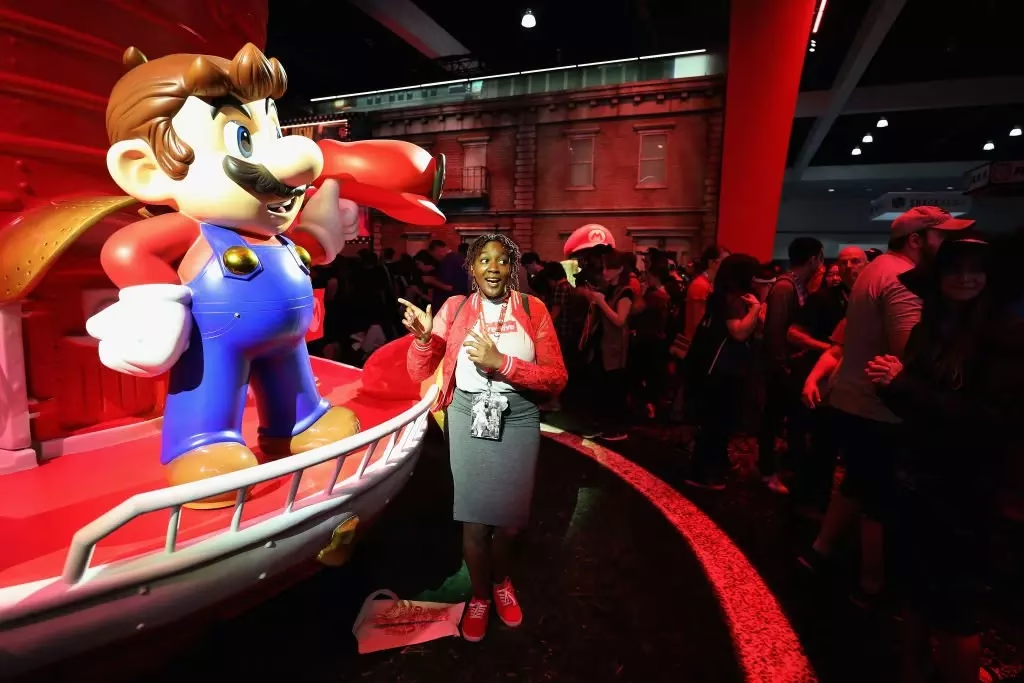
Taking arguably the world's most famous video game character, Mario, into the next era of gaming advancement, Nintendo teased the new "Super Mario Odyssey," which will go on sale Oct. 27, by releasing the trailer during Electronic Entertainment Expo this week.
The new game takes place in New Donk City, a fictitious city based on New York City. From the T-Rex's first booming steps in the trailer, it's clear that sound design continues to play a vital role in the world of gaming.
While sound for video games has not always been high-resolution, it has been highly important. Wired gathered a team of experts to look inside the psychology of the most recognizable sounds in video game history, from the limited chip-created blip sound in Pong to the specific impact classic game sounds have on gamers by using the basic parameters of a modulating synthesizer, demonstrating how much thought goes into good sound design.
Some of the more clever sound techniques implemented over the years include the pulsing swells of "Space Invader" timed to match the human heart rate so it can be sped up, causing the heart to speed up; the mocking pitch shift of "Duck Hunt" crafted to emulate laughter; and the two-tone "Mario Kart" start sounds that gamers learn to time perfectly for a speed boost.
Today, of course, sound for video games has exploded into an industry of its own. But not all legendary video game sounds are generated using chips synthesizers. BBC was at E3 and tracked down Charles Martinet, the actual voice of Mario, for a brief interview, proving that video game sound design is still as human as ever.