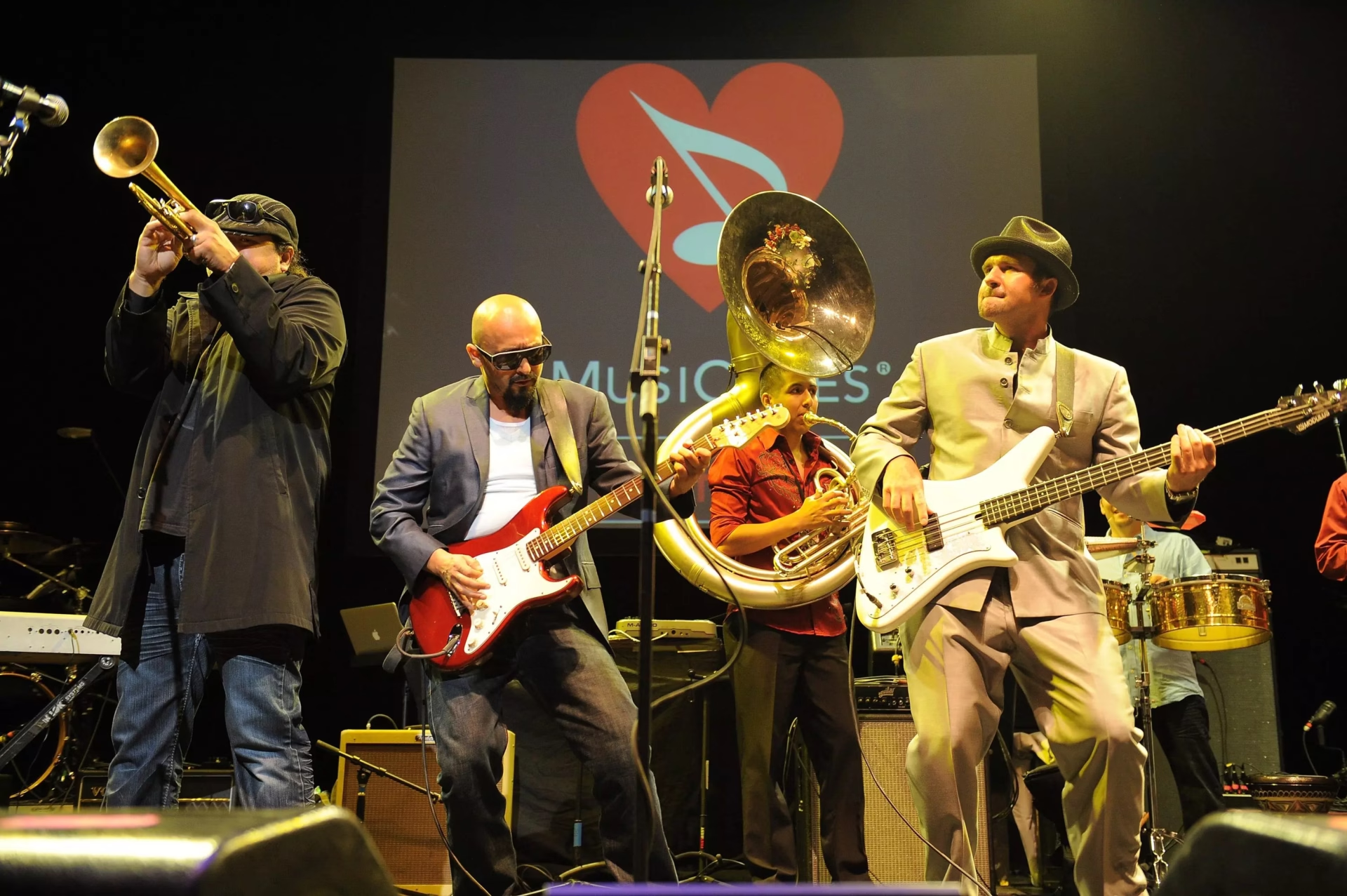
In 2012, Los Angeles' own Ozomatli recorded their very first kid's album, Ozomatli Presents OzoKidz.
Previously, the two-time GRAMMY-winning band had been known for meshing cumbia, salsa, hip-hop, funk and more in an upbeat, danceable fusion unique to growing up Latinx in L.A. Songs like "Cumbia del Muerto," or "Cumbia Of The Dead," off their 1998 self-titled album, was easily the soundtrack of Latin bi-cultural America during that time. Now, the song is a cumbia-American classic, continuing to bring Ozomatli's legacy to the next generation of Latinx in the U.S.
But as time went by and the band began to notice that their fans were starting to have kids, they saw an opportunity to connect with an even tinier generation.
"I think one of the great things about it for us is that we were able to really look at songwriting as a way to really get into characters," vocalist and guitarist Raul Pacheco tells the Recording Academy. "We just sat around and talked about things we went through as a kid or things you were into and just kind of associated certain styles of music with those subjects."
The 2010s album, which would become a GRAMMY-winning album, kept the band's sonic essence but also contained songs meant to teach kids how not be afraid of water, skateboarding and germs. Ultimately, the album taught the band something, too.
"It actually helped our songwriting, [to] kind of not have to be stuck to what it meant to be an adult," Pacheco said.
Now, Ozomatli are bringing their program—inspired by the OzoKidz album experience—to the Recording Academy's GRAMMY Museum on Nov. 18, the same day the Latin Music Gallery at the museum in Los Angeles is set to launch. Pacheco says the program will only continue to build the relationship Ozomatli has with the museum, the GRAMMYs and the Recording Academy.
The Recording Academy spoke with Pacheco more about how the album helped the band evolve, their workshop at the Latin Gallery unveiling, being a part of the GRAMMY Museum history, music education and more.
You are going to be a part of a kids workshop during the GRAMMY Museum Latin gallery opening. But this isn't your first rodeo with kids. Why connect with kids via an album?
We all grew up in public school systems where we learned and were introduced to music. I think that experience for us as young people is super impressionable, something we all talk about a lot, the importance of that experience for us. It really kind of makes playing music not some unattainable thing that you only see someone do in pictures or on TV or whatever. It's always been something very important to us.
I think we've always had a connection. As we've gotten older and have our own children, we got to a point where a lot of our fans were having kids ... So the idea came up to make a kid's record and we went for it. I think one of the great things about it for us is that we were able to really look at songwriting as a way to really get into characters. It actually helped our songwriting, [to] kind of not have to be stuck to what it meant to be an adult. We could just... create these different kinds of impressions that we were trying to focus on what it meant to be a kid. It was really cool to all these different kinds of subjects you go to just in a natural way as a child. I think we tried to make a record and songs that the parents wouldn't get sick of listening to a thousand times.
Was it only the themes you felt changed?
Yeah, because on that record there's a song about going to the movies, there's a song about germs that's just kind of funny. It's a little scary and funny. There's a song about being afraid to go into the water, and don't be afraid of it, just jump in. There's a song about skateboarding. So there's all these different subjects. We just sat around and talked about things we went through as a kid or things you were into and just kind of associated certain styles of music with those subjects.
What kind of experience with music did you have at school?
My first real experience with music was in the school choir and I had a very, very important teacher, Mrs. Hubbard. She was one of those teachers that was so influential in terms of really introducing children to music and she was so good at it. You don't really realize that until you're old and you can kind of go like, "Wow, this lady used to wrangle all of these kids and get them to do something some of them didn't even think they could do." There's a kind of a profound thing in that, that a lot of teachers probably experience in terms of just introducing kids to concepts or to the experiences to help them do the work that it takes to have an outcome. I think for me it was also understanding, without knowing it at the time, it takes work to do what you want to do.
<iframe width="620" height="349" src="https://www.youtube.com/embed/D4jRV9jrTIk" frameborder="0" allow="accelerometer; autoplay; encrypted-media; gyroscope; picture-in-picture" allowfullscreen></iframe>
You have to show up, you have to practice, you have to rehearse, you got to prep and then you got to perform. And the better you get at all that it really allows you to have better presentation. Those concepts, which you're not really sure that you're not even really aware that you're learning that, it's kind of really important ... I went on to be in a boys' choir because of her. Then I just got into rock guitar as a teenager and that kind of led to other stuff. But that first experience from her was super important.
Why work with the museum on this workshop now?
We've had a long relationship with the GRAMMY Museum. [We] performed there many times. We did a kids' presentation there ourselves. We got to perform with Booker T. there. I've seen numerous presentations there. So we have a relationship with the GRAMMYs. Doing MusiCares, which we performed at, to Harold Owens who runs MusiCares, to people who work at the GRAMMY Museum. We've won GRAMMYs. I think that all kind of makes us part of that family so we know that there's certain things that they can ask us that we're always willing to do, if possible. This is one of those things.
What can you tell us about the event on Monday?
I know that it's an important presentation. There's going to be important items there with the idea of Latino music and we're going to grab the family. We're a part of that history. We have some stuff there that they asked us to bring. I have a Tres guitar, which is a Cuban guitar, that's going to be there. That was one I played at one of the Latin GRAMMYs. They asked for a bunch of stuff from some performances that we had. For us, it's just important to be a part of that whole moment and that presentation and we're honored that they asked us. Doing what we do is just, [it's] not really work. We're going to have to show up and do what we do.
For people not aware of what Latin music is today, and specifically in Los Angeles, what is the significance of the Latin gallery opening up at the museum and specifically in L.A.?
I think that there's always been a correct criticism in terms of the separation of those worlds, [between L.A. and Latinos]. To me, to this day, it's a little hard to understand the strict separation that we have in our daily lives even though that there's all kinds of people that live in Los Angeles. When it comes to Latino L.A. and non-Latino L.A., I know there's plenty of integration in our game, but somehow in our hearts and our heads, it still seems different. I'm hoping that this is a continuation of a progress into recognizing some very obvious things about the city of Los Angeles, its own history, its own adversity, and continue to create that kind of awareness in all institutions, not just music.
I get that this is important to kind of continue that evolution of thinking, of how we look at the city. This particular showcase is going to be about music, popular music. And because it's in Los Angeles, directly is how it affects L.A. There's a lot more integration that ... [brings into] recognition of basic things that we all share and ultimately don't need to be kind of segregated in that way. I'm really very happy to be a part of the progress of that.