
Accessibility has long been omitted from conversations surrounding live music. Research points to numerous health benefits associated with regular concert attendance, however venues don’t consistently recognize the needs of patrons with disabilities. Feeling safe, comfortable and welcome are privileges afforded primarily to the able-bodied. While Title III of the Americans with Disabilities Act requires businesses to make accommodations, venues across the country remain out of compliance, either unaware or unconcerned with changing the narrative.
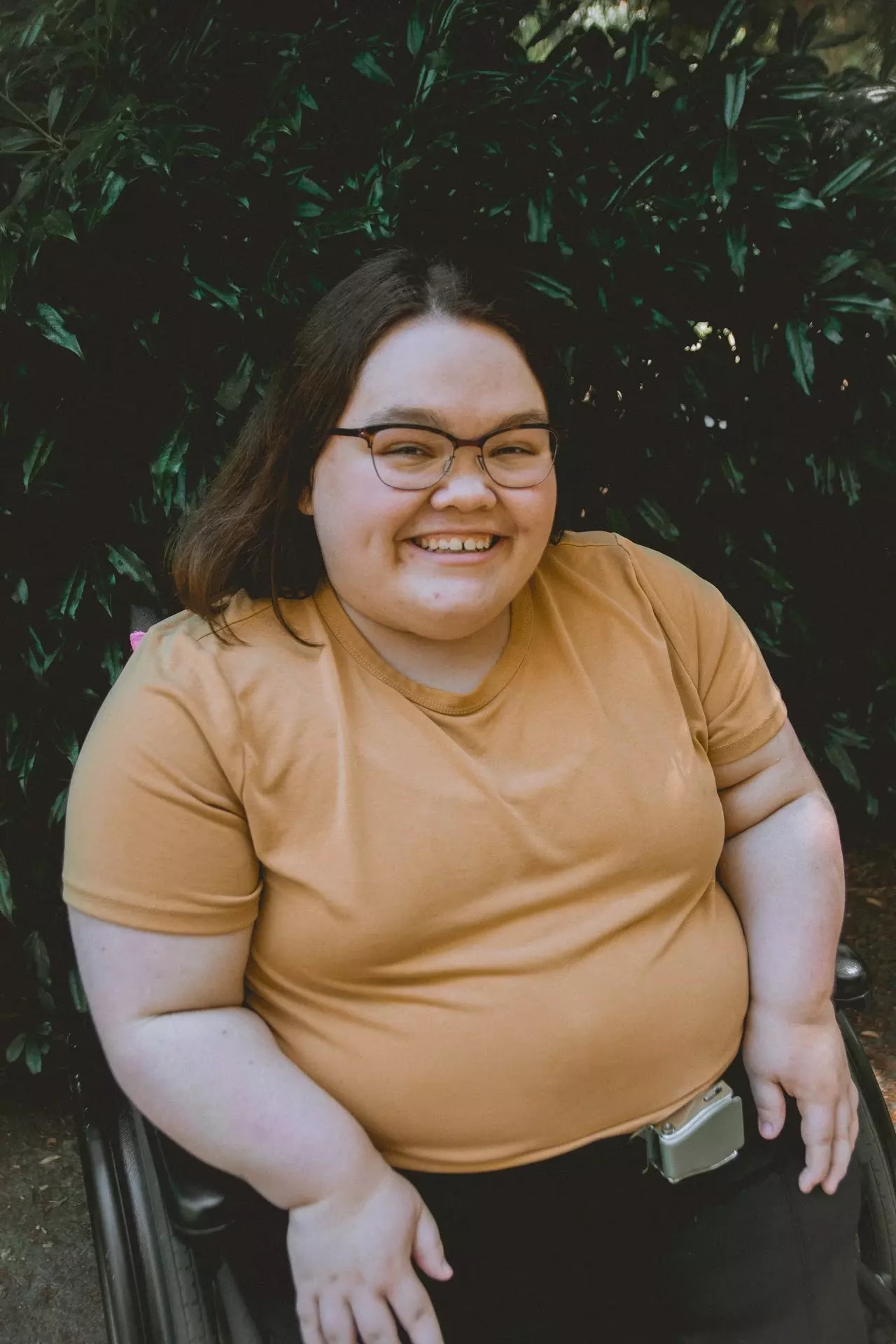
Founded in 2016 by Boring, Oregon native Cassie Wilson, Half Access is a 501(c)(3) nonprofit organization dedicated to making live music accessible. Frustrated with the experience of navigating general admission venues as someone who utilizes a manual wheelchair, Wilson decided to tackle the issue proactively. Initially funded after winning the SubCity award from Hopeless Records in 2017, the Half Access database provides accessibility info on any and all venues to help prepare disabled folks on what to expect before arriving at a show. Sourcing this information has helped initiate meaningful dialogue between promoters, venue owners and show-goers alike. From a diner in Portland, Wilson spoke to us about self-advocacy, common misconceptions around accessibility and where PDX venues stack up in comparison to other cities.
What was the catalyst for launching Half Access?
I had been going to shows for a few years before I started to think about accessibility. When you go to your first GA show as someone that uses a wheelchair, no one says, "Here's the ADA area." I had never thought about it. I just knew I had to be in the front row to see. After I had spine surgery at the end of 2016, I thought maybe I don’t want an entire crowd of people pushing up against me. I started to ask venues if there was somewhere I can be besides the front row to see, but be safer. Even as someone with a visible disability, venues would say, “What do you mean? That doesn't exist."
The language around accessibility wasn't quite there.
Exactly. It was surprising this hadn't come up for venues before. I'm lucky in that I don't mind asking venue staff a million times to get what I need. I've taught myself how to advocate for myself since elementary school. I started the conversation with "Where can I be?" When I realized there was either no answer, no help, or no change, I realized the scope of the problem.
I had stopped putting myself in unsafe situations at shows. I would go to venues where I'd either have enough friends there where it was okay to be in the front row because they could protect me and watch for crowd surfers. Other times, I would just sit in the back. At a sold-out Mayday Parade show where I knew being up front wasn't feasible, I moved to the back. That night I posted a picture of my view—the venue created an ADA area which was tape on the floor in a square against the wall with a sign that said ADA only. I was like, hmm, funny, this clearly doesn’t work. I took a picture of my view and commented, "So apparently this is what venues think accessible viewing areas are." That got a lot of traction.
I come from an angle where I really want to support venues. It’s hard to want to speak up when it's something they're doing wrong because I'm also trying to support them. Recognizing that people were supporting me was encouraging, which led to needing a more productive outlet. Being a writer, I thought maybe I'd just write about my experiences. That's where the idea of the database evolved from. If people knew what to expect going to these venues, that would be more helpful. That actual entity helped develop a voice that wasn’t just me yelling about it. It helped start the work of actually changing the conversation. I realized that if this is a big issue and it hasn't been changed at this point—someone had to change this, so why not me?
Based on your research, what percent of venues here in Portland and surrounding areas are ADA compliant? How might we compare to other cities?
Portland is fairly average. We have equal amounts of great venues and venues who have a lot of work to do. With ADA compliance it's interesting because a lot of venues are considered historic just because they’re so old. Accessibility isn't exactly part of that history.
You're literally going up against history.
Yeah! I get so frustrated with the idea of historic buildings. If it’s still being regularly used and the building needs to function for people today, and it clearly doesnt, it has to change. I’m pretty sure the Bossanova Ballroom has talked about how if they were to change, they would also have to make all the seismic upgrades which would be millions of dollars. So many things clash.
It's hard to say if any venue is fully accessible because so much of accessibility focuses on mobility and not other aspects. A lot of venues don’t have a clear way of saying, "Hey, if you need this show to be interpreted, here’s how you go about requesting that." There are other aspects of accessibility where GA venues aren’t thinking about. Moda Center is peak accessibility to me at least, because they cover the whole spectrum of any need.
Where and how are venues failing concert-goers consistently?
A lot of venues, and this where the named Half Access comes from—you might be able to get, in but they haven't put in much effort beyond that. That’s where this idea came from. They're half accessible. Just because you can get in doesn't mean you get to equally experience the show. Seated venues often build in accessible areas but at GA venues it’s often a freefall. It doesn't work.
If you ran a venue, what are the non-negotiables you would put in place?
Most of it can be encompassed by the idea of being able to freely move about a space. I love going to Crystal Ballroom because I can push the elevator button, I don't have to be escorted around by staff. It’s so nice. Being able to equally experience the show and also accessible restrooms. That will sometimes be the only thing that’s not accessible at a venue. It will be in a basement or up two steps. Those are some of the big ones. Someone said to me recently, you know venues have to hire security each night, they should also have to hire a sign language interpreter. Someone who is on their staff. We're so used to being accommodated and accessibility is never permanent at venues. A lot of entries in our database will say we can set up an ADA area if you need it. If you can set up, why don’t you leave it?
At the Wonder Ballroom they have an accessible area now. If no one shows up to use it by halfway through the headliner, they stop telling people to get out of it. They’re great. If I'm using it the second someone comes over the line they tell them to move. It’s nice, but also, get a barricade! That would do your job for you. I understand in regards to capacity. If it didn't exist before and it takes up space, obviously it can affect capacity. That comes down to money.
What would you consider to be a model venue here in town? What stands out?
The Hawthorne Theatre is. They are so responsive. Not even through Half Access, just me going to shows there and recognizing that I’m just as much of a regular as anybody else. If I mention that something isn't working, it will be fixed the next time I’m there. Their head security guard, who I met for the first time in 2013 (and remembered me ever since) is amazing. All of their team is so on board. I’m confident it’s not just me, they are equally as helpful to anyone else who comes through.
You've taken such a proactive approach to opening a dialogue around ableism. How do you initially start a conversation with a venue or promoter?
That’s kind of the next phase of what we’re doing. We’ve been focused on building up our database for the past couple of years but for me, even just acknowledging a problem is so huge. So many venues just don’t realize that they are not fully accessible or that something is an issue. If it's never brought up—how are they going to know? That's also the best way to gauge how responsive a venue is going to be.
Even if you're super nice about bringing something up, venues can get defensive super quick. Everyone associates accessibility with costing a lot of money which to me is not the case. Most venues can do so much within their means. It doesn’t have to be a lot to make a big difference. The Hawthorne and the Wonder are both great examples. They created accessible viewing areas with practically nothing. It’s taking the time to create a solution that works. Some venues will have the accessible area but clearly it was chosen by someone who is six feet tall and standing while testing it out.
Bands have a lot of social capital and power. How can bands be strong allies in this work?
The biggest way that bands are helping us right now is by getting venues into our database with the help of their booking agent. One band, Gouge Away, put it in their contract that every venue they play has to be in our database. Another band who have done something similar is La Dispute. They recognize how much accountability venues have to them. Gouge Away have venues submit directly. It’s huge. To me, information is power and if you know whether a venue is accessible or not, that makes a difference in regards to whether or not you are able to go. A lot of people won’t go to shows because they think most venues are not accessible. Most public places you go I assume I can at least get in and experience things, but venues are such a different level of inaccessibility, it’s wild.
What keeps you motivated to continue to pursue this work?
Even though we are a relatively small organization, occasionally someone will reach out and say I knew this venue was accessible or inaccessible because of Half Access. That makes it feel worth it. Also, bands being supportive of it and people backing what we do. We’re doing something right. When I started this I knew it would be a lifelong project and I’m fine with it. Otherwise, nothing was going to change.
You've also championed other music non-profits here in Portland. Who else is doing important work you are excited about?
Friends of Noise. They were first local non-profit I got involved with. Their dream is to have a permanent all ages venue. We need that so bad.
You're booking a show. Tell me three Portland bands you want playing and where you want to see it happen.
The venue is Post 134 on Alberta. If it was a little bigger it could replace my least favorite venue and I’d be so happy. Glacier Veins would headline because they are the best band in the world. Noise Brigade would play and Dobak. His old band was what got me into local music. Basically all of my friends!
These Record Labels Are Changing The Way Portland Listens To Music
