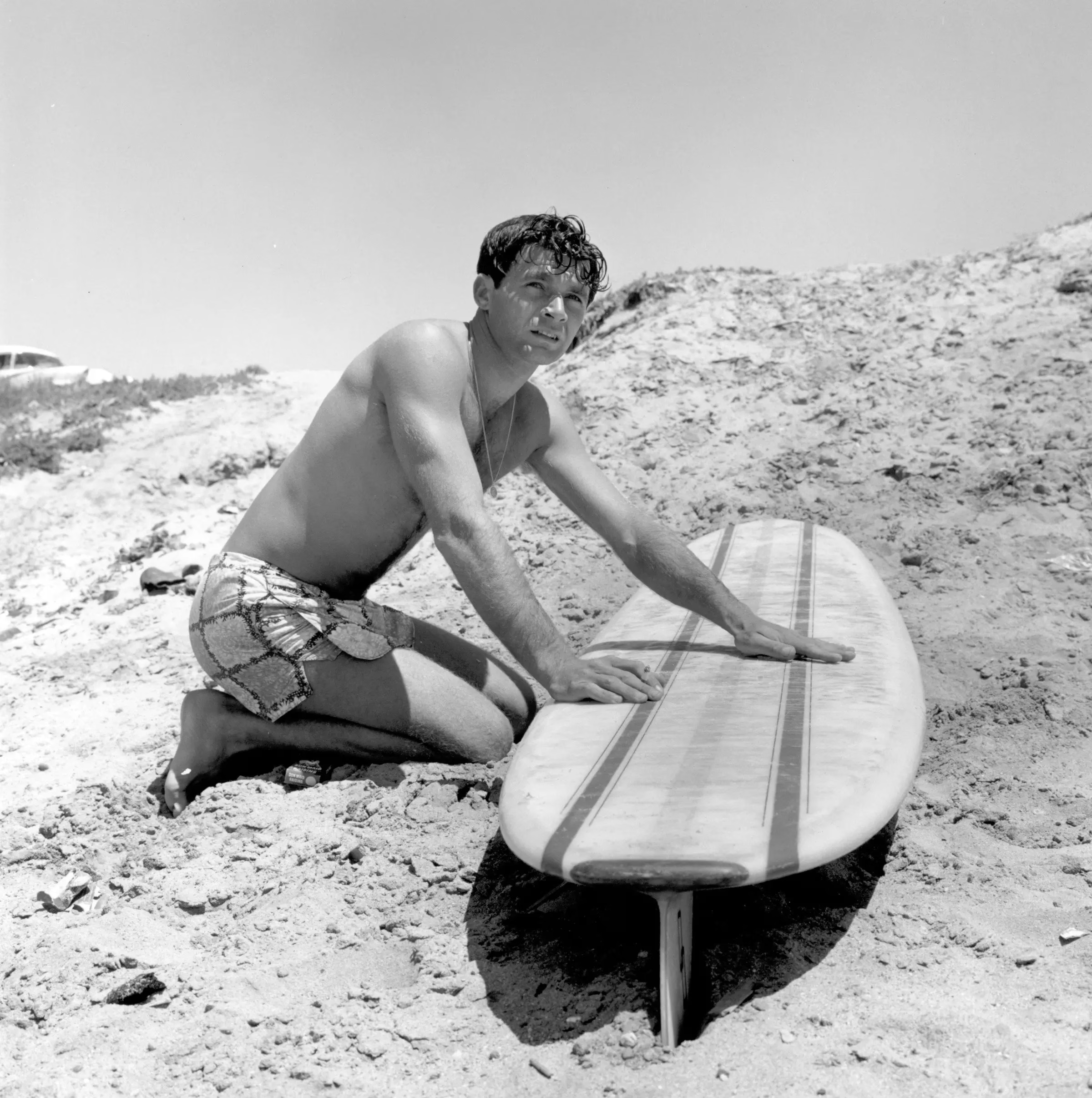
Electric guitar pioneer Dick Dale died on March 16 at the age of 81, leaving behind a reverberant trail of musical and sonic influence stretching from The Ventures to modern garage surf and beyond. Since the 1950s, Dale has wielded his left-handed reverse-strung Fender Stratocaster and treated fans to his signature guitar sound, distinctive for its relentless rhythm, shimmering reverb and sheer volume, earning him the crown as "The King Of Surf Rock."
From introducing the world to the sound of surf rock with his band the Del-Tones to reaching a new generations to follow with film and even video game reboots of his classics, Dale's influence has touched an impressive list of legends including the Beach Boys, Jimi Hendrix, Stevie Ray Vaughn, The Ramones, The Cramps, Los Straightjackets, and many more.
As the music world mourns the loss of one of the most game-changing talents to ever pick up a guitar, here's a look at seven surf rock explosions that reveal Dale at his boldest.
"Miserlou"
"Miserlou" is an obvious to start an examination of Dale's brazen and unique sound. In 1962, the frantic tremolo picking of his adaptation of this Middle Eastern instrumental folk tune (spelled "Misirlou" and translating to "Egyptian Girl") established Dale as a singular artist with a sound all his own while rock 'n' roll was still searching for its footing. The song's iconic guitar line is also instantly recognizable to younger listeners thanks in large part to its use in the opening credits of Quentin Tarantino's 1994 classic film Pulp Fiction. "Miserlou" was also sampled by Black Eyed Peas on their 2006 "Pump It" and challenged video gamers in "Guitar Hero," more indicators of the endless reach of Dale's sound and fury.
<iframe width="620" height="349" src="https://www.youtube.com/embed/mKpsuGMeqHI" frameborder="0" allow="accelerometer; autoplay; encrypted-media; gyroscope; picture-in-picture" allowfullscreen></iframe>
"Let's Go Trippin'"
Dale's highest charting hit, 1961's "Let's Go Trippin,'" is arguably the song that started it all, becoming the first surf-rock hit landing at No. 60 on the Billboard Hot 100. Its release in 1961 preceded the Beach Boys' first surf song, "Surfin,'" but the Boys would tip their sailor caps to Dale two years later by coving "Let's Go Trippin'" on their 1963 album Surfin' USA.
<iframe width="620" height="349" src="https://www.youtube.com/embed/M6mMNzUSJzc" frameborder="0" allow="accelerometer; autoplay; encrypted-media; gyroscope; picture-in-picture" allowfullscreen></iframe>
"The Scavenger"
Along with "Let's Go Trippin,'" 1963's "The Scavenger" was one of just two songs Dale ever landed on the charts, ducking into the Billboard Hot 100 at No. 98. "The Scavenger" was the lead-off track from Dale's third album, Checkered Flag, which explored hot-rod automobile themes made popular by the Beach Boys and even included sounds of engines revving and lyrics about street racing.
<iframe width="620" height="349" src="https://www.youtube.com/embed/iDNRad10e10" frameborder="0" allow="accelerometer; autoplay; encrypted-media; gyroscope; picture-in-picture" allowfullscreen></iframe>
"Pipeline"
A match made in guitar heaven, Dale teamed up with another incomparable guitar legend, the late Stevie Ray Vaughn, for 1987's "Pipeline," placing the two unmistakable styles side-by-side for an historic and electrified blues/surf mashup. For their efforts, the duo were nominated for Best Rock Instrumental Performance (Orchestra Group Or Soloist) at the 30th GRAMMY Awards. The song was featured in the movie Back To The Beach, which Dale and Vaughn also appeared in, performing the song.
<iframe width="620" height="349" src="https://www.youtube.com/embed/56SAxtf-RTg" frameborder="0" allow="accelerometer; autoplay; encrypted-media; gyroscope; picture-in-picture" allowfullscreen></iframe>
"Hava Nagila"
A standout track on his 1963 sophomore album and first on Capitol Records, aptly titled King Of The Surf Guitar, "Hava Nagila" is Dale's take on the traditional Israeli folk song of rejoice. The album featured contributions from the likes of Glen Campbell, Leon Russell and Hal Blaine. Dale's treatment of this traditional tune with his frenzied picking seemed like a natural fit, much like his arrangement of "Miserlou."
<iframe width="620" height="349" src="https://www.youtube.com/embed/CgrMME-HsF8" frameborder="0" allow="accelerometer; autoplay; encrypted-media; gyroscope; picture-in-picture" allowfullscreen></iframe>
READ MORE: 30 Songs That Use Hal Blaine's Iconic "Be My Baby" Beat
"Peter Gunn"
Dale's 1965 surfed-out rendition of Henry Mancini's TV theme clearly illustrates his sonic stamp by placing his angular playing on top of one of the most recognizable melodies in instrumental music. Mancini's original The Music From Peter Gunn won Album Of The Year at the first-ever GRAMMY Awards in May of 1959. But in Dale's version you can hear where guitar slingers such as Los Straitjackets and cymbal riders like The Cramps drew aesthetic inspiration.
<iframe width="620" height="349" src="https://www.youtube.com/embed/fikqwCHzBqM" frameborder="0" allow="accelerometer; autoplay; encrypted-media; gyroscope; picture-in-picture" allowfullscreen></iframe>
"Nitro"
By 1993, Dale's influence had permeated widely into the worlds of ska, rock and punk, and on the first track off Tribal Thunder, he leaned into to a more modern sound, etching his signature tone and licks into a wall of solid rock drums. While Dale is far better known for his early recordings, "Nitro" is a daring reminder of the ferocity and endurance that fueled Dale's endless touring and refusal to mellow with age. The song even received a name-check from Jack White in a tribute post following Dale's death. “I spent many moments learning his massive reverbed guitar licks in my bedroom, and still enjoy playing his song ‘Nitro’ whenever I can,” White wrote.
<iframe width="620" height="349" src="https://www.youtube.com/embed/XnreN5LsjvQ" frameborder="0" allow="accelerometer; autoplay; encrypted-media; gyroscope; picture-in-picture" allowfullscreen></iframe>
