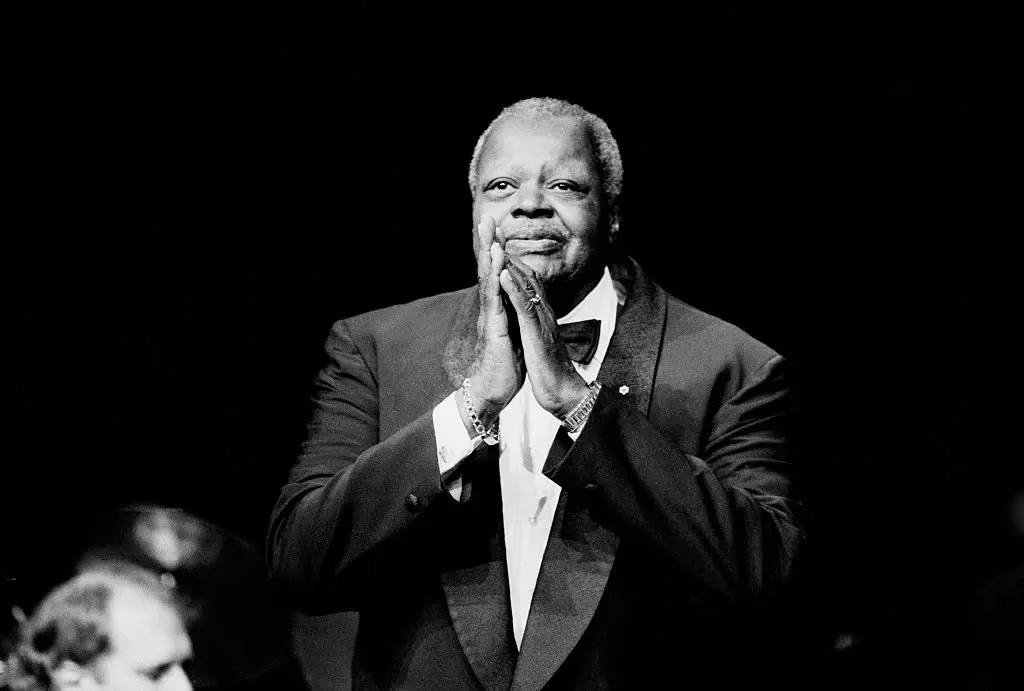
Late GRAMMY-winning jazz musician Oscar Peterson's Trio's 1963 album Night Train and punk band D.O.A.'s 1981 album Hardcore 81 have been announced as the 2019 Slaight Family Polaris Heritage Prize winners.
The Slaight Family Polaris Heritage Prize, self-described as similar to a hall of fame, awards Canadian albums of "artistic distinction" from the following periods: 1960-75, 1976-85, 1986-95 and 1996-05 every year.
In a statement, Peterson's widow, Kelly Peterson, said the award was a huge honor for Peterson's legacy:
How deeply honoured I am on Oscar's behalf, knowing how humbled he would be to realize this recording remains significant more than 65 years after its release. It’s especially gratifying because this record contains the absolute original version of what is perhaps his most significant composition. During the recording session, Norman Granz challenged Oscar to compose a piece on the spot. The result was Hymn To Freedom. My gratitude for this honour knows no bounds. Thank you to all involved with the Polaris Heritage Prize.”
The jazz artist, who was a seven-time GRAMMY winner, was honored with the Recording Academy's Lifetime Achievement Award in 1997.
D.O.A.'s Joey ‘S***head’ Keithley also shared joy for the honor, saying it is an "amazing" moment for the hardcore rock music trailblazers.
"It's pretty cool for D.O.A. and our fans to have Hardcore 81 recognized by Polaris," he said. "When it was released, we never realized that this album would give birth to the hardcore music genre and make an impact around the world. So this is an amazing moment for us."
While there are two Slaight Family Polaris Heritage Prize winners, one prize is chosen by a jury, in this case, Peterson's album, and another album is chosen by a public vote, in this case, D.O.A.'s. Past winners include Alanis Morrisette, Neil Young, Peaches and more.
For more information on the award, visit the Polaris Music Prize website.
Charley Pride Honored With GRAMMY Museum Mississippi's Inaugural Crossroads Of American Music Award
