Ric Ocasek's introduction to the world was morse code: chug-chug-chug-chug-chug-chug-chug-CHUNK / chug-chug-chug-chug-chug-chug-chug-CHUNK-CHUNK. Those opening notes of the Cars' first single "Just What I Needed" were telegraphing something small and then something BIG! And then something small again, and then BIG! BIG! The instant rock-radio classic oscillated freely between the two modes, and so did its mastermind. Together with Blondie's iconic Debbie Harry, the spindly, jitter-voiced Ocasek turned the beginnings of new wave—a hybrid of punk's flat, minimalist drive, and art-rock's burgeoning love affair with the synthesizer—into an even more ambitious combination of both "cool" and "pop." His thin, strange voice echoed forebears like Todd Rundgren (who'd go on to lead a not-well-liked version of the Cars eventually) and Television's Tom Verlaine, but this time it was attached something far more sleek and marketable. Like a car, actually.
<iframe width="620" height="349" src="https://www.youtube.com/embed/gvy2yqUHLLg" frameborder="0" allow="accelerometer; autoplay; encrypted-media; gyroscope; picture-in-picture" allowfullscreen></iframe>
Let's not put that one aside; fewer band names had a better fit for the product they were selling. From the opening chirps of The Cars' "Good Times Roll," their debut album caught hold through engine-like repetition that built up steam into power-pop choruses. And they were humorous; they named a song "Drive," one of their biggest hits. But Ocasek proved you didn’t have to emote to be human. His greatest moment was "My Best Friend's Girl," a huge Cars hit that ostensibly lamented an old rock'n'roll subject, losing his girlfriend. But any aloneness on the verses was cut by bandmates like his lifelong friend Benjamin Orr on the exultant chorus. He sounded almost happy. To inhabit Ocasek's sound was to dress up in cool until it fit you like a glove. So if he was going to turn his breakup into a party, one he maybe even invited the title ex to ("I kinda like the way she dips!" he yelps at one point), then so be it.
<iframe width="620" height="349" src="https://www.youtube.com/embed/RyFo6p6LGkA" frameborder="0" allow="accelerometer; autoplay; encrypted-media; gyroscope; picture-in-picture" allowfullscreen></iframe>
Of course, this then-novel inversion of nerd power was more musical than anything else, so the two best moments in "My Best Friend's Girl" are telling: the jangly post-chorus riff that Ocasek nipped wholesale from the Beatles' "I Will," (from the same spot, too!) and the moment when the drums first kick in and an arcade game dies a triumphant death in synth form. He made a shiny, spotless future out of the indelible past. Pulled the same trick again in 1994 when he produced a similarly downstroke-obsessed band called Weezer's eponymous debut, too. "Buddy Holly" even brought the vacuum-sealed synths.
By then, this is what he was most known for as both bandleader and producer: giving squares the aural equivalent of hot wheels. Not only did Ocasek design the sound of Weezer's two shiniest albums (the underrated 'green' album is even more Cars-like) but also Nada Surf’s "Popular," a light high school satire espousing the proper etiquette to address "Johnny Football Hero" by. But he played both sides of the fence, producing Romeo Void's lasciviously bored smash "Never Say Never" (you know, "I might like you better if we slept together") just a year before he helmed Bad Brains' hardcore totem Rock For Light at their 1983 rawest. He worked with art-droners Suicide and DIY punk mainstays Bad Religion. He blurred the lines by taking the legendarily cheaply recorded Guided By Voices hi-fi in 1999 (don't sleep on "Surgical Focus").
<iframe width="620" height="349" src="https://www.youtube.com/embed/4x0fPZrPV3M" frameborder="0" allow="accelerometer; autoplay; encrypted-media; gyroscope; picture-in-picture" allowfullscreen></iframe>
In all of his endeavors, Ocasek was like those ZZ Top videos where the trio magically appeared to bestow some unlucky loser with a sweet ride and videogenic babes, except he was ZZ Top, the loser, and the car. He willed himself onto the charts and below at his leisure. And that indefatigable quality permeated all six of his albums with the Cars, especially Candy-O, which doubled down on the girl-crazy debut, and Heartbeat City, on which a rising "Mutt" Lange power-tooled the Cars into high-powered Batmobiles. By then, he'd bent new wave, and essentially, rock and pop, to his whims, replicating the staunch rhythms of the Velvet Underground and Def Leppard from the same ingredient.
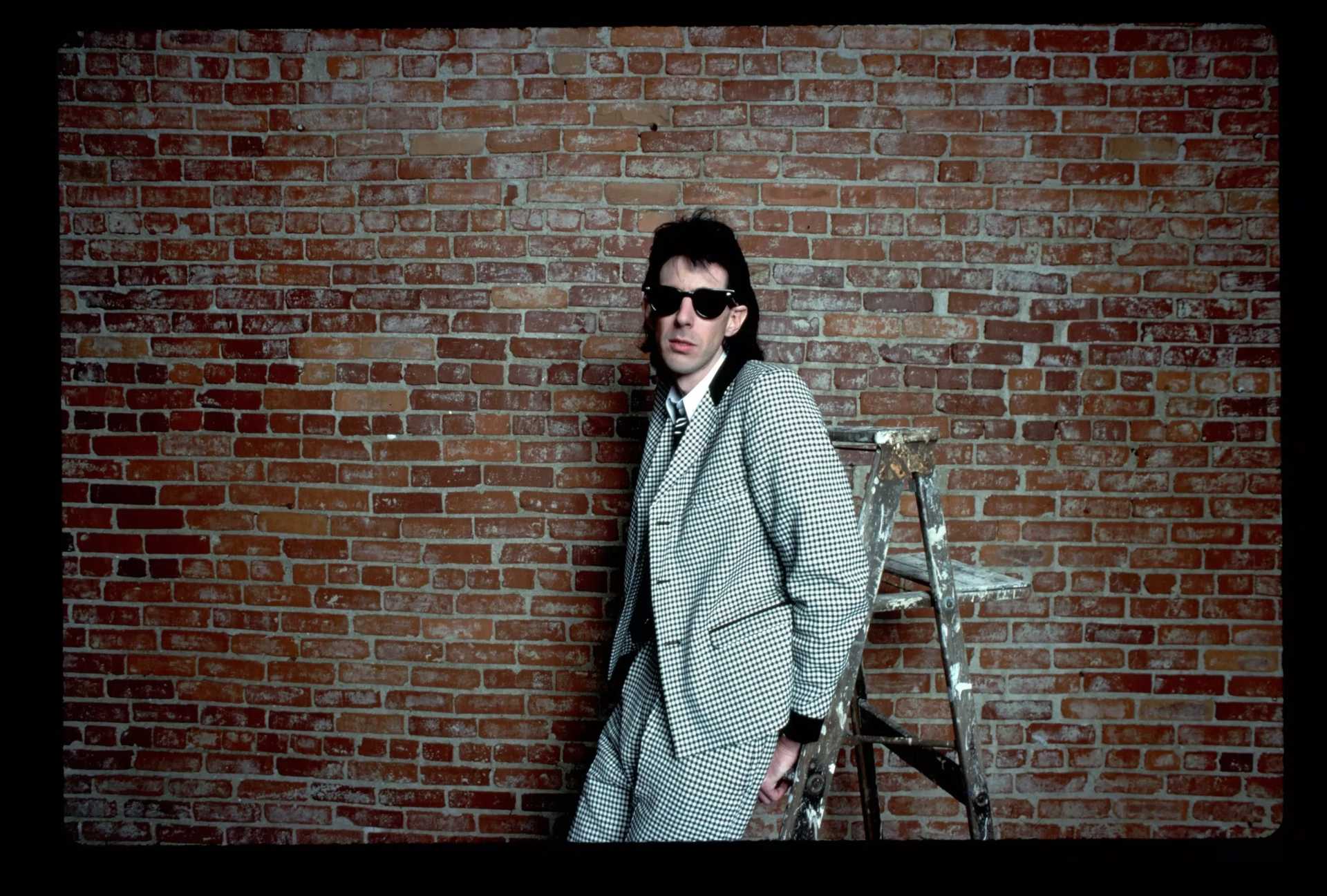
Ric Ocasek wrote, sang and produced great songs, made his prolific time in the spotlight look easy, and stumbled into sex symbol-ism and power-couple-ism with his longtime wife Paulina Porizkova, all from behind huge sunglasses that let you know he was living his damn life. A quick spin through The Cars' Greatest Hits reminds us how often he let us in on the fun.
