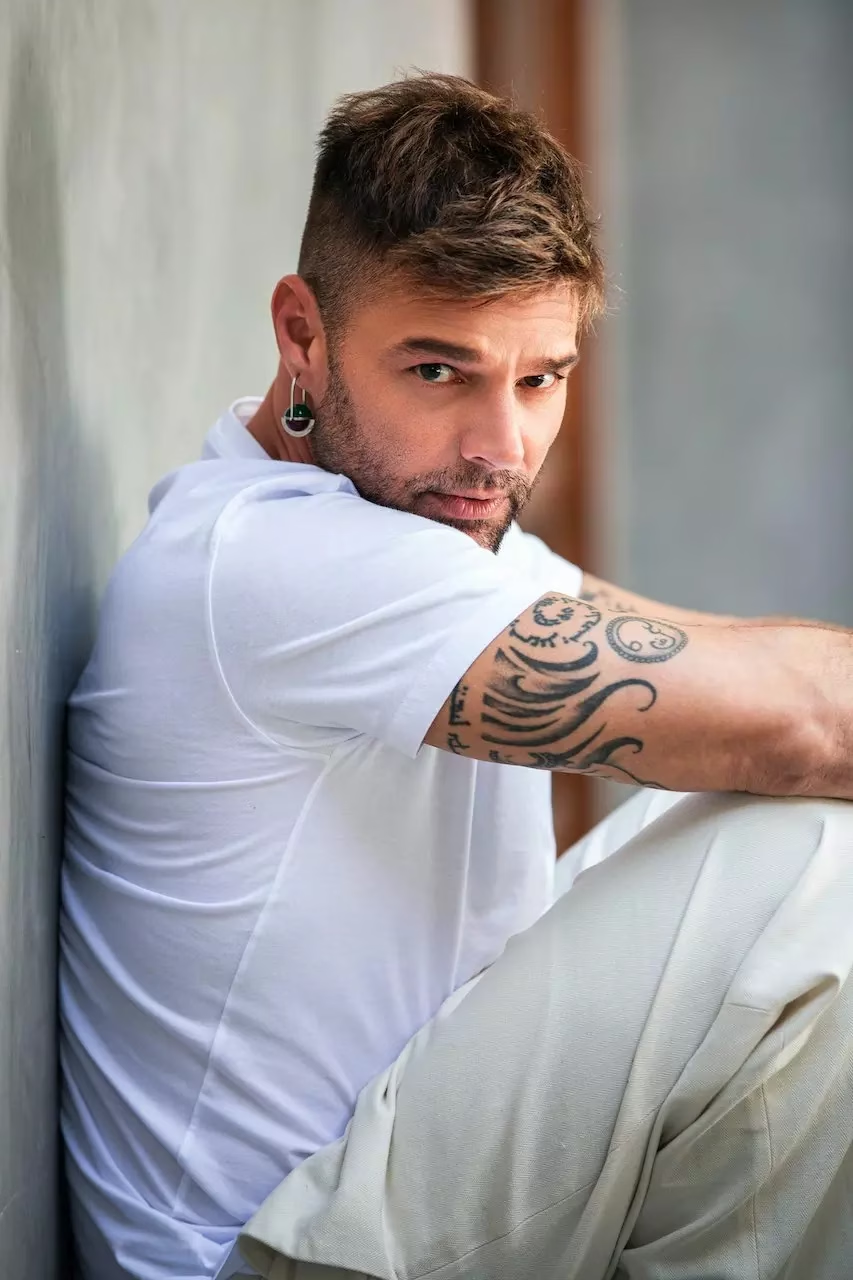
Ricky Martin is pressing "play" on his music career again after 2020’s PAUSA. The Puerto Rican icon hasn’t released an LP since 2015’s A Quien Quiera Escuchar but released his EP last year, teasing fans who have been waiting for a longer musical comeback. His upcoming album, aptly titled Play, will feature his newest single "Qué Rico Fuera" featuring Chilean-American singer Paloma Mami. In the neon-lit music video, the premier Latin pop star dances through the streets like no time has passed since his launch with Menudo in the ‘80s. The alluring song embraces today’s most popular sounds blending Latin pop music with influences of reggaeton and Afro-beats. The rhythms, he says, are influenced by his DNA.
"[Play is about] going back to my culture and having fun with what I am made of," Martin tells GRAMMY.com. "When we talk about Puerto Rico, we have so many different cultural influences. We have Africa. We have the Anglo influence. I've never been a purist. All I want to do is create fusion and that's where we are today."
<style>.embed-container { position: relative; padding-bottom: 56.25%; height: 0; overflow: hidden; max-width: 100%; } .embed-container iframe, .embed-container object, .embed-container embed { position: absolute; top: 0; left: 0; width: 100%; height: 100%; }</style><div class='embed-container'><iframe src='https://www.youtube.com/embed/7UigkvOlpKs' frameborder='0' allowfullscreen></iframe></div>
Martin reveals fans will have to wait a little longer to hear Play as he's still working on what is to be his 11th studio album. But there’s already something to mark—in November, he will celebrate 30 years of his first solo release, 1991's self-titled LP. The album helped Martin conquer the Latin music world and in 1999, he became a trailblazer in globalizing Latinx culture with his crossover smash "Livin' La Vida Loca." The sultry banger impressively earned him Record of the Year, Best Pop Album and Best Male Pop Vocal Performance nominations at the 2000 GRAMMY Awards Show. Following his success in both the English and Spanish-language markets, Martin is one of the rare unicorns to have earned both a GRAMMY and Latin GRAMMY—he's collected 2 GRAMMYs and 4 Latin GRAMMYs.
Martin’s influence is so wide that when he came out as gay in 2010, it became a cultural touchstone for LGBTQ+ representation in the Latinx community. As he continues to celebrate global success, Latin music artists generations after him get to see that attitudes are changing in a historically machista culture and that they can have a career being their authentic selves after coming out, too.
In an interview over Zoom, Martin talked about collaborating with Paloma Mami, his fall co-headlining tour with Enrique Iglesias, and his legacy in Latin music.
What was the experience like to work with Paloma Mami for "Que Rico Fuera"?
It was amazing. But to be honest, we met the day we shot the video, and that's how it goes nowadays. I'm a little bit obsessed with her. I love her attitude. I love her approach. I love her talent. I love how she's taking the bull by the horns. She's young and I have a lot of hope in this great generation of young artists that are popping out. When it comes to music, I just love what she does. At the end of the day, it's about being open to ideas. It doesn't matter where they're coming from. To be open-minded. That's what I do and I love working like that.
Like "Vente Pa' Ca" and "La Mordidita," it's also a very sensual song.
Yeah! Sex sells and I'm not afraid of that. Everybody can relate, I think. It’s one of those things. [laughs] One thing is sensuality. One thing is sexuality. Let's mix them both. When I walk onstage, I bring my culture with me. I'm Latino and we're not afraid of playing with our sexuality, so that's important. Why run away from that?
<style>.embed-container { position: relative; padding-bottom: 56.25%; height: 0; overflow: hidden; max-width: 100%; } .embed-container iframe, .embed-container object, .embed-container embed { position: absolute; top: 0; left: 0; width: 100%; height: 100%; }</style><div class='embed-container'><iframe src='https://www.youtube.com/embed/KUmrNavXsd0' frameborder='0' allowfullscreen></iframe></div>
Christina Aguilera was another woman you worked with. “Nobody Wants To Be Lonely” turned 20 this year. What do you remember about that collaboration?
Every time I talk about Christina, it brings a smile [to my face] because I think it was a very powerful track. Her delivery, her performance like always was beautiful. Then I had the opportunity to revive the song with my residency in Vegas. I called her and I said, “Baby, I’m going to revive this song, and I would love to shoot a video for you to be there with me while I sing.” She was like, “I’m ready, Ricky. Let’s do this and let’s do it right.” And because of that video, I think it’s one of those songs that I will keep alive as much as I can.
How did you come up with the idea for the joint tour with Enrique Iglesias?
It had to be now. Not before. This is the time because we both really want to do this. This is not a strategic thing. We talked about this, and we agree on the fact that, at this point, we just feel free in many ways. Imagine a tour with Enrique. His music. My music. People get ready because it's going to be all about dancing. No ballads in this concert. It's about celebrating life, especially after what we've been through.
You're an artist that's won both GRAMMYs and Latin GRAMMYs awards. How do you feel about that?
It's extremely important for me. When people say, "I didn't win, but it's ok." No, no, no. It's important to win. [laughs] It's important to win and it's important to be recognized by your colleagues. It's all the producers in the industry, engineers and composers. It's beautiful to feel the support from people within the industry. I think I’m at six [GRAMMY and Latin GRAMMYs] now. It's really cool. I felt very protected by the [Recording] Academy for many years now and it's still the same. Let’s see what happens. This is only the beginning. Let’s do this.
It's Pride month and I was wondering if you had a message for your fans in the LGBTQ+ community.
Everybody just be. Just be. Be happy. And it just feels amazing to also feel protected by an amazing community. I became a better person when I was able to be transparent. And for those out there that are still struggling with their identity, I just wish you the best. Everything's going to be good.
What I loved about the Latin GRAMMYs last year was that in the Big Three categories (Song, Record, and Album of the Year), there was you, Kany García, Pablo Alborán, and Jesse y Joy's Joy Huerta. There was a lot of LGBTQ+ representation.
There is a lot of representation, but we want more! This is what's so important about me posting pictures with my family and posting pictures with my husband [Jwan Yosef] because it's about visibility. It's important to normalize families like mine. It feels good. There's a lot that needs to be done. We've taken solid steps, but because of these very beautiful and positive steps, we're also feeling a lot of resistance from people that just don't understand the way we love. So we just have to practice compassion and move forward, but be firm and proud.
<style>.embed-container { position: relative; padding-bottom: 56.25%; height: 0; overflow: hidden; max-width: 100%; } .embed-container iframe, .embed-container object, .embed-container embed { position: absolute; top: 0; left: 0; width: 100%; height: 100%; }</style><div class='embed-container'><iframe src='https://www.youtube.com/embed/iOe6dI2JhgU' frameborder='0' allowfullscreen></iframe></div>
This year marks the 30th anniversary of your first solo album. What have you learned about yourself in that time?
That it's important to change. I'm happy to say I'm not doing the same kind of music that I was doing 10 years ago. It's important to evolve. That's why I keep going back to the importance of walking into the studio or creating a very beautiful creative process with people from different generations and different cultural backgrounds. That's one of the things I don't want to change. I've always been very open to that.
In Menudo, my introduction into the music business, I was pretty much told what to do, how to sing, what to say, and how to answer questions. It was good in the sense that I was disciplined, but then it was about going within and finding the emotions and stories to talk about. And apparently people can relate to my stories. They can relate to my sounds. I'm very thankful.
How do you feel to see Latin music being so global now?
It has always been global! [laughs] I know what you mean. It just takes me back to when I was experiencing that very beautiful crossover in the early 2000s. And here we are again with everything that's happening with Bad Bunny, J Balvin, and all these monsters that are doing amazing things for music. It is amazing that they don't have to record in English to be accepted because people are used to the sound of different languages now with all this streaming and for music from all over the world to be so accessible. Obviously language is not an issue anymore. It just feels great. It feels great to see them enjoying and surfing this wave. To see this young generation being so in tune with their needs, it's very special. I feel like a proud papa.