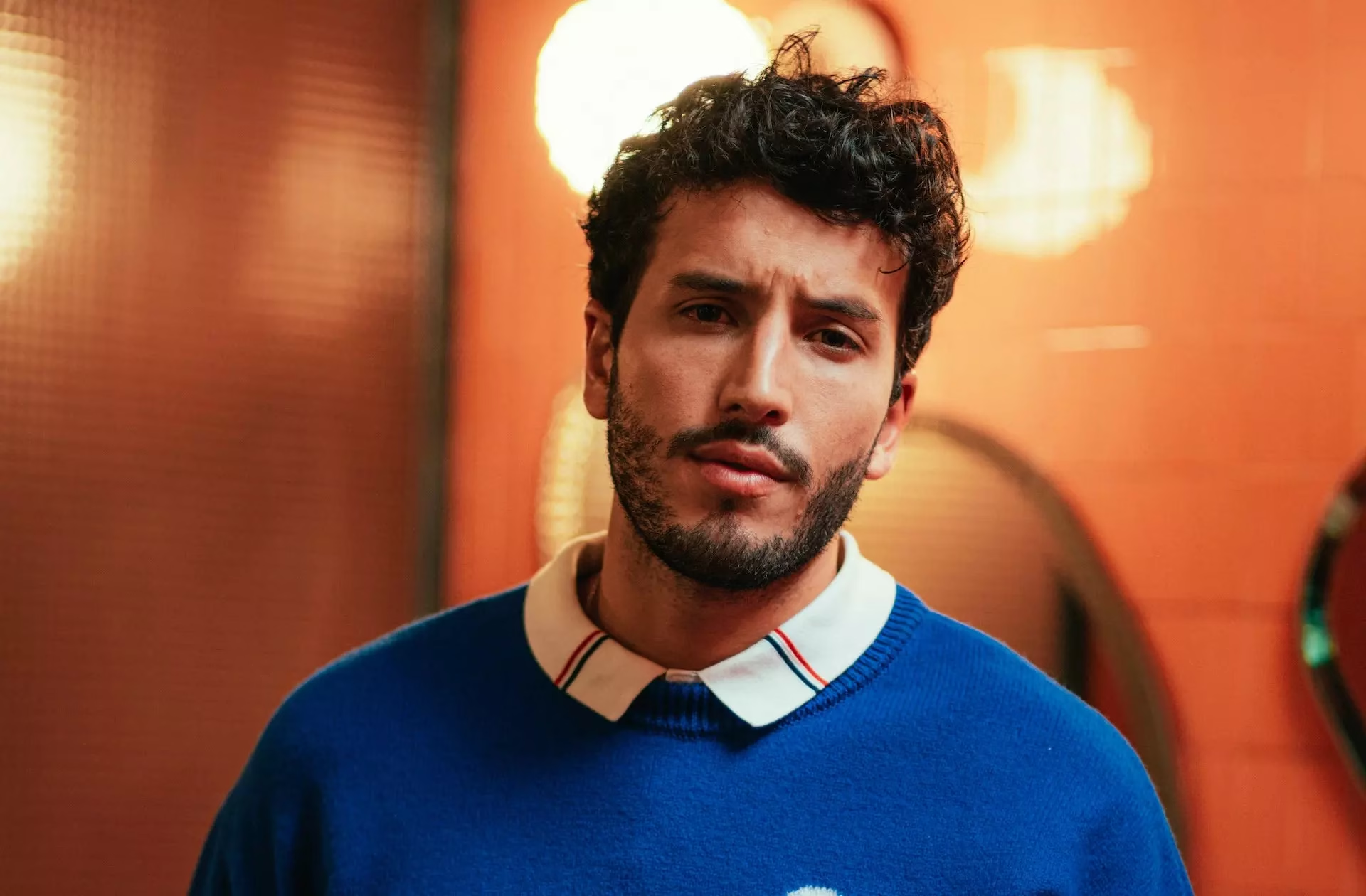
Six months ago, Sebastián Yatra picked up a copy of Sapiens: A Brief History of Mankind by Yual Noah Harari. Little did he know, that book would solidify the vision for the project he had been trying to perfect for years.
Upon reading, the 27-year-old Colombian artist discovered dharma, a concept that is defined as the nature of reality. To Yatra, that term perfectly encapsulated his last three years, which saw the singer embark on a personal quest filled with intentional self-discovery and whimsy, learning how to love while also refining and expanding his sound. Thanks to Sapiens, Yatra hadn't just found his album title; he had completed what he calls his "masterpiece."
"I've been working on myself a lot, and I'm back to being myself," Yatra says. "I'm happy with the music I'm working on, and I think it's reflected in my videos, where it's like, they're being made out of love and enjoyment and not out of what the result is going to be — really having some valor agregado (added value)."
What's most important to Yatra now is having his music reflect his current state of emotions while helping fans feel all of theirs too, whether it's a profound feeling or something more rooted in fun. That approach resulted in a genre-spanning 17-track album, on which Yatra tethers between genre lines with ballads and vallenatos, incorporating sounds of punk rock and '80s retro pop to create boundary-pushing Latin sounds.
Yatra detailed his meaningful Dharma journey to GRAMMY.com, explaining how he was able to let go of any inhibitions and create his most personal album yet — one that he hopes will help, as he puts it, "heal all parts of your emotions."
Tell me what your elevator pitch would be for this project. Why do you think that it's the best Latin pop album of 2022?
I love that. You got me, I didn't have that answer prepared. [Laughs.] But I've just got to say the truth about what I feel with the album, and it's definitely my best album so far.
Dharma means the acceptance of reality and accepting our reality is accepting our emotions. And for me, this album reflects that, because our emotions are all over the place. It's not just one way of feeling things or one type of music that makes us connect with all our emotions.
I decided not to do this album based on any genre, but on emotions. And then, depending on the story I was telling or the emotion I was talking about, I decided what rhythm I was going to use or what style. So you can find all types of things in this album.
Each of these songs is very honest, very real, and it feels like you could build an album around any of them. But I didn't build an album thinking about wanting to win an award or wanting to get a result out of it. I built an album where people can actually feel any of their emotions and see themselves reflected and understand that it's all part of our reality, and we've got to accept it.
So your emotions are what guided the variety of sounds and styles on the album?
For me, [I think] why do you have to only sing one style? It's like if you were a doctor, and you only make pills for a headache, but you don't have something to like, treat kidneys or bones. I'm making music to heal all parts of your emotions and all your heart.
You worked on this project almost entirely during the pandemic. How was that creative process for you? And what sides of your humanity do you think we see in this album that we haven't seen before?
I think you see a lot of my humanity. I'm not a person that talks about my personal life in interviews or in public or anything, and you always see me with a smile. In my music, I've always been very dramatic and stuff, but I didn't [get] personal.
Something cool about this album is that I just let go of any fear. I was very honest about everything, and a lot of the songs have to do with me, 100 percent. Some of the songs are stories that the different writers would come and tell me in conversation. But we've all gone through so much in this pandemic and grown so much that there [were] so many things to write about all the time.
I want to thank this album a lot, because I feel like it's made me a better person. It's an album that I grow and I learn from. I'm learning lessons from the songs that I didn't even know that I was even getting when I wrote them.
What's an example of that? Like, where can we hear that reflected in the way that you're describing?
There are two songs that are mega special for me in the album. When I wrote "Adios," it was like an improv. I just improvised everything, and I didn't really know what I was saying. I understood the lyrics like a year and a half later — [realizing] what I was going through in my head and in my heart at that moment. I had a very big, internal crisis at that point of my life. That song marks the beginning of my process of where I was.
"Quererte Bonito" is the evolution of where my heart and my mind is now. I wrote "Quererte Bonito" like a year ago, and now I'm starting to understand those lyrics and the beauty of just letting life flow with no expectations, being present, and loving people for who they are. And, you know, not forcing anything to stay and not forcing anything to leave.
Out of the music I've done — it is so weird to use this word when referring to your [own] music — but compared to my other songs, I think it's like my masterpiece. It's like when you're in college, you know, "presenta la thesis." This is my thesis as a writer, and I'm really proud of this song and the message it transmits in the lyrics. I think it really gives you hope, and it makes you understand that relationships can have amazing outcomes, and positive outcomes, and they can last in time.
It sounds like you had a lot of revelations during your journey leading up to this album.
Life can be full of fleeting things, or it can also be full of things that last. But that all starts with you, your self-love, taking care of yourself, and dedicating time to yourself.
Dharma's brought me into doing yoga. This album, this process, this journey, and these lessons I've taken from it made me make the decision to start going to the psychologist and not be scared of therapy. This album is so much more than just music for me.
Throughout the album, there is a strong sense of exploration of love. You explore cowardly love, unreciprocated love, saying goodbye. Like you said, it feels like love in all its phases is at the center of your work. Why is that?
I'm just an emotional guy. I mean, my moon's on Pisces [Laughs].
That's fair!
Maybe it's a subject that I talk about a lot because it's what I'm going through at this moment in my life. Maybe once I have that more resolved, I'll speak about other things, but I'm just being true to myself. This is where my heart is and my thoughts are right now. I feel like I don't have to jump to another phase when I'm not in it yet.
I have written other songs more about society and all these things, but I feel like I'm not at that point right now. When I do want to express that, I want to express it because I'm feeling good a million percent inside — not because I'm forcing myself to do it or [saying], "I want everybody to think that I don't just write about love. I want to be super interesting and write about society and do more protest songs right now."
When I do write that, it's going to be because it's what I want to communicate, and it's the emotion that I have that I want to leave forever. But I want to leave it in the right way.
Did you feel like you got enough time with this album? Did you feel pressure to release it sooner, or are you happy with it?
I mean, thank God I got some pressure, because then we were never going to release. Like, I've been wanting to release it for a while, but it just wasn't ready. If I had done it earlier, the songs weren't there yet. The concept wasn't there. I found [the term] dharma in a book like six months ago. I had other names for the album, so it happened when it had to happen.
I've always been a person that, even if I don't have [outside] pressure, I've put it on myself. I've had that wall, and it's something I'm working on. I feel like everyone is pressuring me, and maybe it's just me, my demons and my thoughts — sometimes [people] are pressuring me [Laughs], but, you know, you make it bigger in your head.
That's one of the things I'm overcoming right now, these past three or four months. It's like I'm myself again, because I'm not putting that pressure on myself that I need to be number one — which I've put on myself before, because we're all naturally competitive. If you're a well-known artist and it's something that you did consciously, it's because you like attention, and we've got to fight against that.
I'm not going to sit here and tell you that I don't like attention! If not, I'd be making music at my house and making it for my friends. I wouldn't be living this public life. But now it's transformed into something different — [something] a lot more beautiful, because I have the opportunities to transmit a message.
Kali Uchis On What It Means To Be A Latin "Crossover" Star In The 21st Century