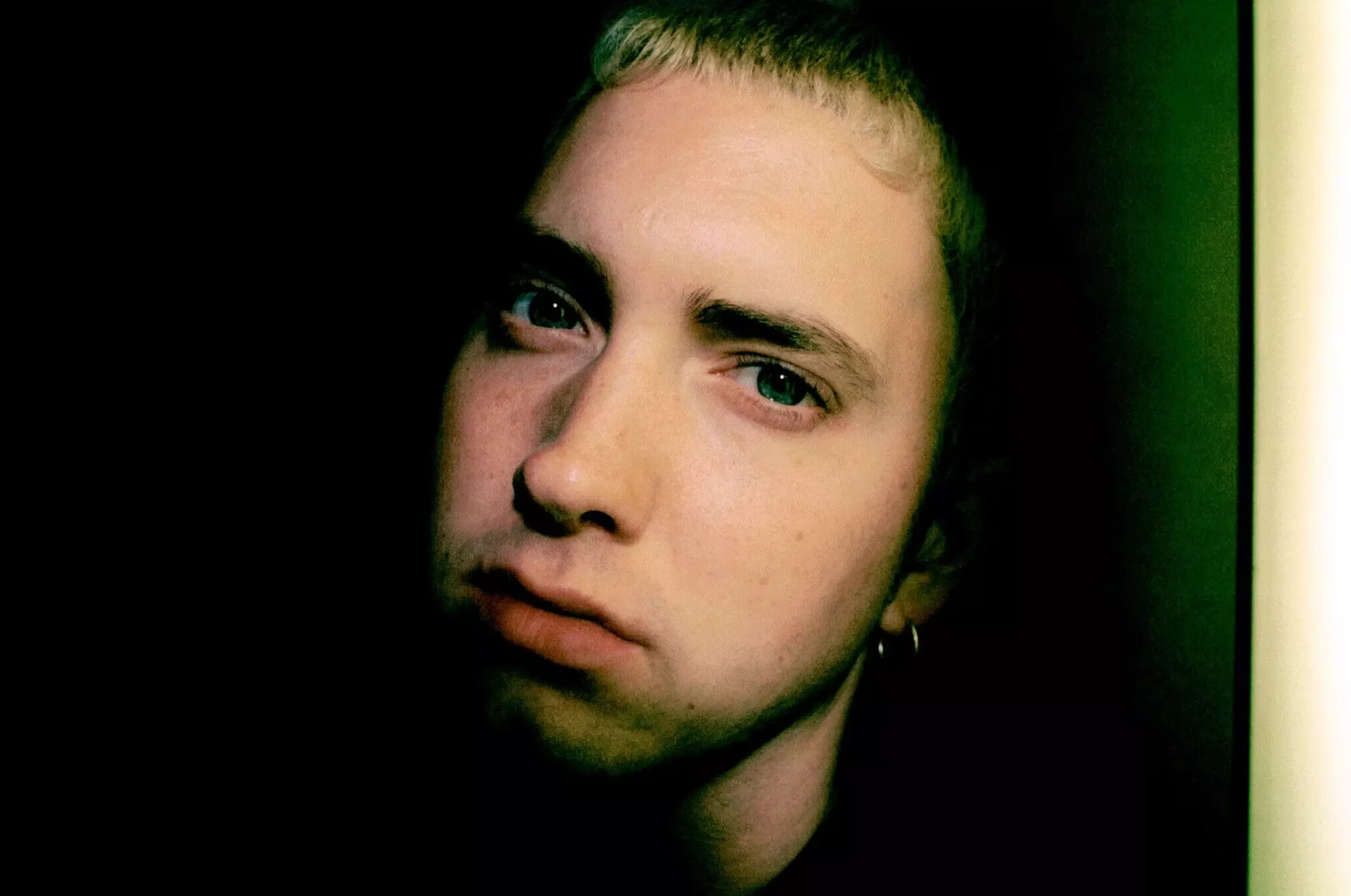
Problematic or not, the metaphor often used to describe impressive rappers' rapping is often that of a gun. Rat-tat-tat flows. Rapid-fire flows. Eminem is no exception, with his Uzi-like rhythm and velocity when he sputters bricks of word into the air, carefully tucking in extra syllables where needed, or slanted rhymes or chainsaw sound effects or personifying the vulnerable children of America as "Little Eric" because it slides neatly into "terrace" and "parents" even if none of those things actually rhyme. He's so gifted that they do now, folding his accent into clever lexical origami and layering meanings, too.
"Little Eric" who "jumps off the terrace" can be Eric Clapton’s son who fell out a window to his death, which would match the cruel laughs on the same song, 2000’s "Who Knew," directed for no responsible reason at Christopher Reeve and Sonny Bono. It can also be Eric Harris of Columbine shame, one of the two deranged high school students that kicked off one of America's worst traditions, the school shooting, who was also tied to transgressive musicians like Marilyn Manson and KMFDM, reigniting a national conversation about the effect of offensive song lyrics on children. But that last point shapes Eminem's work in the public eye even more than the astonishing care and invention of his verbal dexterity.
Of the available weapons to compare his groundbreaking, hysterically funny, disturbingly relatable music to, Slim Shady is more like a bomb. He hits his targets and maims plenty of bystanders, too. Injures himself and puts his loved ones in the line of fire. Puts all of America in the line of fire, in fact. Two decades ago, he blew up society as much as music possibly could with The Marshall Mathers LP. He mixed everything up like body parts on the battlefield. Conflated GLAAD protests of homophobia with the religious right's censorship of art. Mocked the irresponsibility of parents and guardians for allowing their kids to listen to him, for allowing him to thrive on his own demographic, for willing this volatile imp into existence with their hypocrisy and social mores simultaneously.
<style>.embed-container { position: relative; padding-bottom: 56.25%; height: 0; overflow: hidden; max-width: 100%; } .embed-container iframe, .embed-container object, .embed-container embed { position: absolute; top: 0; left: 0; width: 100%; height: 100%; }</style><div class='embed-container'><iframe src='https://www.youtube.com/embed/mQvteoFiMlg' frameborder='0' allowfullscreen></iframe></div>
In fact, it was all there in 1999's brilliant, unprecedented "'97 Bonnie and Clyde," wherein he portrayed a loving, protective father to his toddler daughter Hailey, who is part of the recording, while trying to hide his murdered wife’s body as the ultimate nightmare husband. He holds both roles to be true and plays them to the fullest. On The Marshall Mathers LP, he threw the whole of his recorded being into the song's prequel, "Kim," which is probably the most realistic portrayal of a domestic abuser in the entire history of music, if only because there just aren't many of those before or since. Artists who sing about abuse rarely inhabit the evil role themselves, and those who do tend to be sophomoric or melodramatic.
"Kim" is both of those things, but it's so gripping with cinematic detail, with acting performance and realistic mind-detours ("Hey, remember the time we went to Brian's party and you were, like, so drunk that you threw up all over Archie? That was funny, wasn't it?") in the middle of killing the mother of his child that it's impossible to listen to without being affected. Eminem is more than a great rapper, he’s an Olympian of the form. If you don’t believe performing music to be athleticism, try to imitate his impossible speech pattern on "The Way I Am" while breathing correctly. The entire thing. But he is using his unearthly physical rapping ability and lightning-bolt mind for vocabulary formation to make us feel something, even if it’s something awful. Whether we sympathize with him or not, he is demonstrating how the abused can become abusers themselves, a complicated cycle in perpetuity.
Listening to The Marshall Mathers LP is to associate pleasure with hearing a sick mind think quicker and wittier than yours. It's conceding an hour to an unreliable narrator who rhymes like a browbeating defense lawyer to connect dots that don't quite scan. The simple question of who he is mad at and why isn’t the easiest to answer. There’s the LGBTQ+ contingent he threatens casually for the first minute of "Criminal." There’s his charting peers ‘NSYNC and Britney Spears and "girl and boy groups" who get the litany of more homophobic rage on "Marshall Mathers" and a far more hilarious send-up on the enormous, dizzying first single "The Real Slim Shady" when he reduces TRL and the VMAs to one image of Fred Durst and Carson Daly debating who Christina Aguilera had relations with first. There's the parents of America who get plenty of scorn less horrifying than the fate he saves for his own mother on "Kill You," and then mocks the press for rewarding someone who would do such a thing, and mocks someone who would feign such pearl-clutching moralizing in the process. And he devotes a retrospectively surreal amount of time to his Detroit rivals Insane Clown Posse in a shameless "Ken Kaniff" skit. He also threatens to kill his greatest benefactor Dr. Dre on "Criminal." A bomb doesn’t think about the consequences, it just explodes. He’s arguing for that bomb's right.
<style>.embed-container { position: relative; padding-bottom: 56.25%; height: 0; overflow: hidden; max-width: 100%; } .embed-container iframe, .embed-container object, .embed-container embed { position: absolute; top: 0; left: 0; width: 100%; height: 100%; }</style><div class='embed-container'><iframe src='https://www.youtube.com/embed/eJO5HU_7_1w' frameborder='0' allowfullscreen></iframe></div>
Of course, this is metaphorical—fervently metaphorical. If The Marshall Mathers LP sent any message at all 20 years ago, it was that pop's most gifted wordsmith wanted us to know that his words had no meaning. This will never be true. The compound effect of such uproarious and clever ability combined with such nihilistic motive was both mass admiration and angry, defensive confusion. And of course, he didn’t mean it. The astounding "Stan" was not metaphorical. Just as he burrowed into his own most hateful and frightening thoughts about the girlfriend he wanted to kill on so many occasions, Eminem ingratiated himself into the mind of a desperate fan who could hurt his own family just because of his unyielding passion for the artist he perceived to permit such atrocities. You don't spend 13 combined minutes meditating on these over-the-top freakshows unless you care deeply about them.
By transmuting his rage and anxiety about his fame and his family into art, Eminem could set his ugliest feelings free. And after Eric Harris and Dylan Klebold's own killing spree, he had reason to believe that if he didn’t tell his most sycophantic followers how stupid and suggestible they were at every turn that they would hurt somebody. "My words are like a dagger with a jagged edge," begins one of Marshall Mathers' most infamous songs. He spends the entire album with an awareness that words hurt, pleading for that to not be the case. He does not want the burden of being this superhero with words, the ultimate witty constructions, the most laser-targeted comebacks, when all they do is cause damage.
<style>.embed-container { position: relative; padding-bottom: 56.25%; height: 0; overflow: hidden; max-width: 100%; } .embed-container iframe, .embed-container object, .embed-container embed { position: absolute; top: 0; left: 0; width: 100%; height: 100%; }</style><div class='embed-container'><iframe src='https://www.youtube.com/embed/gOMhN-hfMtY' frameborder='0' allowfullscreen></iframe></div>
So 20 years ago he drove himself insane trying to let it all out—into expertly constructed pop songs, mind you—to empty his mind of all this poison his immeasurable talent makes so easy and so quick. Thankfully for the world he’s so contemptuous of, it didn't work. He just kept filling up and needing to drain it all back out again. But on The Marshall Mathers LP, the bomb hit its target. "There’s a little Slim Shady in all of us," he mumbles at the end of "The Real Slim Shady." It's true. It's just that the world—then and now—is overrun by destructive people with far less control over the Slim Shady in them than the man who noted this. And most of them don’t make art, much less great art. Only one of them made The Marshall Mathers LP, so titled lest you forget which.
'Da Real World' At 20: Missy Elliott Champions Women, Hip-Hop Rookies, And, Most Of All—Herself