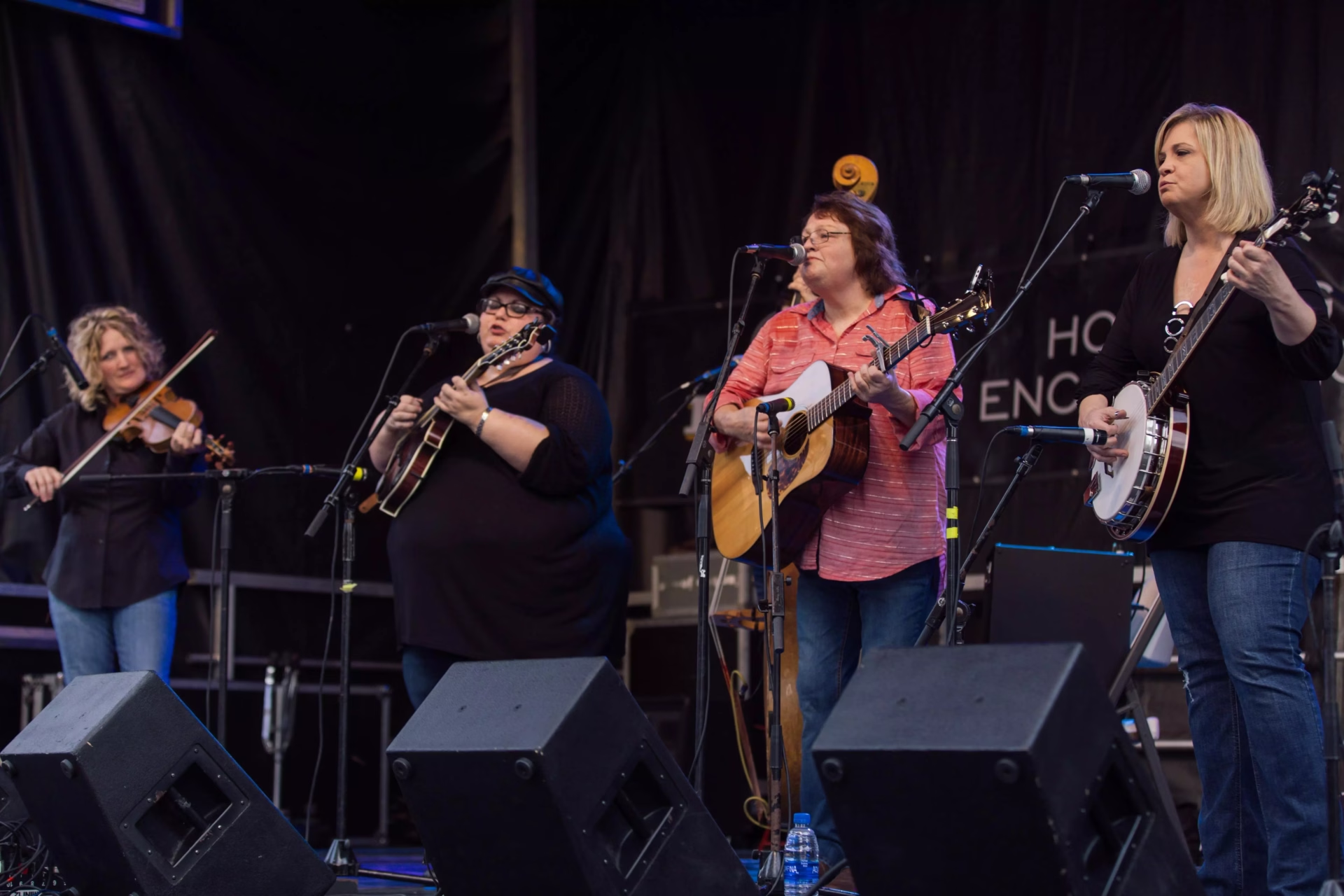
Bluegrass music has featured many talented female artists who have made their mark in the genre over the past seven decades of its existence, even though they have been greatly outnumbered by their male counterparts. In modern times, women musicians are still making history and breaking new ground with female artists winning the International Bluegrass Music Association Mandolin Player of the Year, Fiddle Player of the Year and the Guitar Player of the Year awards for the first time ever in the last two years alone.
Sister Sadie is a group of very talented female artists who have played in many different bands throughout their careers. Now, they have decided to join together to create a powerful new musical force. The group is made up of five-time IBMA Female Vocalist of the Year Dale Ann Bradley, Tina Adair on mandolin and vocals, fiddler extraordinaire Deanie Richardson, Gena Britt on banjo and Beth Lawrence on bass.
<iframe width="620" height="349" src="https://www.youtube.com/embed/A49ri4dKgG8" frameborder="0" allow="autoplay; encrypted-media" allowfullscreen></iframe>
We caught up with Lawrence and Britt of Sister Sadie during a late-night rehearsal this week at the IBMA World of Bluegrass convention held in Raleigh, N.C.
How many bands have you been with over the years, and can you remember some of their names?
Lawrence: Oh I don't know. Been with, or played with? It's hard to know. I mean it's been quite a few. I've played with a family band starting out. I've played with a couple bands from the area up in Wisconsin and moved here to Johnson City where I played with the East Tennessee State University's Bluegrass Pride Band. I played with the Stevens Sisters. I played with Gena Britt, with Gena Britt and Friends. I played with Mark Newton band, Alicia Nugent, Jerry Stanley Band, Sister Sadie. But I also played in a bunch of different configurations.
Did you do the East Tennessee State University bluegrass program, like Becky Buller and a bunch of others have?
Lawrence: Me and Becky were roommates, yeah.
That's incredible! So what'd the program do for you?
Lawrence: I think it was a great setting to pick with a lot of the pickers that played in the area. There's just a great community of picking there, and we all stay connected now. I think it's brought a lot of students together that normally wouldn't be together, or pickers who normally wouldn't be together because they were from different areas of the country. And we all got to meet and play together and start relationships that we've continued and we're still friends today and playing in different bands and have that connection now.
What was it like coming south like that from Wisconsin?
Lawrence: Well, my dad was born in Tennessee, so my grandparents were from the south. And so every year we came down for vacation and we would go to festivals and things like that. So, we always wanted to move to Tennessee when I was growing up.
Tell me about Sister Sadie - pretty amazing lineup.
Lawrence: We really enjoy it. There's different dynamics, different personalities, different playing styles but a lot of energy, and we get together and it just kind of fits. And we laugh the whole time.
Your second Sister Sadie album just came out. How'd that come together for you guys?
Lawrence: It came together pretty well. We recorded it at Scott Vestal's studio, and he was great to record with. He had great tones, and we just kind of went in and, when we put the songs together, we put them together pretty much right before we tracked them, and they just kind of fell into place. It's a little different than the first [album], and it's a little different than anything we've done, and I think it always kind of progresses that way. But it just keeps it interesting I think.
<iframe width="620" height="349" src="https://www.youtube.com/embed/0umJPXUH4tE" frameborder="0" allow="autoplay; encrypted-media" allowfullscreen></iframe>
Thank you, Beth. Gena, how many bands have you played in over the years?
Britt: Oh, gosh that's a good question. A lot. I've freelanced a lot, I'll put it like that. But I've played with Lou Reid & Carolina, New Vintage, Dale Ann Bradley Band, Alecia Nugent... gosh. Sister Sadie of course, Alan Bibey & Grasstowne.
Oh, yeah. Were you in that Petticoat Junction band?
Britt: I was in Petticoat Junction. That was in the early '90s for just a few years.
How'd you make your way to Sister Sadie? How was it formed?
Britt: Just a bunch of friends that knew each other from over the years through seeing each other on the circuit and everything. And, we thought it'd be fun to get together at the Station Inn one year at Christmas time, so we booked a show around that. We thought it would be a little fun thing, so the five of us got together. I'll never forget it. At five o'clock that evening, when we hit the first note, we all looked at each other like, "Oh yeah, this is pretty special."
From that point, we had no plans of ever doing that again. That was just a one-off show. And then some people started putting live videos from the show, and we started getting some phone calls, and would we be interested in doing it again, so it kinda has snowballed from that.
Everybody in the band is top-notch, it's gotta be pretty amazing, really.
Britt: It's really amazing, and like you said, everybody in their own right has had a great career already, and it's an honor to get to play with all these people. We have such a great musical chemistry on stage and off.
How'd the second Sister Sadie album come together from your perspective?
Britt: The Sister Sadie II album, we just decided that we didn't want to let everything go to the wayside and not be creative with what we had been given. We had been given this gift of being able to be together and create music together, so we wanted to make sure we shared it with each other and with our fans, too. We were getting some requests from our fans to do another record and we're tickled how it came out. Scott Vestal was the engineer on our new record and he did a fabulous job, and we had a lot of fun working with him.
Who are your banjo heroes?
Britt: Scott Vestal, Terry Baucom, Sammy Shelor, and J.D. Crowe - and Lynn Morris for the fact of her professionalism and how she carries herself. In the music business and as a performer, Lynn was one of the few women that I took notice of when I was learning how to play, because she can play and sing at the same time. You don't see a lot of banjo players that can actually sing lead and play at the same time and I thought, "I wanna be like her."
Photo Gallery: Inside World Of Bluegrass, IBMA Awards & Festival in Raleigh
