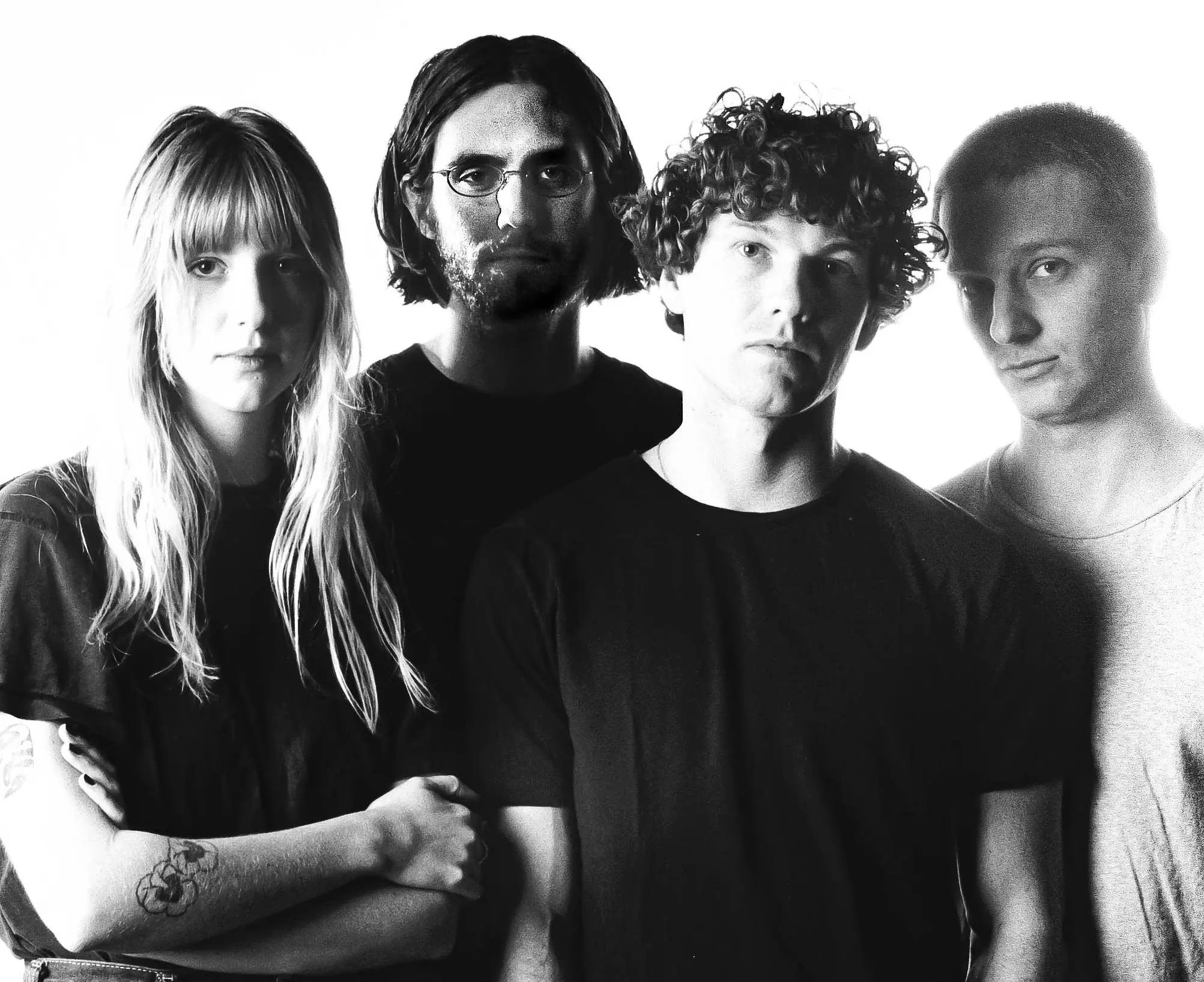
Slow Pulp aren’t sure how to sonically categorize themselves, so they jokingly offer: "cow rock," "slowcore" and "not emo, but emotional." They’ve been labeled as shoegaze before, but they think the reason for that is: "We’ve put out such a little amount of music that people don’t know what to call it yet."
The group is based in Chicago, but the four of them are from Wisconsin. Three of the members—Alexander Leeds (bass), Theodore Mathews (drums) and Henry Stoehr (guitar)—have been playing together since sixth grade, and Emily Massey (vocals/guitar) joined in 2017. Moveys is their debut album, arriving via Winspear on Oct. 9.
Moveys follows a crazy series of events involving a depressive episode, a diagnosis and a car crash, but the record glows with an aura of serenity and weightlessness. It’s different from their past material; it’s more focused and cohesive. It’s naturally packed with inside jokes, eccentric sound effects, infectious indie rock riffs and sprawling folk ballads. Read our chat with the band about the making of Moveys.
<style>.embed-container { position: relative; padding-bottom: 56.25%; height: 0; overflow: hidden; max-width: 100%; } .embed-container iframe, .embed-container object, .embed-container embed { position: absolute; top: 0; left: 0; width: 100%; height: 100%; }</style><div class='embed-container'><iframe src='https://www.youtube.com/embed/Qc9jp4iTu0M' frameborder='0' allowfullscreen></iframe></div>
While all of you were working on this album, Emily, you got diagnosed with Lyme Disease and Chronic Mono and then your parents were involved in a crash. Could you take me through this timeline?
Massey: Where do we begin?! Last year we all lived together and we were touring a lot and trying to write music. I was experiencing a lot of fatigue. I was sleeping most days and feeling really depressed and confused about my health. My motivation level was really low and my [self-esteem] was really low. I was in a big time period of questioning whether or not I was capable of being in a band and writing. When we started writing a lot of the songs on this record, I started feeling a little bit better in terms of my mental health and desire to get better. I went to the doctor in the fall of 2019 right before we were going on some other tours. I got my diagnosis. It was really validating in a lot of ways because it was another piece of my health that was causing my fatigue and my anxiety and getting sick a lot. That’s kind of when we really started writing the record—after that diagnosis.
I started getting a lot of tools to take care of myself and then my parents got into a car accident on March 1 of 2020. My mom broke her neck and my dad fractured his neck, so they both had pretty serious injuries and were in the hospital for a while. I came back to Madison, Wisconsin, to take care of them. Then, a couple weeks later, COVID hit. I remember I came back to visit Chicago for a day and that’s when it really dawned on me how serious it was. I asked the boys—Henry, Teddy and Alex—if they wanted to hang out and they were all like, Um… I don’t think we should do that. That’s a bad idea because of coronavirus. And I was like, Oh, yeah, that’s a real thing. The next day my mom was in the rehab hospital terminal and I couldn’t even see her for three weeks because they wouldn’t let anybody in. That was really crazy and I ended up getting stuck in Madison partly because of COVID and my parents needed a full-time care taker. There was no one else to do it, except for me and my sister. Because of coronavirus, we couldn’t have family friends coming over or anything like that. It was a really strange time to be dealing with all of these things in what felt like an isolated and lonely way. There’s just a lot going on—drama with family friends. It was a very difficult time. We finished a lot of the record during that time [laughs]. It was kind of a whirlwind.
But my dad is a musician and he engineered my vocals on the album. In a way, working on the record was a nice reprieve from being a care taker and dealing with grief. Weird juxtaposition finishing a record and writing about being emotional and sad and dealing with a lot of difficult things but also using it as a thing to help me through it.
<style>.embed-container { position: relative; padding-bottom: 56.25%; height: 0; overflow: hidden; max-width: 100%; } .embed-container iframe, .embed-container object, .embed-container embed { position: absolute; top: 0; left: 0; width: 100%; height: 100%; }</style><div class='embed-container'><iframe src='https://www.youtube.com/embed/yuoFLLHB1Fc' frameborder='0' allowfullscreen></iframe></div>
Was it nostalgic to be back in Madison, Wisconsin?
Massey: It was a nice time to be there, I think. I hadn’t been there in a while, and I think after this time I have a new appreciation for it—for the city. I grew up there and before I moved to Chicago I lived there my whole life. My parents actually are moving away from there this fall, so it was my last time being in Madison as a home base. My mom put it in an interesting way—since my sister and I moved out of the house, it’s was the last time that we would really spend time as a family like this, unless the pandemic gets worse and everything fails and I don’t have any money and I have to go back [laughs]. Which is highly likely, but it is an interesting time to reflect. I’ve been in Madison during tough times and I’ve found it to be a very healing place. There’s a lot of lakes and it’s really beautiful to walk around. That helped me a lot.
How does mental health tie into the record?
Massey: When we started writing this record, I was at a low point within my own mental health. I was having a really difficult time explaining it or communicating about it especially to my bandmates. I was—for a while—unable to write. I was really self-conscious about writing and was very self-deprecating all of the time. That’s difficult when you’re a musician because you have to believe in what you’re making, and I wasn’t in a space to do that.
Mental health isn’t something where you wake up and you’re like, "I’m better and good!" It’s something that comes and goes, at least from my own experience. Throughout this record, I was learning a lot about myself, about my body with my diagnosis, about myself as an artist, about myself as a human who was growing. It was at the forefront of my mind, and lyrically it came out. For me, it was a way to understand it. I was having trouble understanding how it manifested in myself. It’s a weird position to be in when you’re a performing or touring musician and you feel so against yourself. I felt like I hated myself and was being [disingenuous] to people watching me, like I was pretending and putting on a facade of being confident and like I knew what I was doing. I needed to step back, and I’m still figuring it out. I don’t have the answers at all. I feel lucky to have gotten out of the place that I was in, but the pandemic and all of the other stuff doesn’t make it easy to continue on the right track [laughs]. It’s a process of figuring out how to care for yourself in the best way. I think this record helped me do that, or at least move forward in doing that.
<style>.embed-container { position: relative; padding-bottom: 56.25%; height: 0; overflow: hidden; max-width: 100%; } .embed-container iframe, .embed-container object, .embed-container embed { position: absolute; top: 0; left: 0; width: 100%; height: 100%; }</style><div class='embed-container'><iframe src='https://www.youtube.com/embed/VRiENpklOO4' frameborder='0' allowfullscreen></iframe></div>
The press release says the title Moveys is an inside joke. What’s it about?
Massey: [Laughs.] It’s kind of funny that they called it an inside joke. Henry had written the last song on the record, "Movey," and I thought it was funny. I liked the word a lot. A lot of the songs also started with names that were related to movie titles. Like, "Whispers (In The Outfield)"—Henry, correct me if I’m wrong—but that’s related to Field of Dreams.
Stoehr: It was actually Rookie of the Year. [Laughs.]
Massey: And we had another song that started out with the title "Evan Almighty." Just random things. For "Track," at one point, we had talked about The Wild Thornberrys Movie as an inspiration. And the way that we communicate about music is very visual. Sometimes Henry will try to be talking about a song and he’ll set up an entire scene to describe it rather than I want it to sound like this. So, I think in that way it’s an interesting tie-in to the title. I also have a history with dance; I used to be a ballet dancer, and I’m a ballet teacher outside of being a musician. That plays into it. We’re just connected to the word in many ways. Movement in terms of health and mental health. I think Alex said something earlier about motion and movement within yourself and your growth being transient and that changing.
There’s a bunch of weird noises and bits throughout the record. Where did these come from?
Stoehr: The sound in "Idaho" is from Teddy and I recording at the same time. I had done this delay effect with guitar pedals, and it was just in the scratch take and I left it in there. For most of the other sounds, we branched out and did some different textures and song environments. I found this keyboard in an alley when we started recording it and it has a lot of cool sounds on it.
Where did the piano instrumental on "Whispers (In The Outfield)" come from?
Stoehr: I had just been playing more piano in between working on the other songs and recording. I had this chord progression going and I’d been fine-tuning it over the course of writing and recording the album. It was one of the last ones that we figured out. I was thinking about this one song that I recently found from this baseball movie used to watch when I was a kid, and I didn’t realize I was thinking about it necessarily at the time. I think I was trying to capture this big baseball energy but in a nice piano song. [Laughs.] I couldn’t play it exactly how I was imagining it, because I don’t play all that much piano. And Emily’s dad is a professional piano player so I sent him a video of me just playing the chords and then we talked and he sent back a couple versions of him playing it. He shredded it.
Massey: He knocked it out of the ballpark.
Shamir Talks New Self-Titled Album, DMing With Mandy Moore & Being The Change He Wants To See