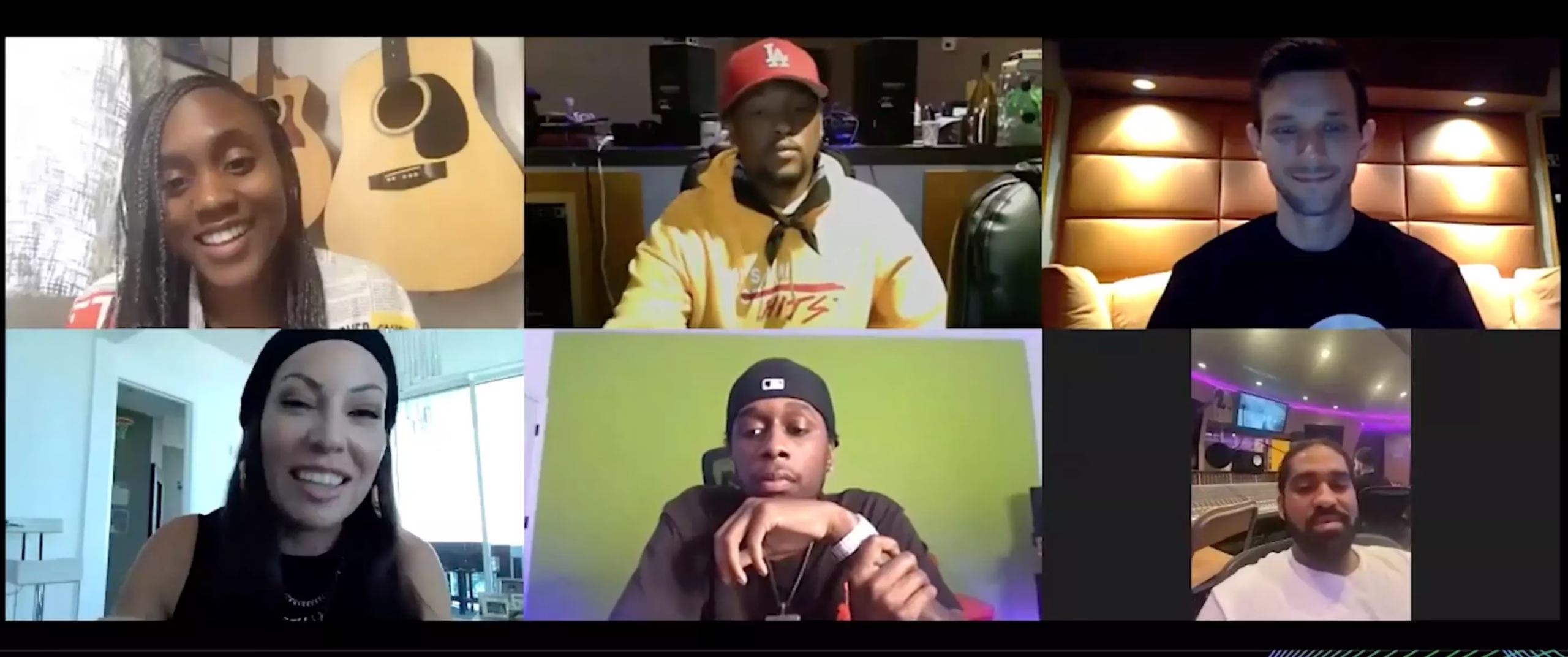
A great song is more an arrangement of human relationships than sounds. For the creators on the control room side of the glass, knowing your way around Pro Tools and an SSL mixing board is only part of what goes into making a hit – it comes down to people.
On Sept. 24, the Recording Academy's Producers & Engineers Wing hosted a live webinar with a group top engineers and producers who have helped shape some of the biggest recent hits across hip-hop and R&B. During the discussion, which was moderated by multi-talented producer, engineer and singer-songwriter Ebonie Smith, Hit-Boy (Travis Scott’s “SICKO MODE”), MixedByAli (Kendrick Lamar’s “HUMBLE”), Chris Dennis (Roddy Ricch’s “The Box”), DJ K.i.D. (DaBaby’s “INTRO”), and Marcella Araica (Timbaland’s “The Way I Are”) discussed the balance between human and technical requisite in making hits.
<iframe src="https://www.facebook.com/plugins/video.php?href=https%3A%2F%2Fwww.facebook.com%2FRecordingAcademy%2Fvideos%2F900649827128789%2F&show_text=0&width=560" width="560" height="315" style="border:none;overflow:hidden" scrolling="no" frameborder="0" allowTransparency="true" allowFullScreen="true"></iframe>
Before Araica was a seasoned music industry vet, she was an assistant at Miami’s Hit Factory Studio in 2002 surprisingly tasked one day with engineering a Missy Elliott session only two years removed from graduating from Full Sail University. Araica revealed in the discussion she was not experienced enough with Pro Tools to keep up with Missy’s speed of working and was subsequently kicked out of the session. From that moment on, Araica made sure she became more skilled at Pro Tools and ready for the next opportunity when it came. But the computer aside, there was a more human element she learned to hone from working with Missy and Timbaland.
“On the engineering side, just really learning how to use my ears. It wasn’t just about hitting the computer and hitting buttons, that was one aspect of it. Really understanding, ‘What was I trying to accomplish in sound,’” Araica said.
Araica’s prioritizing of serving the song and the session beyond just operating the equipment is a piece of advice every participant echoed. There are thousands of engineers and producers in the world, but these accomplished panelists agree the ones who can make the artist’s studio experience the easiest on a human level are the ones that end up sticking around. That may include cleaning up the studio before the artist gets there or getting the artist tea if their voice is raspy. “It’s not only [about] being an engineer. It’s easy to record and hit command + space bar. It’s also about being there for them on a personal level making sure they’re taken care of; making sure the vibe is right; doing whatever you have to do to make sure they’re in their right mindset to make the best music possible,” Dennis said.
Still, a producer’s primary way of standing out is their work. Unless fans read the credits or an artist is willing to keep the producer’s tag in the beat, the architects of the sound can get lost in the final project. Ali spoke on the importance of engineers and producers developing what he calls their “sonic thumbprint.” “You have to sit up and spend countless hours developing and curating the sound with them. At that point, you create the sonic thumbprint. I speak about the ‘sonic thumbprint’ because that’s how you separate yourself from the herd of people,” Ali said.
He advises engineers to stay an extra few hours in the studio after mixing a record for an artist to do an additional mix with all the tricks that show the unique creativity they can bring to the table. The extra time may be unpaid, but the connection with the artist could grow more inextricable. “Invest in an artist early. Invest in time of getting with them early and creating a sound together because when they blow up, they’re going to need that sound throughout their career,” Ali added.
DaBaby’s hit-making producer/engineer DJ K.i.D. is a testament to that advice. K.i.D. helped DaBaby get a Top 15 Billboard Hot 100 hit by transforming NSYNC's 1998 rendition of "O Holy Night" with booming 808 drums for the song “INTRO” from DaBaby’s KIRK album. He credits the extensive time spent working with DaBaby for understanding his sound enough to know how to expand it. “I was the dude that loved pop music and wanted to put 808s on pop instead of just straight trap music. He helped me step into the trap lane," K.i.D said. "Then, on the road as his engineer, it was like, 'Ok, you need to speed stuff up.' So, working with such a great artist helped me turn into a better engineer.”
Sometimes as a producer or engineer, the most human approach to success in music is to listen to the people over your own ego. Hit-Boy burst onto the scene in 2011 producing the six-times platinum megahit “Ni**as In Paris” from Kanye West and Jay-Z. If he only trusted the depth of his technical talents and not the ears of others, he may not have recognized the hit on his hands.
“Once I caught my first big rap hit, which was ‘Ni**as In Paris,’ that was my most simple beat, I was dumbfounded. I’m doing beats with all these chord changes and y’all pick my simplest beat to be my biggest beat,” Hit-Boy said. “That really killed me for a second. That really taught me that it’s the way it hits the ear. It’s not always about piling everything on. It might be the simple thing that takes off."
During the panel, Ali spoke of his prolific time 2016-18 run where he worked on Kendrick Lamar’s DAMN, SZA’s CTRL, Mac Miller’s The Divine Feminine, Danny Brown’s Atrocity Exhibition, Vince Staples Primadonna, YG’s Still Brazy to name a few. While he was racking up GRAMMY Awards and platinum plaques with his work being played everywhere, he says he was depressed because he felt like a mixing robot who took no time for himself. The panelists all agreed, including DJ K.i.D. who revealed he can be so preoccupied with work he forgets to eat for more than 13 hours and stressed the importance of engineers and producers’ health in making hits.
“As much as we love the grind to be in the studio and going hard for what we love, taking a break for what yourself is super important because you never know what could come out at the end of that. You might take a seven-day break from the studio and make a hit,” DJ. K.i.D said.
While these sonic masters focused more on the human side of hitmaking, they still gave a peek into the gear behind the work they do. Araica expressed her appreciation of the handheld approach on the [Shure] SM-7 or SM-58. MixedByAli briefly touched on his mixing approach being a fusion of analog, explaining he mixes on the SSL G-Series mixing console gifted to him by Dr. Dre while using a sample peak program meter to gauge the loudness of his mixes before sending them off to mastering.
But, in the end, these professionals who reached what most would consider the apex of engineering and production made their hits by being more than service and nothing less than human.
“The relationship between the artist and the engineer is like [being] with your homeboy taking a road trip. Your homeboy knows where he wants to go, but the engineer is holding the map kinda taking him there,” MixedByAli said, as his peers nodded in a shared understanding.
Watch the full conversation here.
