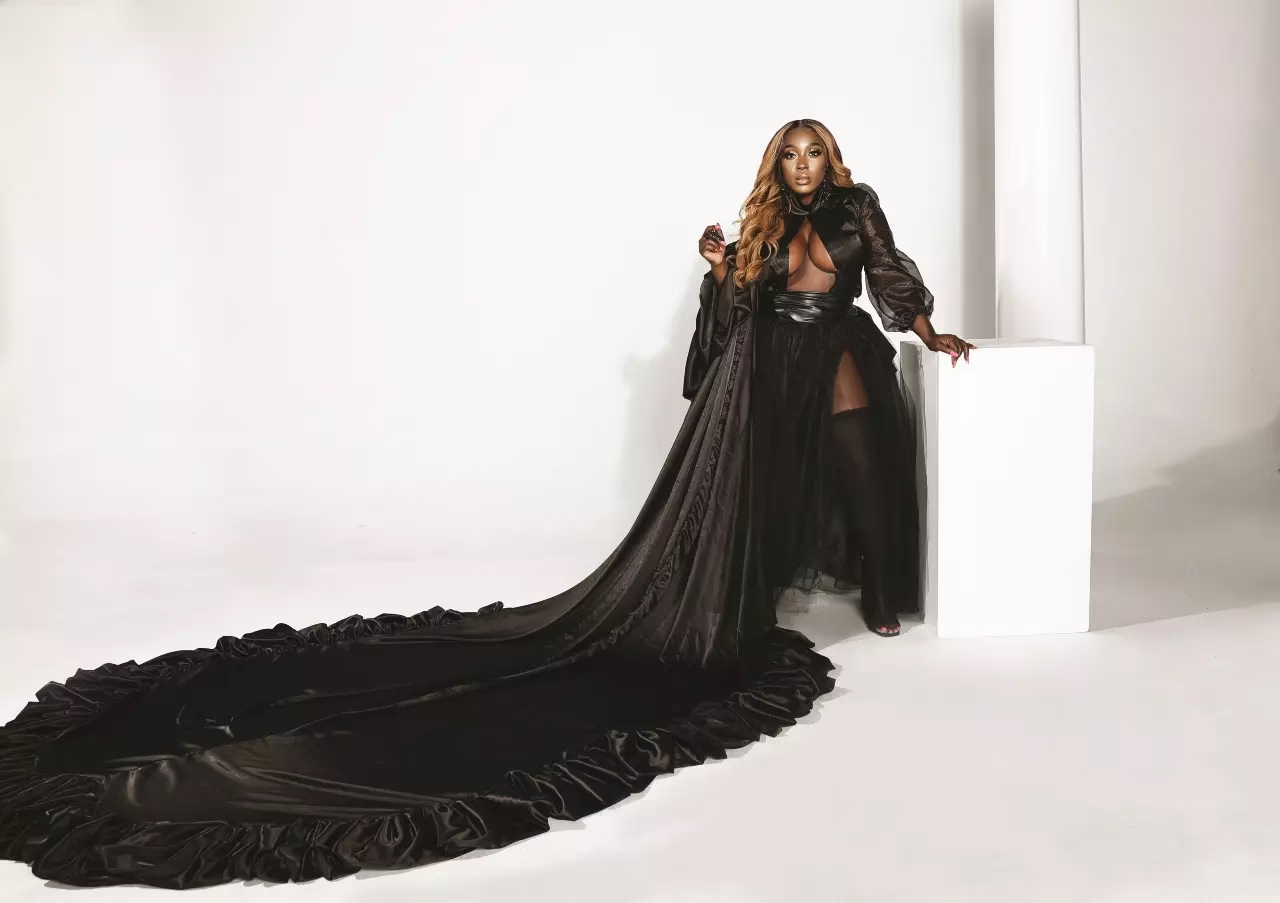
The music business is a global breeding ground for ambition and enterprise, but arguably nowhere more so than Jamaica. The dancehall superstar Spice gets hers from a basic, upsetting truth: her scene has been pillaged for musical riches without getting the global credit it deserves.
"We're still ambitious because it's been around for three decades and there are still artists trying to be impactful and known there," she proclaims to GRAMMY.com. "I would say we are very ambitious to still be going after 30 years, 40 years." Rather than be hobbled by these hurdles, she went on to be unstoppable in the dancehall scene — and work with two of mainstream reggae's leading lights.
Indeed, Shaggy and Sean Paul appear together for the first time ever on Spice's new single, "Go Down Deh," which just cracked 20 million views on YouTube. The percolating tune is included on her new album, Ten, which will be released on her birthday, August 6.
True to its title, the 15-track collection was in limbo for a decade due to label tumult. Now, listeners can hear her message loud and clear: Dancehall and reggae are for everyone, and it all began in Jamaica.
GRAMMY.com caught up with Spice over Zoom about her rags-to-riches story, why the world of dancehall is far richer than most give it credit for and how she feels now that Ten is finally on the horizon.
<style>.embed-container { position: relative; padding-bottom: 56.25%; height: 0; overflow: hidden; max-width: 100%; } .embed-container iframe, .embed-container object, .embed-container embed { position: absolute; top: 0; left: 0; width: 100%; height: 100%; }</style><div class='embed-container'><iframe src='https://www.youtube.com/embed//lZizLbWxr_E' frameborder='0' allowfullscreen></iframe></div>
This interview has been edited and condensed for clarity.
You mention dancehall culture in the press release. While I'm very aware of the genre, I'm less knowledgeable about the vibe and culture surrounding it. How would you describe it?
Let me start out by saying that a lot of people don't know that dancehall is a place. Dancehall is actually a place where people go to dance and have fun. It's a very energetic genre. A lot of people from different cultures take from dancehall. Kool Herc was playing dancehall in New York, and that's where hip-hop was birthed. A lot of people don't know that dancehall has been very impactful.
I imagine that there are myriad varieties within dancehall, too. It's not just one thing.
Definitely, there are different sounds within the dancehall genre. Different types of style and sound. You have old-school dancehall, modern dancehall — everything is kind of different. Every artist always puts their unique style to it, so it has changed over the years.
Do you consider yourself exclusively a dancehall musician, or is that just one trick you've got up your sleeve?
I do a bit of reggae as well. I would definitely say I just represent Jamaican music, which is dancehall and reggae at the same time. I do dancehall sometimes; sometimes, you hear me do a little more cool end of the style. I know you would be more familiar with a Bob Marley type of song, so a Bob Marley style would be reggae. But when Spice [comes] out more and I spit lyrics [over] a more hardcore bass/drum [beat], that's dancehall.
Is this the truest dancehall music you've made, or have you gone more dancehall in the past?
I definitely have been more dancehall in the past. One of my biggest hits is "So Mi Like It"; it has almost 100 million views. I'm known for doing hardcore dancehall music.
But these days, it seems like you're more interested in blending it with whichever inspirations come your way.
Definitely. I would definitely say that. My fanbase and audience know me for that type of music, too — hardcore dancehall. It wasn't surprising that "Go Down Deh" with Shaggy and Sean Paul was so impactful and that it did so majorly and so very well.
Read More: The Women Essential To Reggae And Dancehall
What compelled you to seek out those two artists as collaborators? Do you go back with those guys?
Well, I've known them over the years. I've been a fan of both of them. I was the one who reached out to Shaggy and I said, "Hey, I think we need to do a song together." He answered me the same day and was like, "Come to my studio. I have a ranch in New York." I went to New York and we discovered "Go Down Deh," the track. It was just so amazing.
I said, "Can you imagine what would happen if I had Sean Paul on this track?" He was receptive to it, so we reached out to Sean Paul. We sent him the track; Sean Paul was already on it. Within 24 hours, Sean Paul sent me back his part with his verse. I tell people that this was the easiest song to put together. A lot of people thought it would be one of the most difficult tasks, but it was the easiest.
What do you appreciate about the specific chemistry between you three?
What I really appreciate is the fact that we are all from Jamaica. When I was promoting it, I just put out "SSS" and everyone was like, "What is SSS?" I said, "Spice, Shaggy and Sean Paul." But what I appreciate more about it is that I'm just so humbled over the fact that it's two of the big legends who have done so well for the genre. Shaggy, he sold diamond.
I'm just humbled that they were able to come together for the first time on the lead single from my album. Every day, I give thanks, and I'm so grateful to these two legends for being able to be part of my album.
<style>.embed-container { position: relative; padding-bottom: 56.25%; height: 0; overflow: hidden; max-width: 100%; } .embed-container iframe, .embed-container object, .embed-container embed { position: absolute; top: 0; left: 0; width: 100%; height: 100%; }</style><div class='embed-container'><iframe src='https://www.youtube.com/embed//8z-tnHKp_Tk' frameborder='0' allowfullscreen></iframe></div>
Because all three of you are from Jamaica, is there a sense of silent communication or understanding?
Most definitely. At the end of the day, when Sean Paul does his interviews, he says "I've been a fan of Spice for so many years." And I myself have looked up to Sean Paul and Shaggy for so many years. A lot of people don't know that we all came from humble beginnings, you know?
Growing up in Jamaica as a third-world country hasn't been easy for any of us. We have managed to struggle and come from a background where we basically had nothing and embrace our culture. We took it to the world and showcased it to the world. We all have similar paths. So now that we are together, I do say we share similarities in that aspect of where we're coming from.
I feel like most Americans are aware of the tumult in that region, but not of the specifics. What was challenging about your upbringing?
Let me speak basically from my point of view and perspective and from where I'm coming from: I come from humble beginnings, meaning I had basically nothing.
I remember going to school with no food, no money, not even knowing how I was going to get back home. I had to beg people to put money together to pay my fare, to take a taxi or a bus. There were nights I went without food and stuff like that. My slope right now is from homeless to owning houses. I remember at one point, I lost my home to fire and I was literally homeless. Sleeping at friends' and family's and things like that.
So, the struggle for me is something like that, but all of us share the same thing of wanting to become international. Having a wider audience. Shaggy and Sean Paul have done that impactfully for the genre. They have crossed over so the American audience knows that, and that's the dream for every Jamaican artist: to be known worldwide, or widely here in America.
Is there a certain strain of ambition unique to Jamaican artists?
I would definitely say that we Jamaican artists are very ambitious. We strive to have our music known widely. So many people have taken so much from dancehall culture, so we still are known as the underdogs.
People don't give us the ratings that our culture deserves. So, we're still ambitious because it's been around for three decades and there are still artists trying to be impactful and known there. I would say we are very ambitious to still be going after 30 years, 40 years.
Oftentimes, the media puts things out there to make it seem like we're fighting with each other, fighting against each other. I'm really humbled and grateful to show that together, we are more of a force to be reckoned with. When this song came out — it's actually still trending in Jamaica right now, the music video — people appreciated the fact that we were able to come together and create this song.
So, I just want people to know that we are together. I love the unity that's happening right now within dancehall and reggae music. I'm just humbled that Shaggy and Sean Paul came together on this track. It has never been done before.
Spice. Photo: Sterling Pics
Where did that stereotype of constant conflict come from?
Sometimes, I see people who are like, "Oh, I want to come to Jamaica, but I'm scared." I'm like, "OK, why are you scared?" They're like, "Oh, because people are dying." I feel like sometimes the news media puts out the bad parts about Jamaica or its music or culture.
Sometimes, people say it's derogatory because we sing about wining a lot and the gyration of the waist. But at the end of the day, so many tourists come to Jamaica because of its music. People come to dance and have fun. They see things that they don't see here in America.
I can speak because I'm here in Atlanta and I go to the club all the time: When people dance here, they're on their feet. They're dancing. In Jamaica, people are spinning on their heads. Their culture is very unique and different and I just wish more media will cover the better aspect of Jamaica because Jamaica is a beautiful place.
So are the genre and the music. There are so many good things there to discover, rather than talking about people who come there and who are dying and stuff like that. That's just my dream: to see people in the media showcase the better parts about Jamaica and its music and culture.
How do you feel now that Ten is on the way?
I'm just anxious and I can't wait! It's called Ten because it's been 10 years that my fans have been waiting for this project. I'm just happy and excited for them because coming off the pandemic, people just can't wait to be outside and partying again and seeing their friends and having a good time. I just want everybody to embrace themselves for my album project because it's going to be amazing.
