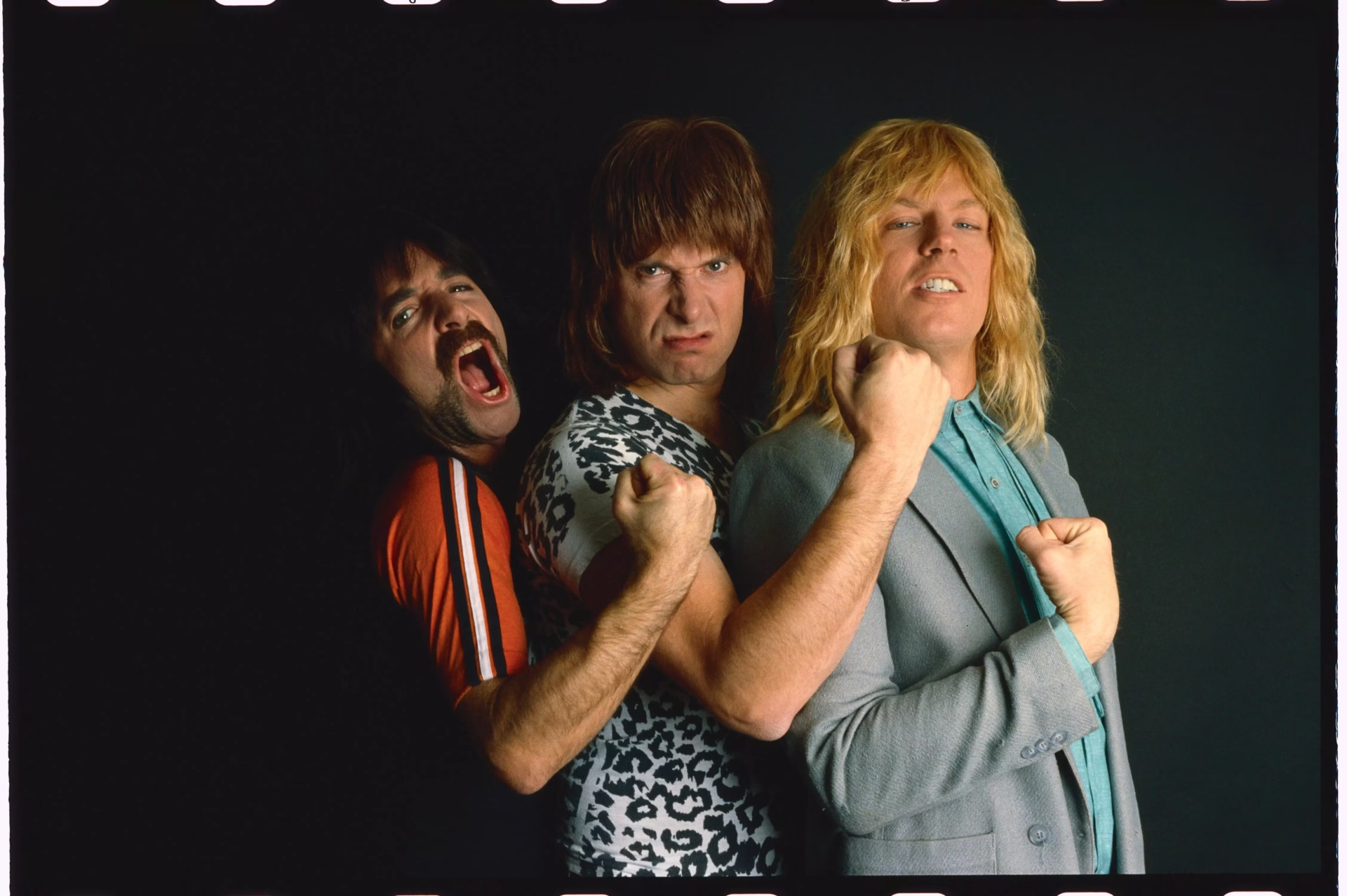
A new chapter has been written in the ongoing case of the lawsuit filed by This Is Spinal Tap's co-creators against Vivendi for alleged underpayment of royalties and merchandising profits from the satirical 1984 cult-classic rockumentary.
<iframe width="620" height="348" src="https://embed.vevo.com?isrc=USQY50929308" allowfullscreen=""></iframe>
Harry Shearer, Michael McKean and Rob Reiner, the film's co-creators and the plaintiffs in the suit, had their initial efforts partially stymied in September. U.S. District Court Judge Dolly Gee dismissed their claim that accounting fraud had been committed by Vivendi and ruled that the companies representing the plaintiffs had no grounds to sue —with the caveat that the co-creators did have right to explore individual suits as third-party beneficiaries of contracts.
The plaintiffs' legal complaint, originally seeking between $125 and $400 million in damages, has since been amended to include "newly claimed expenses," Billboard reports. Universal Music, a subsidiary of Vivendi, was also added to the suit as a co-defendant, while the film's director Christopher Guest was added as an additional plaintiff.
At the center of the lawsuit is the claim the plaintiffs made in October 2016 that, despite the millions in merchandising and soundtrack sales that Vivendi and Universal have tallied from the film over the past 30-plus years, the co-creators had been paid a total of $81 in merchandise profit shares and $98 in album royalties, while being delivered no accounting paperwork whatsoever.
Meanwhile, Vivendi's argument centers on the assertion that the Spinal Tap creators wrote the film and its music as a contracted work-for-hire, meaning they were contracted to "perform services — not receive rights or other benefits."
The crux of this semantic argument stands on the 1976 Copyright Revision Act, which includes provisions allowing creator's the ability to reclaim their copyrights from record labels or other license holders after a period of 35 years. If Universal's claim that the film and its music were created as a work-for-hire is overturned, then Shearer, Guest, McKean and Reiner will have grounds to reclaim full ownership of the Spinal Tap brand, regardless of whether their suit for alleged underpaid royalties is decided in their favor.