Professional U.S. musicians appreciate the Recording Academy's Advocacy work to reform government overregulation that harms livelihoods in music, for example the music all-stars participating in our National Advocacy Committee.
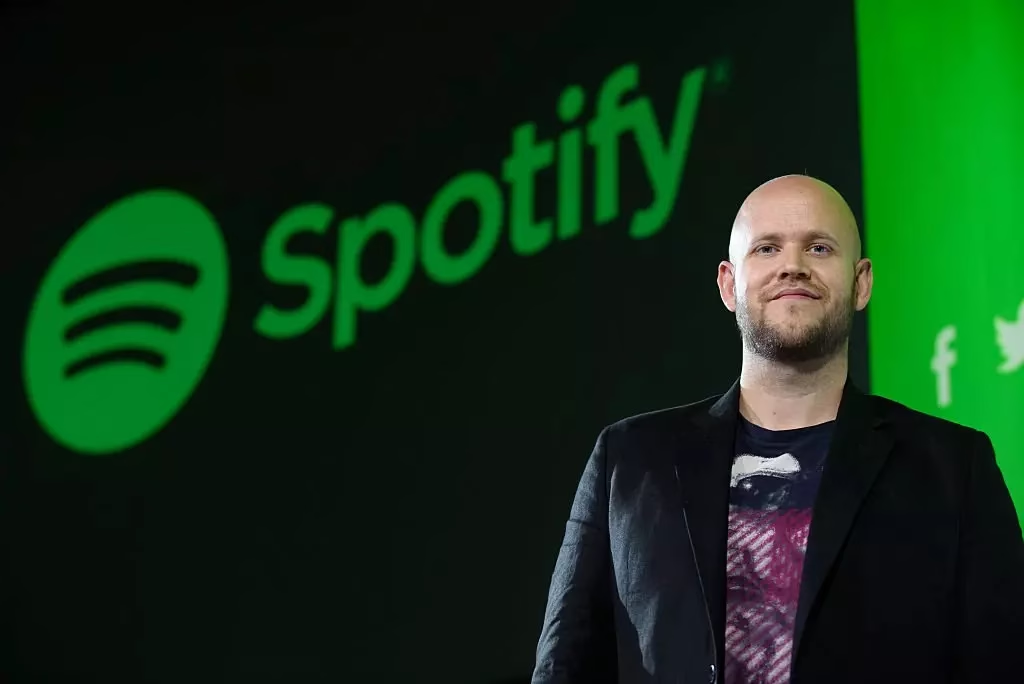
Without fair laws, the music industry as a whole remains vulnerable to expensive lawsuits, such as the high-stakes litigation over unpaid mechanical royalties that has Spotify arguing internet distribution is just a performance — like radio. Spotify is arguing that without distribution of physical copies, it should not be subject to these specific royalty obligations.
National Music Publishers' Association President/CEO David Israelite said, "As long as this is an active argument, we are in a state of war with [Spotify]."
Billboard contributor Robert Levine has written an exploration of whether resolution of this question "could upend the music industry's newfound recovery." By exploring the worst-case scenarios for publishers or alternatively for Spotify, Levine observes risks that could potentially produce lose-lose outcomes. Although he blames this on "a chain reaction that's getting out of control," battles based on the status of ephemeral digital files transmitted over electronic networks to devices are older than lots of people's children.
Those kids grew up with the internet but, like most consumers outside of the music business, discussions of intellectual property rights are likely to fall on deaf ears. Meanwhile, internet platforms and devices with computer chips are used every day by a huge segment of humanity. A big slice of daily internet users would rather do without some of life's greater pleasures than lose their internet connection. Spotify benefits from this love of digital life online and contributes to it, but enthusiasm doesn't add up to fair royalties and the ability to keep the music playing while supporting the community of full-time music professionals.
As an industry leader, Spotify stayed ahead of the curve, neglecting copyright filings that will now cost millions of dollars to litigate. Still searching for a profit and hoping to go public, Spotify likely views such lawsuits as life-and-death for its future, hence the "state of war." Other services face their own unique survival struggles, such as SoundCloud, and revenue is critical for all businesses — just as it is for the music community.
Whether people enjoy the details of copyright law or avoid them, this is just a glimpse into public policy efforts the Recording Academy has pursued for decades — fighting for fairness that will keep the music playing.