On Dec. 17, UK Music, who describe themselves as "the umbrella body representing the U.K.'s commercial music industry," shared the results of their Music Industry Workforce Diversity Survey. The numbers show "slow but steady" steps in the right direction towards greater equality and representation in the music industry, with small upticks in the percentage of both women and people of color working in music-related fields from 2016 to 2018.
<blockquote class="twitter-tweet" data-lang="en"><p lang="en" dir="ltr">See the progress the UK music industry has made to boost diversity - and the work that still needs to be done <a href="https://t.co/oNJfdZnLmQ">https://t.co/oNJfdZnLmQ</a> … <a href="https://twitter.com/hashtag/UKMusicDiversity?src=hash&ref_src=twsrc%5Etfw">#UKMusicDiversity</a> <a href="https://t.co/dpNuQnX0gH">pic.twitter.com/dpNuQnX0gH</a></p>— UK Music (@UK_Music) <a href="https://twitter.com/UK_Music/status/1074605829666541568?ref_src=twsrc%5Etfw">December 17, 2018</a></blockquote>
<script async src="https://platform.twitter.com/widgets.js" charset="utf-8"></script>
The group launched the study in 2016 to track improvements towards a more representative ethnic and gender-diverse workplace in the U.K. music industry, surveying around 3,000 U.K.-based music industry professionals annually and comparing the numbers to see where changes have occurred. Their survey's numbers reveal a slow increase towards diversity, with a 2.2 percent increase in people of color being represented (from 15.6 percent in 2016 to 17.8 percent in 2018), along with a 3.8 percent increase in women responders (from 45.3 percent in 2016 to 49.1 percent in 2018).
The study pointed to slightly larger improvements for young people (under 24 years old), with the percentage of young workers of color rising from 20.2 percent in 2016 to 25.9 percent in 2018, as well as young women increasing from 54.6 percent of the workforce in 2016 to 65.3 percent in 2018.
Additionally, people of color saw greater representation at both ends of the org-chart, accounting for 35 percent of intern and apprentice roles in 2018 (up 10.8 percent from 24.4 percent in 2016), and making up 18.8 percent of senior manager positions in 2018 (up 7.4 percent from 11.4 percent in 2016).
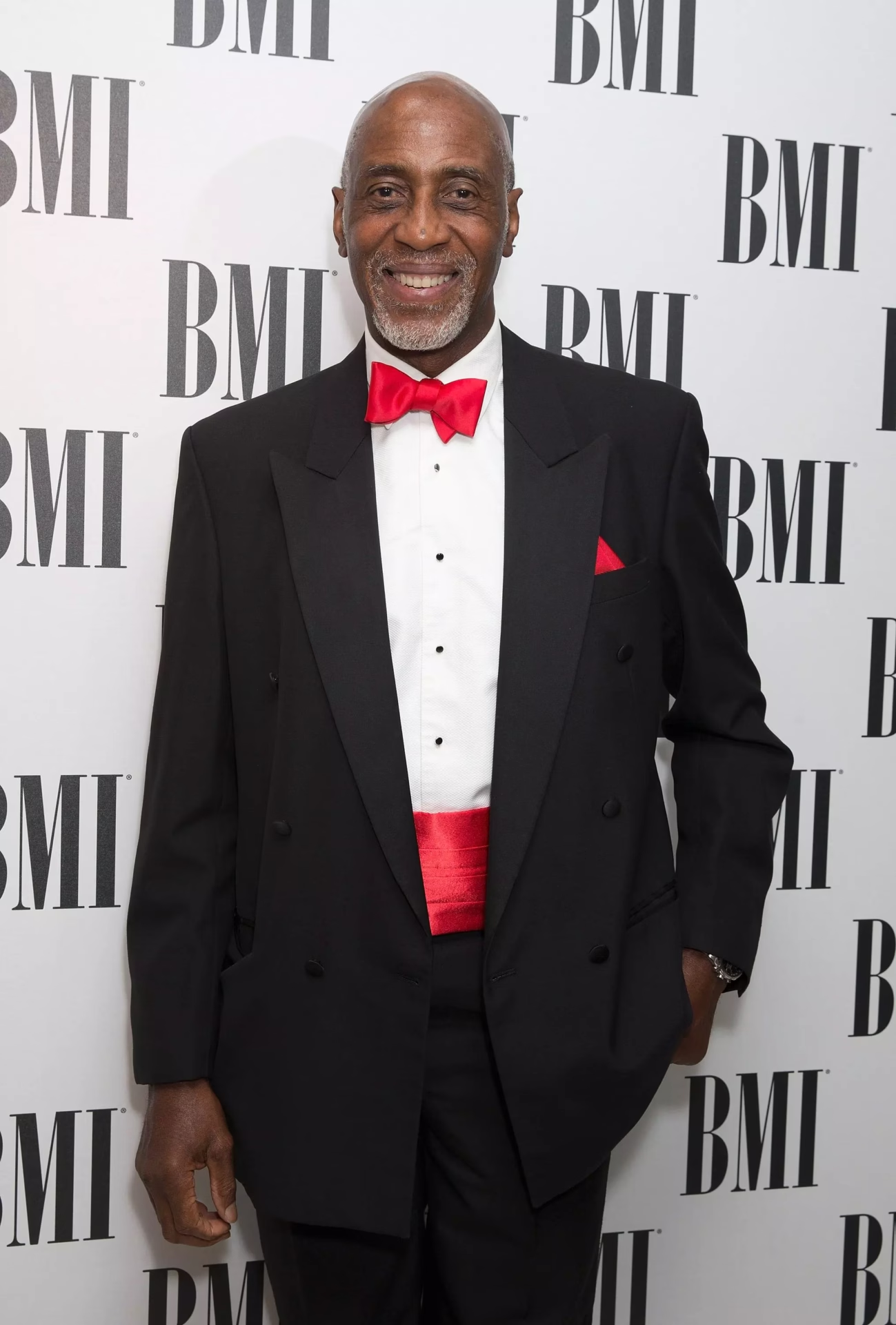
While these numbers highlight a positive outlook for a more diverse music industry in the U.K. the future, they also show there is still work to be done. UK Music's Diversity Taskforce Chairman, the GRAMMY-winning songwriter and producer Keith Harris, reflected on these numbers, which he says highlight "slow but steady" progress.
"The survey remains an important tool in terms of making sure that some of the initiatives put in place across the industry are bearing fruit. Things are changing for the better. Progress has been slow but steady," Harris said. "We are continuing to keep our focus on ethnicity and sex as the most obvious indicators that things are changing, while remembering that diversity in the industry is about much more than that, with socio-economic background being among the important but often neglected areas which needs attention."