The wild west of self-promotion opportunities afforded by modern internet and its ever-expanding interconnected spheres of social media have opened unprecedented doors of opportunity for young artists in recent years. Barriers against entry to the big leagues of the mainstream music industry continue to dissolve, and these changes occur at an increasing rate of acceleration.
Previously, a young artist's biggest barriers to entry may have been the struggle to reach untapped markets of prospective fans, which they would historically need the promotional strength of a major label to identify and activate. Now, the proliferation of peer-connected social music streaming platforms such as SoundCloud, Spotify and AppleMusic make it possible for artists with genuine appeal to cultivate and capture a large audience before ever signing a major record deal.
As a natural outgrowth of this era of upheaval in our industry, there has been a fascinating shift in the balance of power. The deals certain young artists are able to sign, as well as the heretofore un-heard-of leverage they can bring to the table during their first encounters with major league players has become a fresh success story of the modern music industry.
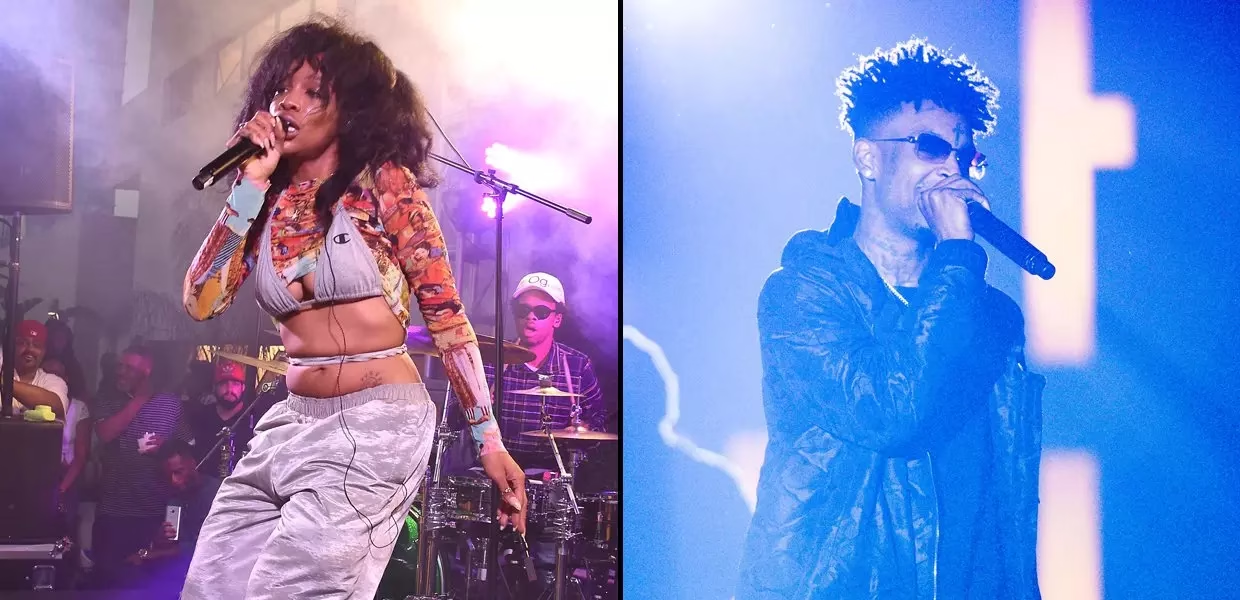
This ability to independently create first a fan base, and then a movement, has helped exciting young artists — notably Russ, SZA and 21 Savage — leverage deals making headlines.
New Jersey-based rapper/producer Russ, for starters, recently made a major a splash with his series of successful SoundCloud releases, many of which have garnered more than 2 million plays in less than six months. However, long before taking his talents for outputting hot rap singles to SoundCloud, he spent more than 10 years building a following and honing his craft.
During that time, he released 11 full albums and cultivated a hardcore legion of ride –or-die fans. When it came time to finally cut a deal with a major, Russ had built an engaged audience that allowed him a 50/50 share of the profits for any releases on the label.
"Basically, you either get a profit split deal or you get a royalty deal," said Russ. "Royalty deals are s*** but new artists aren’t getting profit split deals out the gate. I was able to. That has to be part of the narrative."
St. Louis-based R&B/neo-soul singer SZA utilized her social following, with the help of Top Dawg Entertainment, to cut a joint deal with RCA Records that was so strong that even music executive Jimmy Iovine took notice.
Yet another young artist making thoughtful moves to protect his profits and his longevity is 21 Savage. In response to an article from venerable hip-hop blog DJ Booth highlighting SZA's success story, Savage's manager triumphantly revealed that, due to the huge following Savage built prior to signing with L.A. Reid's Epic Records, he was able to leverage a deal that awarded 100 percent ownership of all master recordings to the artist — a deal unheard of even five to 10 years ago.
The obvious through line connecting these three young artists is quite simple: they understand the power of the medium they use to deliver music to their fans, and they've paid attention to the history of artists who've gone before them.
21 Savage's case in particular is a fascinating yet simple lesson many artists have yet to learn: ownership of the master recordings is crucial.
For some artists, the battles over publishing rights and masters ownership has become the stuff of industry legend — cautionary tales for wiser rising stars to take to heart.
Prince is arguably one of the most famous cases, having spent decades of his career fighting to regain financial control over the rights to the masters of some of his most beloved recordings, a battle the singer waged from the mid-1980s until 2014.
Paul McCartney fought for nearly half a century to recover ownership rights to the Beatles' massive catalog of hits, finally settling the dispute to his satisfaction just a few weeks ago.
As Iovine pointed out in his summation of the changes SZA's label deal signify, artists who understand the power of current technology are in an incredible position to leverage vastly different deals with major labels than ever before. Meanwhile, the role labels play remains pivotal — perhaps now more than ever.
With equal efforts supporting artist development and activating new fan bases now coming from both artists and labels, previously unthinkable new pathways for creating successful music brands will open. The truly exciting aspect now is waiting to see what will come next.
How did Jimmy Iovine, Dr. Dre get their start? Industry heavyweights talk HBO's "The Defiant Ones"