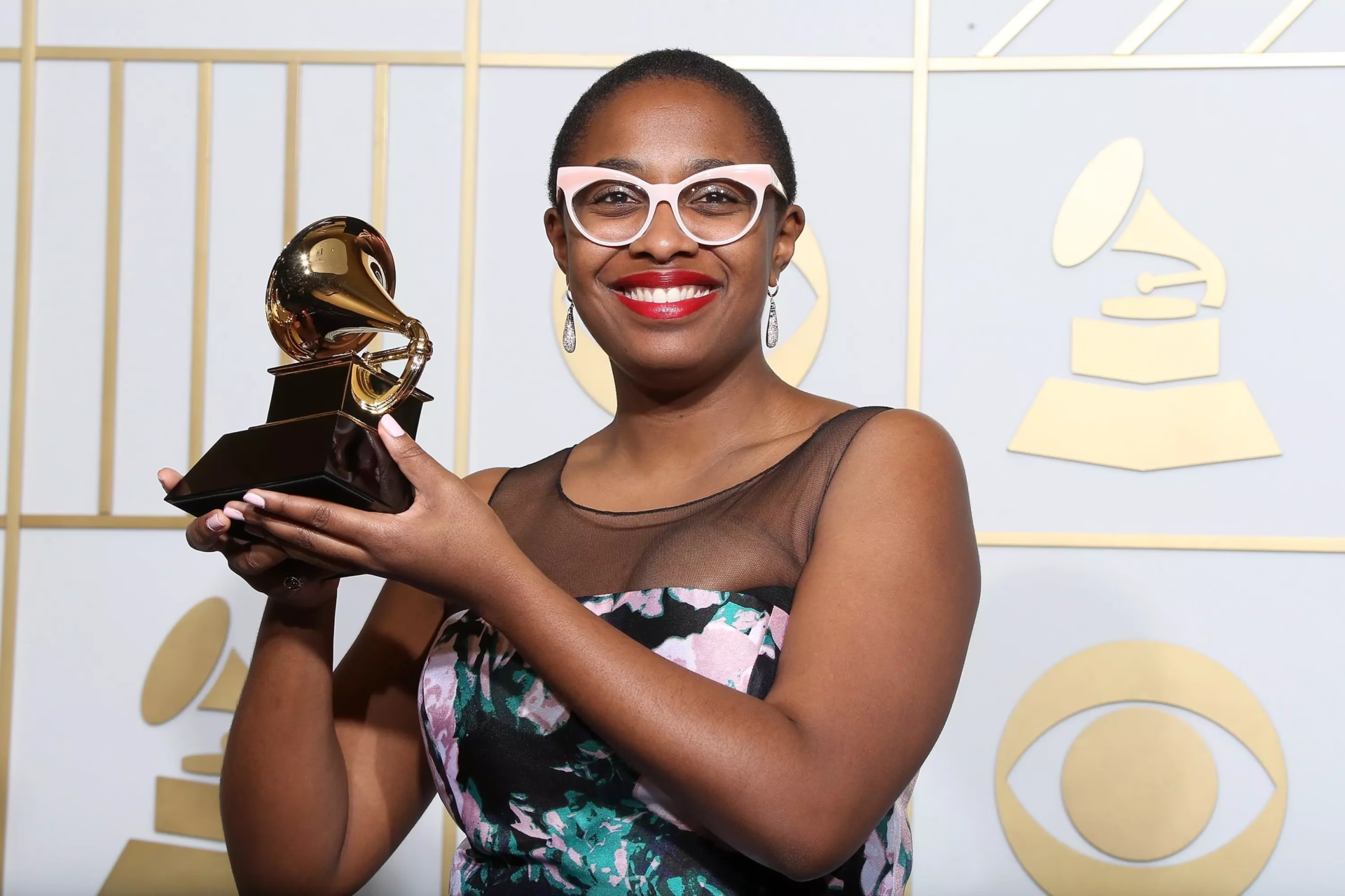
(The Making Of GRAMMY-Winning Recordings series presents firsthand accounts of the creative process behind some of music's biggest recordings. The series' current installments present insight and details about recordings that won 58th GRAMMY Awards.)
(As told to Bruce Britt)
The five original songs on the album were written over the course of about two to three years. They were written in different places — on the road, at my parent's house, in my apartment. "Fog," "Left Over" and "Monday" were written pretty much simultaneously, music and lyrics together. With "Look At Me" the music was written three years before the lyrics, while [with] "Underling" the lyrics were written months before the music was.
Writing the songs was like a personal thing for me. A lot of them started as lyrics or poems, with me just expressing myself the same way that people might in a journal. It took me a while to realize that these were actually songs that go beyond being expressions of my feelings for myself — that they had a more universal appeal than just journal entries. So, I started working them out with the band, and I realized that the songs were really about yearning. That kind of became the theme of the album.
I had the original songs, and also a good amount of songs that we had been performing on tour, so part of it was figuring out if there was some connecting element — some kind of theme between the originals and the other songs that I chose. In the end, I thought the most natural thing was to pick the songs that I thought were the strongest and the most important for me to record at the time. I thought that [Burt Bacharach and Hal David's] "Wives And Lovers" was a good song to work with. My interpretation is very much tongue in cheek. It couldn't be more ironic. It deals with the contradiction of wanting to be a powerful woman who doesn't feel obligated to look good for a man, but at the same time wanting a man to think that I look good so he doesn't leave me. That's a total contradiction we women deal with.
For [2013's] WomanChild, I had a band that was formed especially for the recording. For One To Love was done with a band that I have been touring with for years. We rehearsed on the road extensively, so you get to the studio and it's a totally different feeling. It's people who know — or have a pretty good idea — of what you're going to do next, so you can try things more. You just don't have the time to do that with people you hire for just a date or two.
We recorded at Avatar Studios in New York for three days, about six hours a day with no overdubbing. Everything was done live and we were all in separate booths. I think it's really important to record live if you can. That way you're still communicating with the musicians, and they're communicating with you. I think if you're overdubbing, it's really no longer jazz because people aren't in dialogue. I'm not afraid of making mistakes or little errors. I think the music is a lot more interesting if you allow it to be human, and not try to make it perfect.
I had to record "Left Over" by myself, and I was really nervous 'cause I knew I was going to mess it up. So, I waited for all of the musicians to leave. I was really, really nervous. I had to drink a shot of whiskey, go into the studio and beg the engineer to not record so that I could try it without having the pressure. Once I was done, I looked back and said, "I hope you recorded that!" And the engineer looked back and said, "Yes, I did."
(For One To Love earned Cécile McLorin Salvant the GRAMMY for Best Jazz Vocal Album at the 58th GRAMMY Awards, marking the first GRAMMY win of her career.)
(Bruce Britt is an award-winning freelance writer whose work has appeared in The Washington Post, USA Today, Detroit Free Press, San Francisco Chronicle, and other distinguished publications. He lives in Los Angeles.)
