
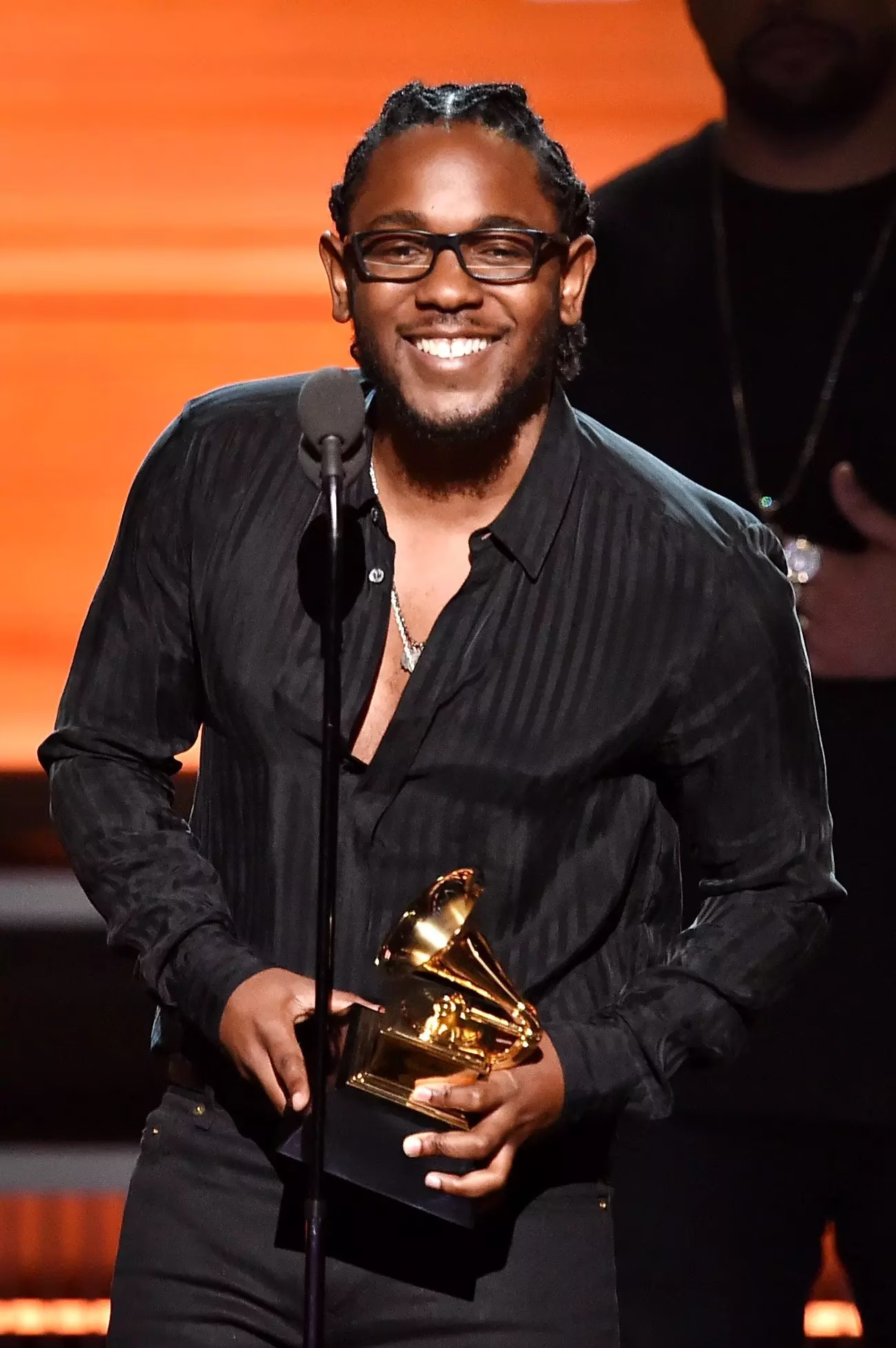
(The Making Of GRAMMY-Winning Recordings series presents firsthand accounts of the creative process behind some of music's biggest recordings. The series' current installments present insight and details about recordings that won 58th GRAMMY Awards. The following is a written excerpt from a GRAMMY.com video interview with Kendrick Lamar.)
[To Pimp A Butterfly] was a two-year process of me basically having a vision of what I want to talk about and how I can execute that. I knew from jump I had to get the best musicians in my own backyard from L.A. — Sounwave, Terrace Martin, Kamasi [Washington], Robert Glasper. I knew I had to sit in the studio for a year and just create [and] not let no type of boundary stop me from doing what I was doing. And that goes for concepts, that goes for the writing process, that goes for throwing ideas on the wall to see if they stick, and speaking on things that I feel like people don't have voices to speak on.
Knowing what all these other musicians put into making this album — it's a little bit more homegrown — and also knowing what's been going on in society [and] in the world, it makes it a little bit more special to know that this type of music is getting the recognition that it deserves. It's really bigger than me.
We [made] a lot of records from scratch. There were certain times where I'd just write to a drum loop over and over and over again till it felt right. I wanted to make this record dense. I didn't want to actually make it for radio. I didn't really want to make it for the car. That's just me being a fan of music and knowing the history on how people gravitate to an album. I want you to be able to walk down the street and sit on the bus stop and constantly play these songs back. And I want you to go to sleep playing these songs back in your ear because what happens is you grow to understand it more throughout the week, throughout the month, throughout the year. Ten years from now you'll always find another jewel in there and that was for sure the execution that I wanted to go for.
What's crazy about [To Pimp A Butterfly] that I love the most is it was me tackling my own insecurities, but also making it to where you can relate as well. That was the main thing I wanted to do. The whole body of the story is me basically accepting my role as a leader, learning how to accept it, and appreciating it and not running away from it. And I want to do just that but I want you to feel the same emotions because the main thing that we're scared of as people is change — from a social standpoint [to] a day-to-day standpoint. I wanted to embody that in this record.
I want to tell my fans a huge thank you because they allowed me to make this album that I wanted to make. They allowed me to step out of the box and touch these different vibes of music that may not be hip-hop. They allowed me to challenge myself and they challenged themselves to listen and to take it all in, and to get something from it — to live with it and love with [it] — and that's not something that every artist can do. I'm truly blessed to be in that position to have the voice and to have the people that's willing to listen and appreciate it. I'm truly honored by that.
(At the 58th GRAMMY Awards, Kendrick Lamar won five GRAMMYs, including Best Rap Album for To Pimp A Butterfly. He received a total of 11 nominations, making him the third most nominated artist in a single year, following only Michael Jackson and Kenneth "Babyface" Edmonds' 12 nominations in 1983 and 1996, respectively.)
