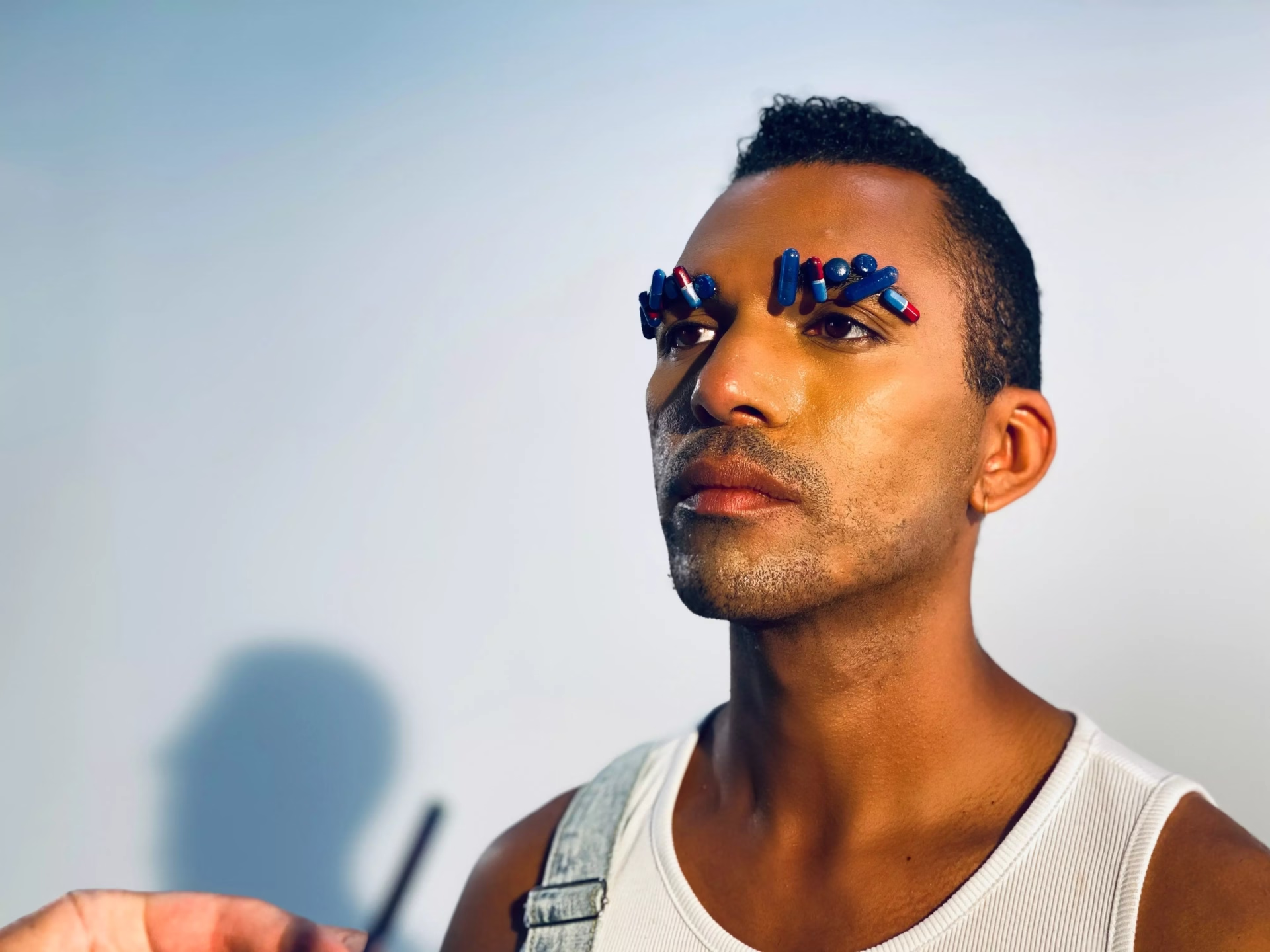
For independent artists fighting to find a following, build a buzz and continue to create during the pandemic, the show must go on. With the release of his visually stunning music video for "Fly," Trent Park has powered through, delivering fresh new sights and sounds while finding creative and thoughtful ways to collaborate within the many health restrictions the COVID era has brought. We caught up with the indie upstart and GRAMMY U alumnus to find out how he's adapted his writing process recently, take a peek at the making of "Fly" with the premiere of his exclusive behind-the-scenes video and hear what's next.
<style>.embed-container { position: relative; padding-bottom: 56.25%; height: 0; overflow: hidden; max-width: 100%; } .embed-container iframe, .embed-container object, .embed-container embed { position: absolute; top: 0; left: 0; width: 100%; height: 100%; }</style><div class='embed-container'><iframe src='https://www.youtube.com/embed//kBcGXR_s0MQ' frameborder='0' allowfullscreen></iframe></div>
Where did the song "Fly" come from and why did you write it?
I twisted my writing style this past year so now I approach my melody/lyric writing not so much pen/paper but more like a rapper would. For "Fly" I looped eight bars of the song with just the main instruments (drums, pad, lead) and hopped in the recording booth right away and freestyled melody ideas. Before diving deeply into the production, I try to cut a vocal as soon as I can. This process is more fun and always gets better ideas and moves the songwriting session quicker than what I used to just sitting on the couch and overthinking what the song concept is or a rhyme scheme or whatever else. I leave it up to my immediate imagination/feel to lead the ideas rather than my mind. That freestyle led me to the concept of escape and words of exploration. The song’s verse starts “a little break needed time to get away”; those were the first words that came out so I rolled with that idea. The environment and unsettling situations of the world led me to this topic of wanting to get away, so I just leaned into it.
The song's music video is visually arresting. Can you tell us about the concept and the symbolism?
This is actually the third video I ever directed, so I’m always glad to hear that people enjoy the work. It’s funny because when I create the music, I usually see glimpses of what I want the music video to be. I saw a lot of blue when I wrote the song and I wanted the entire color palette of the visual to contain that element. The video treatment was made rather quickly, and my concept was focused on the idea of reality versus dream. I wanted there to be reveals within the music video to trick the eye of what is being seen. I was blessed to have a creative team that could bring my crazy visuals to life. I had a coffee with my production designer phenomenon Hudson Garcia and we geeked out over concepts and executions, I had hour long convos with my makeup artist Jordan Slack of how we could pull off gender ambiguous type looks, and constant check ins with my DP/co-director William Sikora III. All these conversations filtered my treatment into a reality of what we could pull off.
<style>.embed-container { position: relative; padding-bottom: 56.25%; height: 0; overflow: hidden; max-width: 100%; } .embed-container iframe, .embed-container object, .embed-container embed { position: absolute; top: 0; left: 0; width: 100%; height: 100%; }</style><div class='embed-container'><iframe src='https://www.youtube.com/embed//gZldYLZOUg8' frameborder='0' allowfullscreen></iframe></div>
What was it like to film a COVID-compliant music video on a tight budget?
These times have been so difficult for me emotionally/financially, and the only healing I have been able to achieve is done through creating. I vowed to pair every song I release with a visual. My two biggest giants I had to face for this were budget and COVID. Coming from the music video production world allowed me an advantage of having the proper tools and wisdom to pre-produce my visuals with a fine-toothed comb. I have a lighting director David Goodman (the best in the business), who achieved over three certifications of COVID compliance within the workplace. He and I went over logistics, production schedule and venue layout to incorporate the proper strategy. We had a 2,300 square foot location at Nightview Studios where our mini crew of eight all had their own space, masks, sanitizer setups, plus proper signage, temp checks, assessment forms, etc.... The safety and comfort of my crew is a huge concern for me, so my team of coordinators spent extreme amounts of care to allow the set to be compliant.
The budget was my second giant that was super daunting. COVID hit me extremely hard financially, and I had pretty much the most compact budget ever (like think tiny then cut it in half). I utilized all my favors, became super creative with what I already had, plus I have probably the best team of creatives that support my art. My community really pulled together to help carry the stress of this. Being an indie artist with no management or label, every expense I have to carry, every creative idea filters through me, every comment of support/hate I read and respond to. It’s a lot! But the privilege of making music always reminds me of why I do it.
As a rising LGBTQ/Black indie artist, how did your experience with GRAMMY U help prepare you for the music industry?
GRAMMY U pulled back the curtain of music business mystique and allowed me access to music industry pros, top tier studios, and access to relationships that I have utilized to this day. I was able to see myself within an industry that I only saw on a screen or heard on the radio; GRAMMY U allowed me to see not only the red carpet lifestyle but behind the scenes. Seeing the humanity of the music business allowed me to envision myself within the creative lead roles that I didn’t have the example of prior. Being a Black/Mexican gay man, I understand deeply of not fitting in. GRAMMY U allowed me a community that shared my passion, encouraged me to grow, but also challenged me to keep being a better version of my art. GRAMMY U helped solidify within my routine to always giving back to the upcoming generation of artists. I hope I inspire with the art I make, but also hope to give any help I can so that the next batch of creators can avoid the road blocks I had to face.
What are you working on now, and what can your fans look forward to next from Trent Park?
I’m working on so much! I have a new haunted Christmas Carol called “River” which is a Joni Mitchell cover coming in October with a music video to pair it in November. I have some shoots set up to prepare for next year releases; I’m basically premiering a new song/visual every eight weeks. I also have some photo shoots scheduled with some amazing photographers that I always premiere on my Instagram and am flirting with the idea of having an outdoor COVID compliant music video screening of my newest work. So lots to do!
GRAMMY U’s “Music & Activism: Enacting Real Change” Envisions Industry’s Equitable Future
