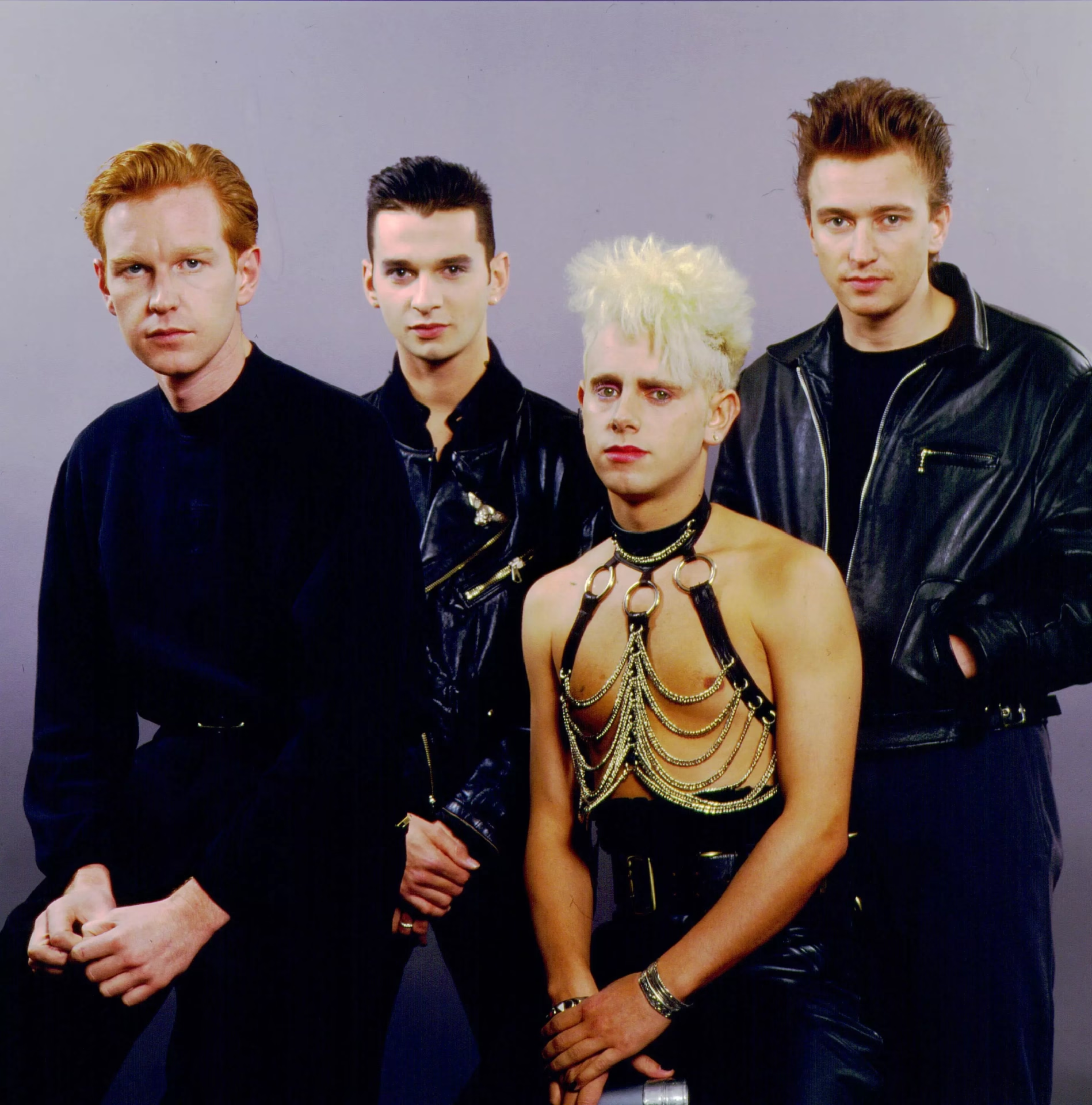
I don’t want to start any blasphemous rumors, but I think that Depeche Mode had an exit strategy for the 1980s. They saw a few tides turning; the synth-pop group's absolutely cutthroat string of charting European singles (and the occasional American hit, like "People Are People") became increasingly less bubblegum. Just trace the pattern from 1981's straight-up bouncy "Just Can’t Get Enough" through "People Are People"'s industrial clang and before the decade's even half over you end up at the one about the girl who survives slashing her wrists at 16 to get hit by a car two years later. The story laid out by "Blasphemous Rumours" wasn’t particularly deep, but the suicide—Martin Gore's sister's—was real, and the images he relayed spoke for themselves. In 1990, he told SPIN he started attending church because "there was nothing else to do on a Sunday."
That cocktail of darkness and boredom became prominently conveyed in chief songwriter Gore and lead singer David Gahan's vocals: Increasingly languid and despairing, and even sexy, these were broad feelings dripping across the most intricate, microscopically threaded sound patterns in multi-platinum rock. That fusion of big personalities and voices and feelings over tiny, tricky rhythm elements is—from Michael Jackson to Timbaland to Timberlake—something we now enjoy and know frequently to be a hallmark of A-list pop music. But in 1990 it was still new and emerging in New Jack Swing and a new generation of teen idols informed by hip-hop and Prince. Depeche Mode put it on rock radio.
<style>.embed-container { position: relative; padding-bottom: 56.25%; height: 0; overflow: hidden; max-width: 100%; } .embed-container iframe, .embed-container object, .embed-container embed { position: absolute; top: 0; left: 0; width: 100%; height: 100%; }</style><div class='embed-container'><iframe src='https://www.youtube.com/embed/nhZdL4JlnxI' frameborder='0' allowfullscreen></iframe></div>
Of course, a synth-pop band putting anything on rock radio was news in 1990. Duran Duran was more mutable than most (the unsinkable Nile Rodgers produced "Notorious") and hung on until 1993, which is also when Pet Shop Boys enjoyed their biggest album, Very, without ever really crossing over in the U.S. But only Depeche Mode felt like they really adapted to the ‘90s, which is probably the darkest, most dissonant pop era, typified by Kurt Cobain, the biggest star and biggest tragedy it produced, alongside the Notorious B.I.G., Tupac and other stars now viewed as martyrs. They named their seventh and biggest album Violator to mock the lunkheaded hair metal that had overtaken their world and gave it streamlined New Order cover art for easy Goth access. If you can believe it, the guitar-driven first single, "Personal Jesus," managed to land in the same year as Nine Inch Nails' debut smash "Head Like A Hole." Both acts turned to U2 engineer Mark "Flood" Ellis for brick-hard sonics that finally made industrial music sound powerful rather than dim.
<style>.embed-container { position: relative; padding-bottom: 56.25%; height: 0; overflow: hidden; max-width: 100%; } .embed-container iframe, .embed-container object, .embed-container embed { position: absolute; top: 0; left: 0; width: 100%; height: 100%; }</style><div class='embed-container'><iframe src='https://www.youtube.com/embed/u1xrNaTO1bI' frameborder='0' allowfullscreen></iframe></div>
It’s telling that "Personal Jesus," their least synthesized hit, became the group’s biggest, a total inversion of Van Halen's success with "Jump" that depends completely on rock’s trend timeline. But the tune’s twangy, ominous swing and unfazed singing was reminiscent of another smash: Soft Cell's "Tainted Love," almost a synth-blues. It’s that unforgettable "Reach out and touch faith" hook that did the unthinkable and made a synth-pop album a smash with ‘90s rock listeners long before any '80s revival, putting the group in rare, respected company with Trent Reznor and David Bowie and the Nirvana-cosigned Devo as so many of their peers fell by the wayside as grunge and less keyboard-friendly trends took over.
Of course, "keyboards" didn’t quite cover Violator’s musical palette. Opener "World in My Eyes" punches you by squirting frenetic sampled blobs in all directions. It’s as aurally dense as anything on Michael Jackson's new-jack-with-Slash pivot Dangerous, and the sounds it employs are all quick, sanded-off and acupuncture-sharp. There’s the cascading, grunting waves of "Sweetest Perfection" and the rippling, moon-across-the-ocean sparseness of "Waiting For The Night." The album is astonishingly quantized, paralleling almost jokingly robotic instrumentation with Gahan's haunting sensuality, and none of it gave off a hint of asymmetrical-haircut chintziness. Violator is not dead-serious, but it portrays dead seriousness against a backdrop of fidgety studio nerds spreading their wings on a masterpiece like the finest cut, and arguably Depeche Mode's best ever, "Policy Of Truth," which evokes everything from a Chinese motif in its primary riff to funky fake horns in the bridge that Outkast unofficially pinched for "The Whole World."
<style>.embed-container { position: relative; padding-bottom: 56.25%; height: 0; overflow: hidden; max-width: 100%; } .embed-container iframe, .embed-container object, .embed-container embed { position: absolute; top: 0; left: 0; width: 100%; height: 100%; }</style><div class='embed-container'><iframe src='https://www.youtube.com/embed/M2VBmHOYpV8' frameborder='0' allowfullscreen></iframe></div>
"Personal Jesus," which was later covered by Johnny Cash, can only take so much credit for getting "Policy Of Truth" and "World In My Eyes" and the pulsating proto-house beauty of "Enjoy The Silence" onto MTV and the radars of newly dubbed alternative listeners. They were just great songs arranged from innovative, memorable sounds. We often think of synth-pop now as a retro pursuit, a bygone template that we can still mine for great pop, as Carly Rae Jepsen and Taylor Swift and Tegan and Sara do lately. But 30 years later, Violator still plays like it had the sound of the future in mind, and for a moment it singlehandedly held off the flannel.
