(Editor's Note: This feature was originally published via The GRAMMYs' official Medium account.)
Nothing prepared us for the Ramones. If you were in New York City in 1975 and happened to stumble into one of their CBGB gigs, the audacity of what they were up to was a shock. It was familiar in some ways; it had elements of garage rock and bubblegum pop, with the beat of the British Invasion groups. But no one had ever mashed the influences together in that way, so it felt brand-new and radical, brash and funny, conceptually ingenious.
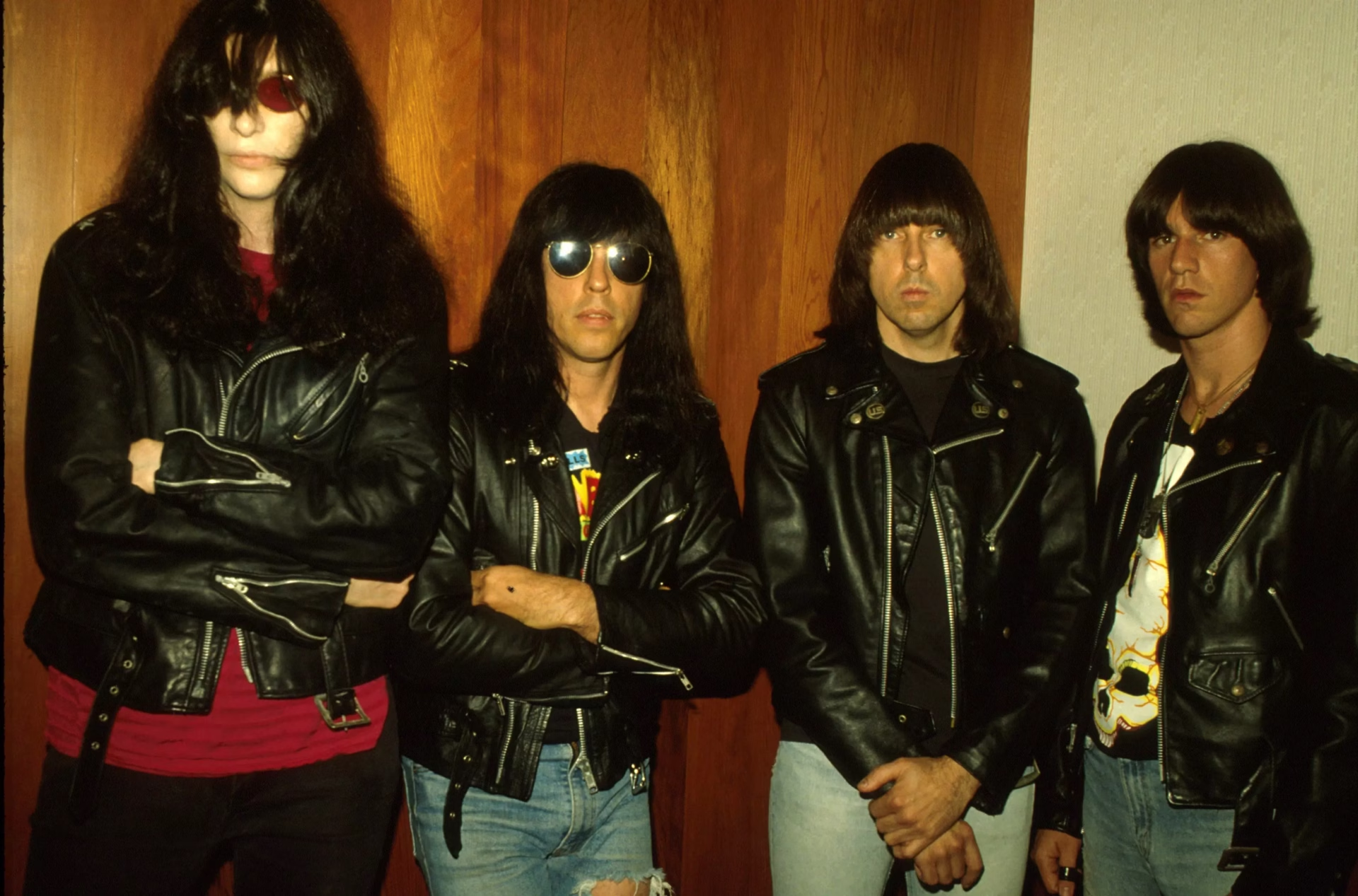
You took in everything all at once because they left you no choice; their songs were short and came at you without a break, and before you knew it, the set was over and you were left with flashing images. Joey's Gumby-as-rock-star posturing, Johnny's spread-legged crouch, Dee Dee shouting "1–2–3–4!" as the only transition between songs, Tommy slamming away. They were unmistakably a band. Or a street gang that somehow found itself holding musical instruments.
They were not, it would be fair to say, universally beloved in their time, but history has caught up with them. I think now and then about how much Joey in particular would have reveled in the belated reverence people have for his band. I can imagine him walking through the rooms of the Hey! Ho! Let’s Go: Ramones And The Birth Of Punk exhibition — coming to L.A.'s GRAMMY Museum in September after a run at the Queens Museum in New York — and thinking, "Of course: this is what was meant to be."
A celebration of the 40th anniversary of the release of their still-stunning debut album, the exhibition is important because it acknowledges that the Ramones were as much an art project as a musical one. They understood the power of visual imagery, of having a great look (Roberta Bayley's photos are reminiscent of Astrid Kirchherr's shots of the early Beatles in Hamburg, Germany), and a great logo. They were the rock and roll version of a scrappy black-and-white B-movie that runs at the bottom of a double bill in your local theater and has 10 times the impact of the CinemaScope-and-Technicolor main feature.
What was startling (and still is) about the Ramones' debut is how against the grain it was. It felt like nothing else surrounding it in that bicentennial year. They were a counter-response to all the rock music that was elaborately constructed and fussed over. Ramones, like Patti Smith's Horses, pointed in a different direction, and was a reminder that rock could be, and probably should be, off the cuff and of the moment.
With about a week’s worth of studio time and a four-figure recording budget, the band and producer Craig Leon made an album that was like a technologically enhanced snapshot of their live shows, and was the antithesis of the obsessive multilayering of bands like Eagles, Fleetwood Mac, Steely Dan, and Boston, who were tinkering for months and months in the studio and spending mountains of cash to fulfill their creative visions. The pursuit of trashiness, Ramones suggested, could be a noble goal. If you were a young musician, you might have turned on AOR radio, heard the laborious, expensive trappings of corporate rock, or the virtuosic meanderings of prog rock, and thought that music was dull and out of reach. The Ramones said, "Think again." The album was a succinct Declaration of Principles, 14 songs in approximately 29 minutes.
It never occurred to them that they were making "outsider art." They knew all the history they embodied, synthesized, and deconstructed, and believed in the power of the pop single. Everything about them was instantly iconic, and that’s why 40 years later there's a museum exhibition devoted to them and not to bands who outsold them by a factor of hundreds of thousands.
Their music continues to reverberate in stadiums and commercials, because it represents the triumph of outer-borough ingenuity and individuality. There were no Ramones "periods." Even Phil Spector couldn't make them anything but what they were — a band determined to shake the world in increments of less than 150 seconds. People are still discovering that first album and feeling that combination of surprise and inevitability, being knocked off their feet and then realizing that this was what they'd been waiting for. In a half-hour of mayhem, the Ramones changed everything.
(Rock journalist Mitchell Cohen contributed an essay to the Ramones: 40th Anniversary Deluxe Edition, which is scheduled for release on Sept 9.)