
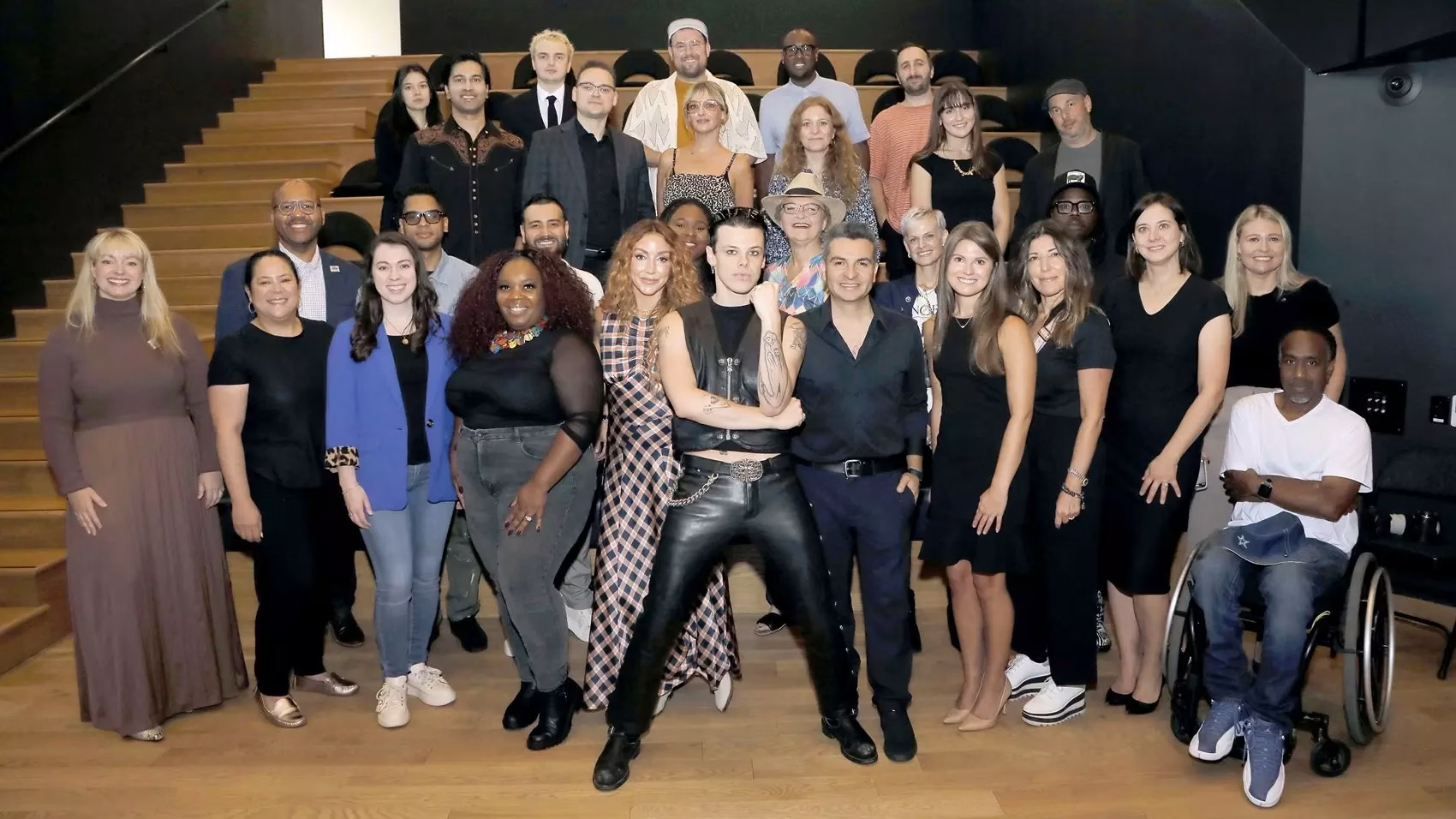
For more than a decade now, the Recording Academy has rallied music creators and industry professionals through Music Advocacy Day. Now in its 11th year, the grassroots initiative continues to bring thousands of members into direct conversations with policymakers to ensure the voices of music-makers are heard.
On Sept. 25, 2025, more than 2,100 creators took part in over 200 meetings with federal lawmakers across 45 states and Washington, D.C. From California to New York — and in states like Iowa and South Dakota — members sat down with legislators including Reps. Brad Sherman, Marianette Miller-Meeks, Adriano Espaillat, and Dusty Johnson to advocate for policies that strengthen the music economy.
Central to this year's discussions were protecting creators from having their works exploited by artificial intelligence without compensation and the need to pass reasonable AI safeguards through the bipartisan NO FAKES Act. Academy members also pressed for continued federal funding for the National Endowment for the Arts, highlighting its importance as an investment in culture and community.
What Is Music Advocacy Day?
Music Advocacy Day is the Recording Academy's annual grassroots event that connects artists, songwriters, producers and executives with lawmakers across the country to advocate for policies that protect and strengthen the music economy.
"Music Advocacy Day represents the core of the Academy's dedication to serving the music community year-round," said Todd Dupler, Chief Advocacy & Public Policy Officer of the Recording Academy. "Protecting creators and their art is crucial to ensuring a thriving music ecosystem, and the Academy is proud to give thousands of our members the opportunity to converse with lawmakers across the nation whose support of pro-music legislation will positively impact the future of our industry."
Through uniting thousands of members in direct conversations with policymakers, the Academy demonstrates the strength of collective action and its unwavering commitment to protecting the rights, livelihoods, and legacies of music creators. From landmark wins like the Music Modernization Act to current efforts focused on fair pay, AI safeguards, and sustained arts funding.
Highlights From Music Advocacy Day 2025
This Music Advocacy Day drew a record level of participation, with more than 2,100 Recording Academy members engaging lawmakers in Washington, D.C., and across 45 states.
In total, creators held hundreds of meetings with federal representatives, part of a coordinated effort to make sure the concerns of music professionals are heard in the nation's capital and beyond. Meetings stretched from major hubs like California and New York to states less frequently associated with the music industry, including Iowa and South Dakota.
The conversations focused heavily on the future of artificial intelligence and its implications for artists. Members urged lawmakers to back the bipartisan NO FAKES Act, legislation that would put safeguards in place to prevent the unauthorized cloning of a creator's voice or likeness. Alongside that push, advocates also stressed the importance of continued funding for the National Endowment for the Arts, framing it as an investment in both cultural life and local economies.
GRAMMY winner Leon Thomas served as this year's Artist Ambassador, putting a spotlight on the issues at the heart of Music Advocacy Day: "Here's what's on the table: AI that works with us and not against us; the NO FAKES Act keeps our voice, image and likeness; keeping the arts alive in every community. The NEA funds concerts, programs and music education that changes lives."
Thomas' presence reflected the Academy's commitment to centering artist voices in these conversations and underscored why direct engagement with lawmakers is essential.
Beyond Music Advocacy Day, that same commitment drives the Academy's year-round efforts to shape policy and deliver meaningful impact for creators.
How The Recording Academy Advances Advocacy
So far in 2025, the Recording Academy has achieved key advocacy milestones that underscore its impact at both the state and federal levels.
The year's most significant achievement came on July 4, when President Donald Trump signed the Help Independent Tracks Succeed (HITS) Act into law, a measure conceived and championed by Academy members over five years of persistent advocacy. Earlier in the spring, GRAMMYs on the Hill returned to Washington in an expanded four-day format, honoring lawmakers who backed the HITS Act, while also spotlighting the reintroduction of the NO FAKES Act.
In February, the Texas Chapter held its biennial Texas Music Advocacy Day, where artists including Paul Wall, Yolanda Adams, and Bobby Pulido joined lawmakers in Austin to push for music education and safeguards around AI.
That same month, Academy members raised $25,000 for MusiCares during GRAMMY Week in Los Angeles, with support from members of Congress who addressed the impact of local wildfires and the urgent need for federal aid. Earlier this year, the Academy marked The Biggest Week in Music in Washington, D.C., as the annual GRAMMYs on the Hill returned April 8-10 for three days of music and policy at the nation's capital.
The week opened with the 2025 GRAMMYs on the Hill Awards, where seven-time GRAMMY winner Randy Travis was honored with the Creators Leadership Award. The celebration was followed by Advocacy Day meetings with lawmakers and the second annual Future Forum, continuing a two-decade tradition of uniting music creators and policymakers around the issues shaping the future of the industry.
What Is Music Advocacy Day?
Music Advocacy Day is the Recording Academy's annual grassroots event that connects artists, songwriters, producers and executives with lawmakers across the country to advocate for policies that protect and strengthen the music economy.
"Music Advocacy Day represents the core of the Academy's dedication to serving the music community year-round," said Todd Dupler, Chief Advocacy & Public Policy Officer of the Recording Academy. "Protecting creators and their art is crucial to ensuring a thriving music ecosystem, and the Academy is proud to give thousands of our members the opportunity to converse with lawmakers across the nation whose support of pro-music legislation will positively impact the future of our industry."
Through uniting thousands of members in direct conversations with policymakers, the Academy demonstrates the strength of collective action and its unwavering commitment to protecting the rights, livelihoods, and legacies of music creators. From landmark wins like the Music Modernization Act to current efforts focused on fair pay, AI safeguards, and sustained arts funding.
Highlights From Music Advocacy Day 2025
This Music Advocacy Day drew a record level of participation, with more than 2,100 Recording Academy members engaging lawmakers in Washington, D.C., and across 45 states.
In total, creators held hundreds of meetings with federal representatives, part of a coordinated effort to make sure the concerns of music professionals are heard in the nation's capital and beyond. Meetings stretched from major hubs like California and New York to states less frequently associated with the music industry, including Iowa and South Dakota.
The conversations focused heavily on the future of artificial intelligence and its implications for artists. Members urged lawmakers to back the bipartisan NO FAKES Act, legislation that would put safeguards in place to prevent the unauthorized cloning of a creator's voice or likeness. Alongside that push, advocates also stressed the importance of continued funding for the National Endowment for the Arts, framing it as an investment in both cultural life and local economies.
GRAMMY winner Leon Thomas served as this year's Artist Ambassador, putting a spotlight on the issues at the heart of Music Advocacy Day: "Here's what's on the table: AI that works with us and not against us; the NO FAKES Act keeps our voice, image and likeness; keeping the arts alive in every community. The NEA funds concerts, programs and music education that changes lives."
Thomas' presence reflected the Academy's commitment to centering artist voices in these conversations and underscored why direct engagement with lawmakers is essential.
Beyond Music Advocacy Day, that same commitment drives the Academy's year-round efforts to shape policy and deliver meaningful impact for creators.
How The Recording Academy Advances Advocacy
So far in 2025, the Recording Academy has achieved key advocacy milestones that underscore its impact at both the state and federal levels.
The year's most significant achievement came on July 4, when President Donald Trump signed the Help Independent Tracks Succeed (HITS) Act into law, a measure conceived and championed by Academy members over five years of persistent advocacy. Earlier in the spring, GRAMMYs on the Hill returned to Washington in an expanded four-day format, honoring lawmakers who backed the HITS Act, while also spotlighting the reintroduction of the NO FAKES Act.
In February, the Texas Chapter held its biennial Texas Music Advocacy Day, where artists including Paul Wall, Yolanda Adams, and Bobby Pulido joined lawmakers in Austin to push for music education and safeguards around AI.
That same month, Academy members raised $25,000 for MusiCares during GRAMMY Week in Los Angeles, with support from members of Congress who addressed the impact of local wildfires and the urgent need for federal aid. Earlier this year, the Academy marked The Biggest Week in Music in Washington, D.C., as the annual GRAMMYs on the Hill returned April 8-10 for three days of music and policy at the nation's capital.
The week opened with the 2025 GRAMMYs on the Hill Awards, where seven-time GRAMMY winner Randy Travis was honored with the Creators Leadership Award. The celebration was followed by Advocacy Day meetings with lawmakers and the second annual Future Forum, continuing a two-decade tradition of uniting music creators and policymakers around the issues shaping the future of the industry.
How To Stay Involved Year-Round
While Music Advocacy Day is a cornerstone event, the Academy's work doesn't end there.
Members and fans can continue to Stand With Music throughout the year by supporting the GRAMMY Fund for Music Creators, the Recording Academy's Political Action Committee. Donations to the PAC directly fuel advocacy campaigns that have delivered historic wins — from the passage of the Music Modernization Act in 2018 to advancing the American Music Fairness Act and securing federal COVID-19 relief for music professionals.
Engagement also happens online, where GRAMMY Advocacy's social channels provide breaking policy news, updates on creator-first legislation, and opportunities to take action. The Academy's Music Advocacy Action interactive tool enables members to contact lawmakers directly and amplify their voices on the issues that matter most. Supporters can also amplify the Stand With Music campaign across their own networks, ensuring policymakers understand that protecting music creators is a national priority.
Based in Washington, D.C., the Recording Academy's Advocacy team continues to mobilize thousands of members year-round, presenting a powerful voice at the local, state, and federal levels. Advocates of the music community can explore highlights of the Academy's work and dive deeper into its recent advocacy impact.
