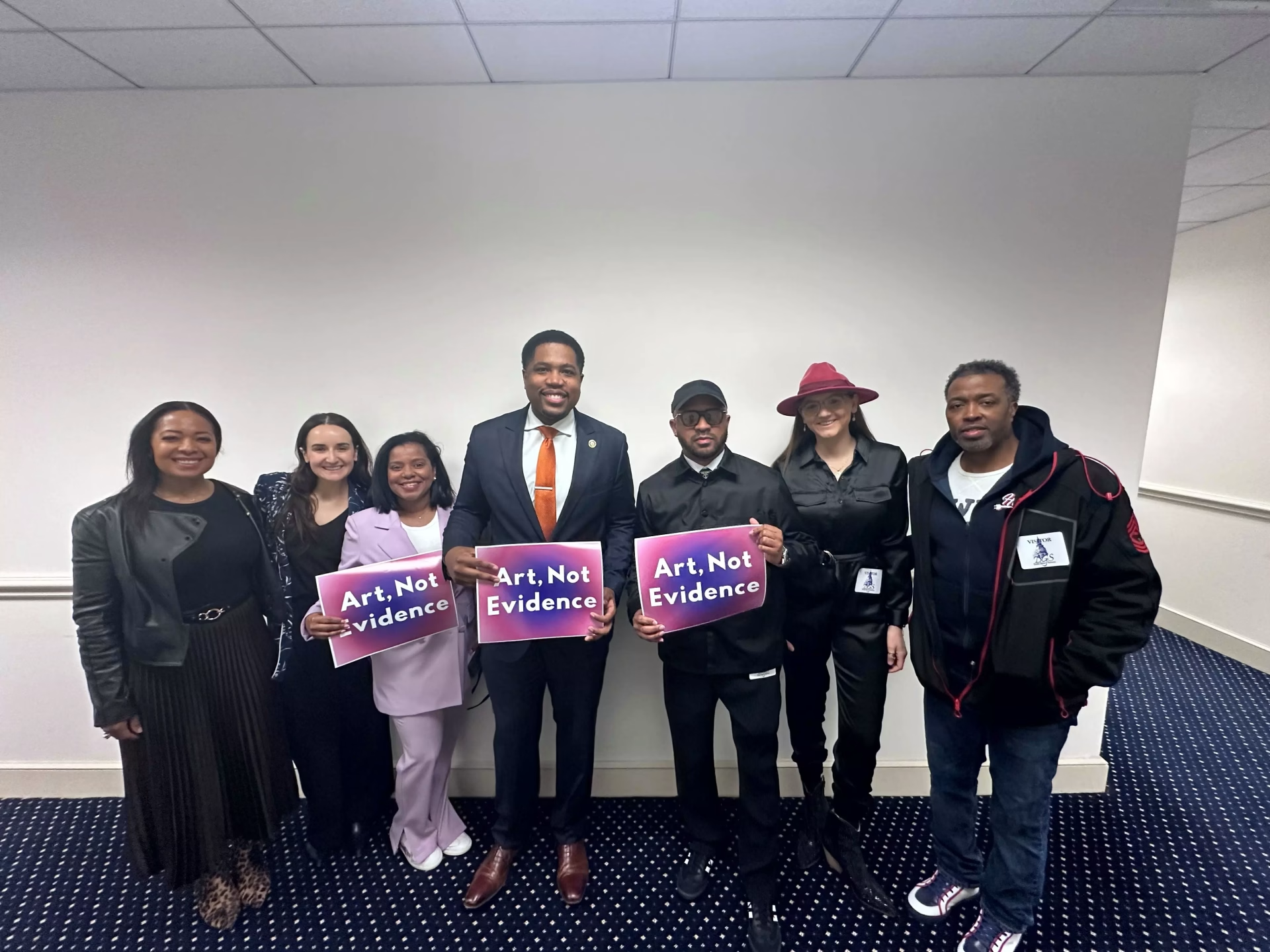
Last week, Recording Academy members from across Maryland gathered in Annapolis for an exciting advocacy day to champion HB. 1429/SB. 662, Protecting the Admissibility of Creative Expression (PACE) Act. Introduced by Delegate Marlon Amprey and Senator Nick Charles, the PACE Act aims to safeguard artistic expression and uphold the First Amendment rights of Maryland's dynamic music community.
Maryland's music industry stands as a pillar for the state's economic and cultural identity with over 22,000 jobs created and a substantial $1.4 billion contribution to the state's GDP. However, despite its economic significance, challenges persist for artists whose creative works are misinterpreted or misused in criminal trials around the country and in Maryland courtrooms.
To kick off the day, Delegate Amprey, Senator Charles, the Recording Academy, and Kevin Liles of 300 Elektra Entertainment hosted a press conference to emphasize the significance of the PACE Act in protecting the rights of Maryland artists. The press conference served as a rallying point for advocates, highlighting the critical need to pass this legislation.
"We want to make sure and safeguard creative expression here in the state of Maryland," stated Amprey. "Unfortunately, across the nation, we have seen an uptick of creative expression in lyrics being used against artists wrongfully in court as a form of evidence."
Lisa Winans, GRAMMY nominated Gospel artist and a member of the Recording Academy echoed the Delegate’s expression as she spoke on behalf of the Academy.
“As a gospel artist, I understand the importance of having the freedom to create music that is an authentic expression of my beliefs without fear of repercussions” voiced Winans. “Artists in any genre should be able to express their creativity through music without fear of reprisal from the justice system simply because of the content of their art or because of biases against their chosen art form.”
Following the press conference, Recording Academy advocates engaged in over a dozen meetings with Maryland state legislators and their staff to garner support for the PACE Act. During these meetings, advocates expressed the importance of passing HB. 1429/SB. 662 to protect music and other forms of creative expression.
The misuse of artistic expression has been a prevalent issue not only in Maryland but across the United States. Instances where prosecutors weaponize lyrics against artists during legal proceedings undermine their artistic integrity and perpetuate biases within the justice system. The PACE Act limits the use of an artist's creative work in trials, ensuring freedom of expression without fear of legal repercussions.
One of the key aspects of the PACE Act is its emphasis on shifting the burden of proof to prosecutors, ensuring that the relevance and admissibility of creative works in legal proceedings are thoroughly evaluated. By doing so, the legislation aims to prevent the unjust weaponization of artistic expression, particularly within marginalized communities who are disproportionately targeted by such practices.
The significance of passing the PACE Act extends beyond Maryland's borders. With only two other states, California and Louisiana, having passed similar legislation, Maryland has the opportunity to lead the nation in championing artistic and creative expression.
By enacting HB. 1429/SB. 662 into law, Maryland would set a precedent for other states to follow, ensuring that artists across the country can express themselves freely without fear of unjust repercussions.
The Recording Academy strongly supports the PACE Act as a solution to these challenges and applaud Delegate Amprey and Senator Charles for taking a stance for creatives in Maryland.
The State Of The ELVIS Act: Inside Nashville Hearings & Advocacy Day To Protect Artists’ Likenesses