
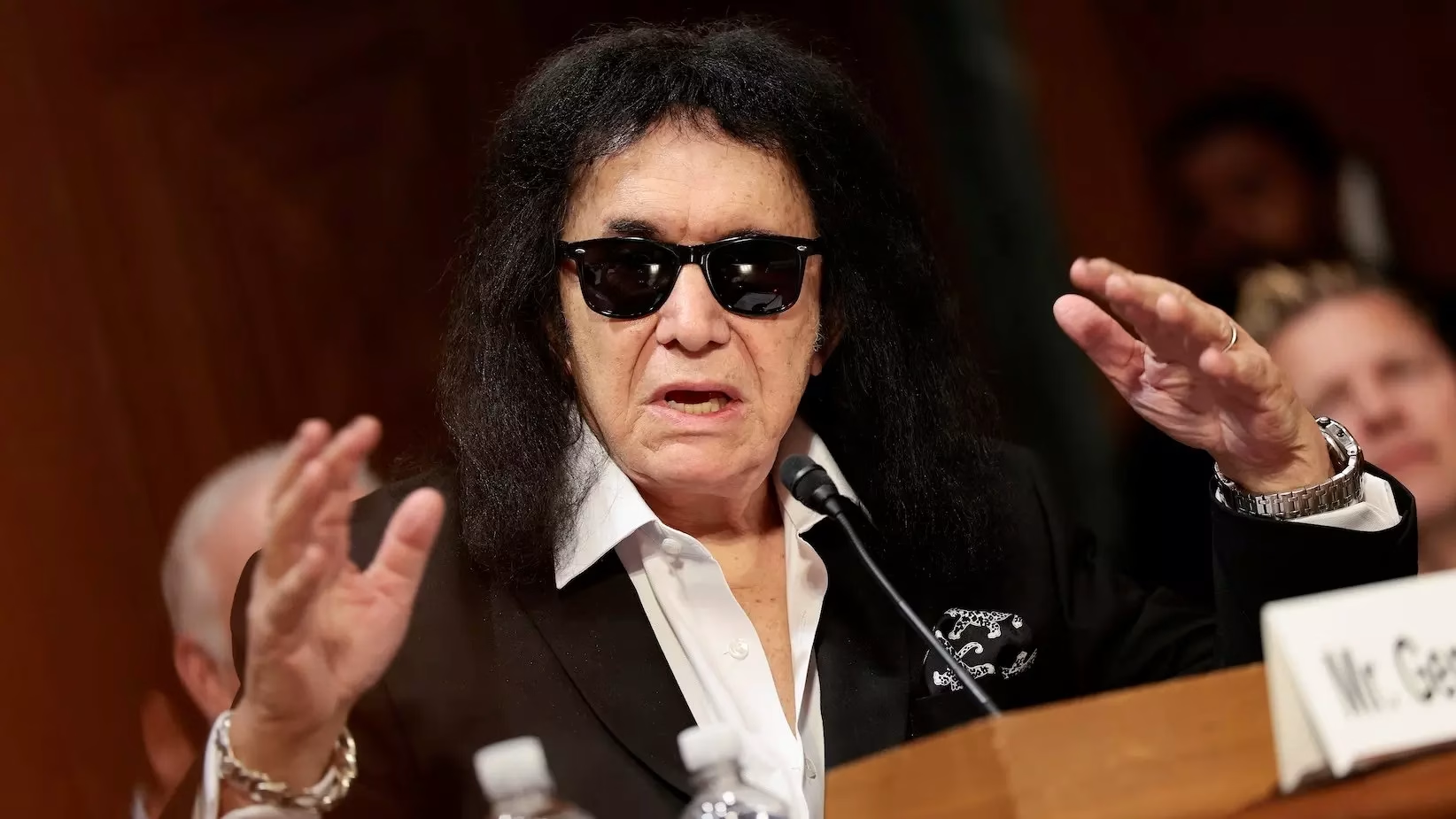
On Tuesday, Dec.9, the Senate Judiciary Subcommittee on Intellectual Property held a hearing titled Balancing the Interests of Local Radio, Songwriters, and Performers in the Digital Age. The hearing highlighted a long-standing inequity in the music community: Creators do not receive royalties when their sound recordings are broadcast on traditional AM/FM radio.
The hearing witnesses included rock legend Gene Simmons, co-founding member of the GRAMMY-nominated band KISS; Mike Huppe, president and CEO of SoundExchange; and Henry Hinton, president and CEO of Inner Banks Media, a North Carolina radio broadcaster. The discussion focused on the American Music Fairness Act (AMFA), which would require a license for broadcasting sound recordings via AM/FM radio and ensure that music creators are compensated for their work across all platforms.
Watch the Senate hearing in full here.
A longtime champion for the establishment of a terrestrial radio (AM/FM) performance right for sound recordings, the Recording Academy has worked alongside key Congressional supporters, including Sens. Marsha Blackburn (R-Tenn.) and Alex Padilla (D-Calif.) and Reps. Darrell Issa (R-Calif.) and Jerry Nadler (D- N.Y.), to reintroduce AMFA. With strong support from the Recording Academy and partners in the musicFIRST coalition, AMFA was reintroduced in January.
First introduced in 2021, AMFA establishes a domestic performance right for sound recordings played on AM/FM radio. Under the bill, artists, performers, producers, and other music makers would receive fair market compensation for their work, similar to payments received from streaming services, satellite radio, and internet radio. AMFA also includes protections for small and nonprofit broadcasters, ensuring local and community-supported radio stations can continue to thrive.
For nearly a century, performers, musicians, and studio professionals have been denied compensation when their music is played on AM/FM radio. From pioneering artists of the past to today's iconic stars,and thousands of essential backing vocalists, instrumentalists, producers, engineers, and mixers,not a single dollar has gone to the creators behind sound recordings broadcast on terrestrial radio. The United States remains one of the only developed countries in the world where this inequity persists, resulting in hundreds of millions of dollars in lost reciprocal royalties overseas, in addition to unpaid royalties at home.
"The public airwaves belong to the American people. Radio works for the American people. And the American people would respectfully ask you to fix this injustice, once and for all," Simmons testified. "According to one poll, 73 percent of Americans say that the system is unfair. This is not meant to demonize the radio broadcast industry. We all have our favorite radio stations we listen to, because we like the music they broadcast … The American Music Fairness Act is the answer to this injustice. It's not complicated. It simply says that when radio makes money playing our music, the people who created that music should get a fair cut."
The Recording Academy remains committed to advocating on behalf of music creators and ensuring they are fairly compensated for their work. By supporting AMFA, Congress can correct a century-old inequity, thereby providing long-overdue royalties to performers, songwriters, and producers and strengthening the future of America's music industry. Want to get involved? Contact your representatives and urge them to support the American Music Fairness Act (AMFA).
