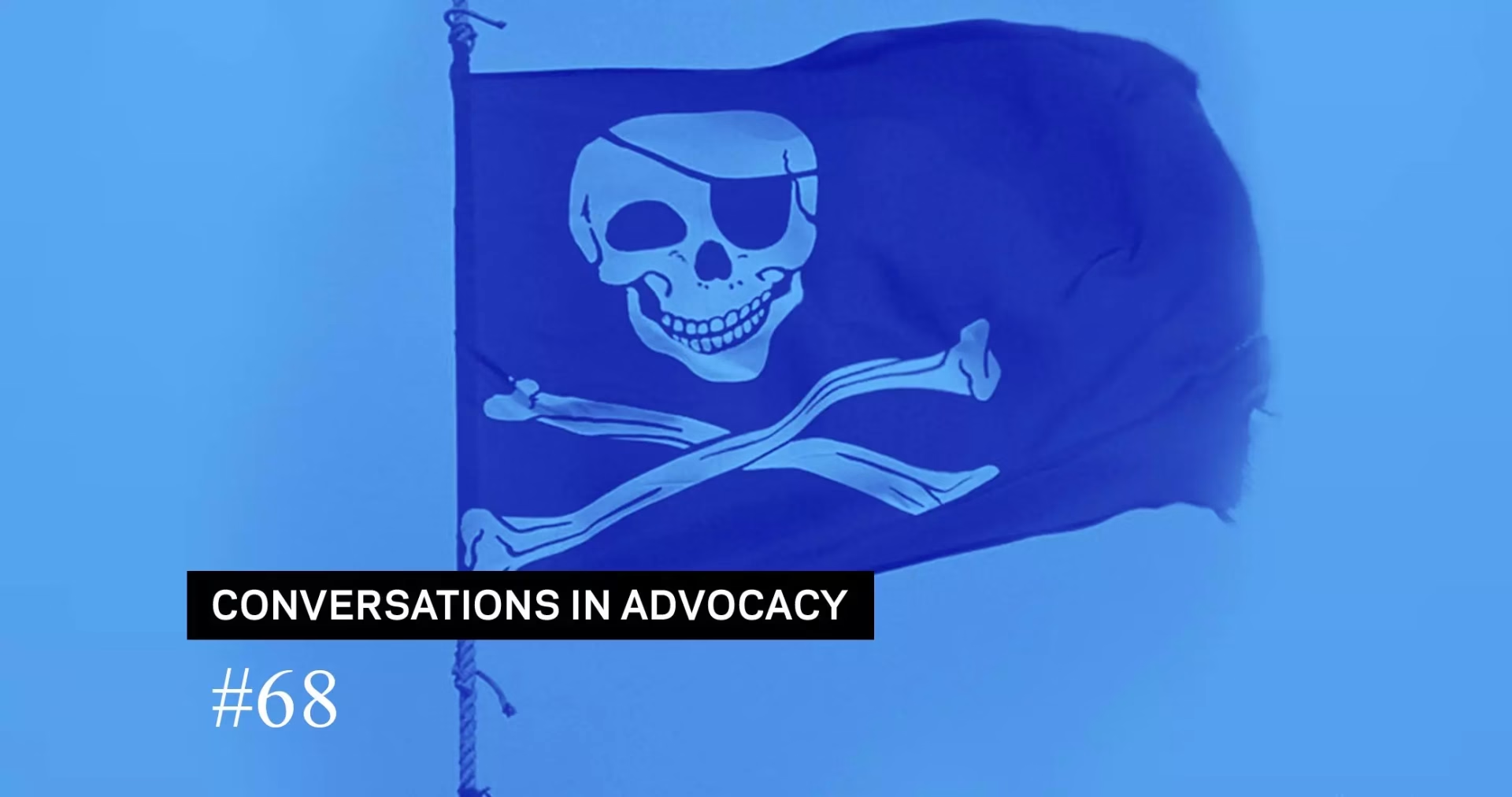
“As more and more people shift from illegal piracy to legitimate services, the biggest pirate left is broadcast radio. For nearly 100 years, they’ve taken music from artists without permission or compensation” –Conversations In Advocacy #68
Beating illegal music piracy has been a battle fought online in recent decades, with the proliferation of legitimate streaming services forcing many pirates to walk the plank. But how about legal piracy? Such is the case with terrestrial AM/FM radio in the United States, where broadcasters freely play music without paying the artists because the U.S. does not have a performance right for sound recordings. American stations don’t even have to ask the artist’s permission before playing their music—making it one of the few industries in the world that can legally take someone else’s work, without permission, and use it for their own financial gain.
Broadcast, terrestrial radio piracy is an old practice, dating back almost a century. But fortunately in the digital realm, times have changed. A promising new study shows a decline in piracy among younger internet users compared to earlier in the 2000s, reporting a 17 percent decrease in, “Intentionally accessing content from unlicensed services” between 2016 and 2019.
<blockquote class="twitter-tweet"><p lang="en" dir="ltr">Online piracy is declining among young internet users <a href="https://t.co/85pk4u4PTt">https://t.co/85pk4u4PTt</a> <a href="https://t.co/U9OGkKkDZU">pic.twitter.com/U9OGkKkDZU</a></p>— CompleteMusicUpdate (@CMU) <a href="https://twitter.com/CMU/status/1189867137885708290?ref_src=twsrc%5Etfw">October 31, 2019</a></blockquote> <script async src="https://platform.twitter.com/widgets.js" charset="utf-8"></script>
Online piracy is waning, largely due to the trend of more individuals paying for music through legitimized streaming services. Apple services reported $12.5 billion in revenue for 2019 Q4, and Spotify hit 113 million subscribers, up 5 million in just three months. With the growth in this model, more artists are receiving royalties they are entitled to collect.
Why, then, does radio get a pass?
When a song is played over the AM/FM airwaves, no performance royalty is paid to the artist, meaning a singer or band member driving down the street when the sound of her voice or instrument comes on the radio, she gets nothing.
Radio is a multibillion-dollar business, too, and it uses music to fuel its model, attract listeners and sell advertisements. The corporate radio loophole makes broadcast radio the only industry in America that’s built on using the intellectual property of others without permission or compensation. In fact American radio stands all but alone as every other country, other than China, North Korea and Iran, recognizes a performance right.
To make matters worse, U.S. artists are missing out on international income from radio play because the U.S. does not have reciprocity agreements in place with all of these countries. This policy failure costs the American economy and artists more than $200 million a year.
<blockquote class="twitter-tweet"><p lang="en" dir="ltr">Take a look at how <a href="https://twitter.com/hashtag/music?src=hash&ref_src=twsrc%5Etfw">#music</a> unions and the musicians who belong to them would benefit from finally getting the AM/FM performance right they deserve.<a href="https://t.co/XC73SInAd2">https://t.co/XC73SInAd2</a></p>— GRAMMY Advocacy (@GRAMMYAdvocacy) <a href="https://twitter.com/GRAMMYAdvocacy/status/1167852299772973056?ref_src=twsrc%5Etfw">August 31, 2019</a></blockquote> <script async src="https://platform.twitter.com/widgets.js" charset="utf-8"></script>
These numbers all build a story. Online piracy is down, and legal access to music is on the rise. As artists and musicians adapt to these new trends and work to earn a livelihood for their work, the picture is snapping into focus: American broadcast radio is the real pirate. They take music from artists without permission, and have never compensated the artist a single penny for their work.
Everyone can do something about this. Learn more about the issue on the Recording Academy's simple and informative issues and policy page and contact your Members of Congress today and urge them to finally establish a long overdue performance right so the artists who make the music that fills the airwaves—and the pockets—of terrestrial radio finally get their fair share.
Let Your Representatives Know You Stand In Support Of Music Creators' Rights