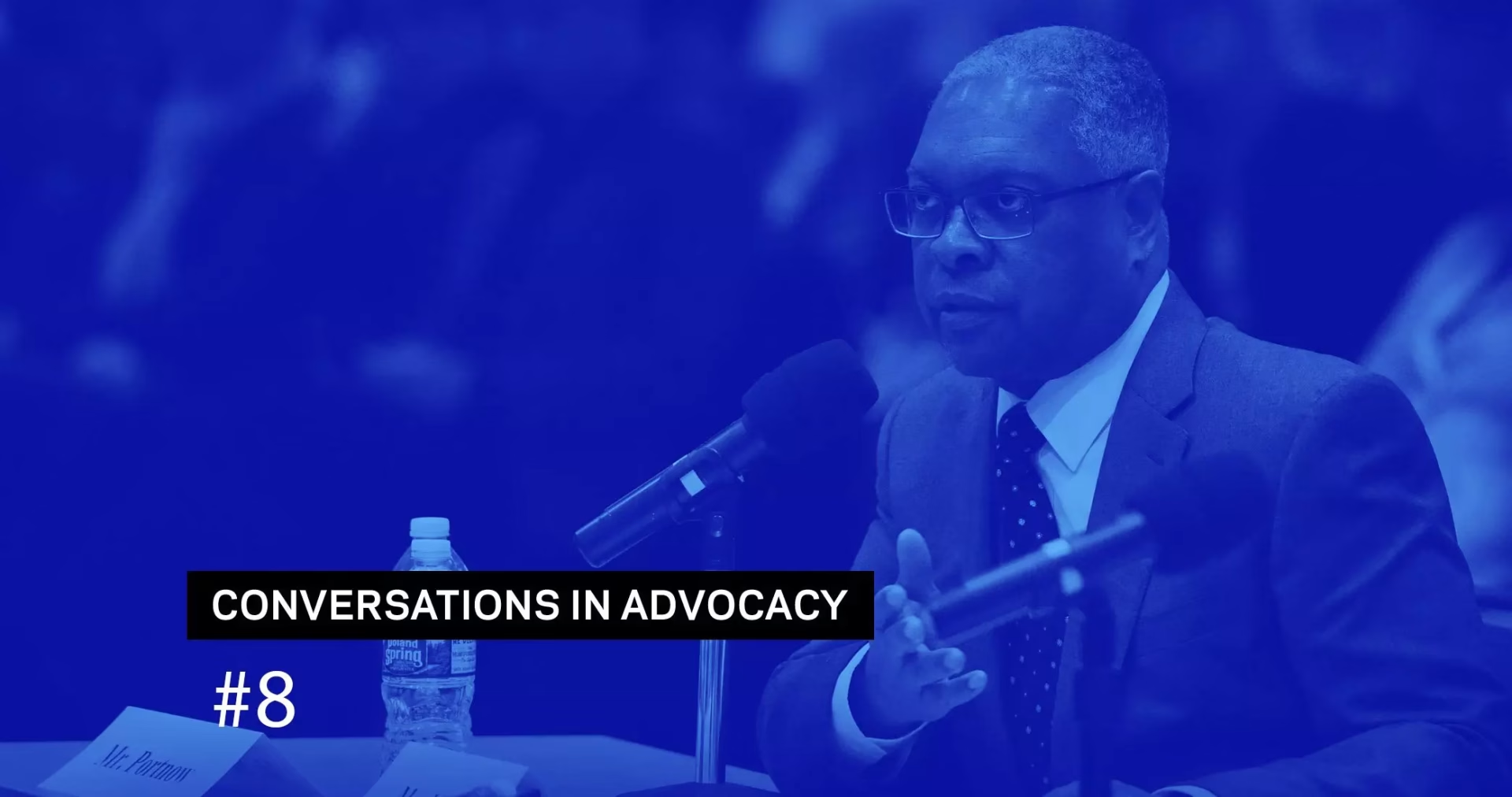
“Legendary artist Booker T. Jones summed it up best at the recent House Judiciary Committee hearing, some of our most iconic and ground-breaking tracks are dismissed and disrespected by a quirk in the law.” – Conversations In Advocacy #8
Multi-instrumentalist, songwriter, producer/arranger, and multi-GRAMMY winning artist Booker T. Jones was one of several prominent creators and music professionals to address the House Judiciary Committee during their GRAMMY week field hearing – "Music Policy Issues: A Perspective From Those Who Make It" – held in New York City at Fordham University School of Law on Jan. 26.
Jones' testimony included vocal support for the CLASSICS Act, which has now been introduced in the House and the Senate, with key co-sponsors from both chambers’ Judiciary Committees, including original sponsors Congressman Darrell Issa (R-Calif.), Congressman Jerry Nadler (D-N.Y.), Senator Chris Coons (D-Del.) and Senator John Kennedy (R-La.). The Act would fix a gaping loophole in copyright law that presently allows digital services like satellite radio and music streaming platforms to stream or broadcast recordings made before 1972 without paying royalty fees to artists or other rights holders.
Booker T. Jones and Aloe Blacc address the House Judiciary Committee
Photo: Photo: Sean Zanni/WireImage.com
He gave as an example his instrumental single "Green Onions" (released by Booker T. and The M.G.s), which was one of the biggest hits of 1962, and has since been inducted into both the GRAMMY Hall Of Fame and the Library Of Congress as an exemplar of American musicianship. Within the current scope of copyright law, any digital music service can broadcast or stream "Green Onions" with no legal compulsion to compensate Jones or any other rights holder on the song, all because it had the misfortune of being released pre-1972.
"[B]ecause of a quirk in the law, many of our most timeless treasures …are dismissed and disrespected as not meriting compensation to the featured artists, non-featured artists, and producers," said Jones, speaking on behalf of himself and countless other legacy artists who are negatively affected by the copyright shortfall. Jones cited examples such as Otis Redding's "Sittin' On The Dock Of The Bay" and Sam & Dave's "Soul Man" as examples of popular classics which digital services were free to use without royalty compensation.
"Artists are trying to protect their rights at the state level because of the lack of clarity at the federal level." – Booker T. Jones
Jones further pointed out that the unclosed loophole at the federal level has opened up digital services to litigation on a state-by-state basis as artists struggle to establish some form of legal precedent to inform policy changes at a national level. "[T]ime is running out for many of these legacy artists and we shouldn’t have to fight state by state to get the compensation we deserve," Jones added. "This uncertainty is bad for artists, and it’s bad for the digital music services."
Jones also argued that the new CLASSICS Act would, "clarify that all pre-1972 sound recordings have protection under the federal copyright system," ensuring that all sound recordings are handled under that same licensing system, regardless of when they were released, while also providing legal air cover for digital services that play by the new rules. "It’s a win-win for everyone," he declared.
<blockquote class="twitter-tweet" data-lang="en"><p lang="en" dir="ltr">.<a href="https://twitter.com/BookerTJones?ref_src=twsrc%5Etfw">@BookerTJones</a> testifies to Congress on the issues affecting the music industry. Years of grassroots efforts got us here. <a href="https://twitter.com/hashtag/SupportMusic?src=hash&ref_src=twsrc%5Etfw">#SupportMusic</a> <a href="https://t.co/3NLH7tTHSo">pic.twitter.com/3NLH7tTHSo</a></p>— GRAMMY Advocacy (@GRAMMYAdvocacy) <a href="https://twitter.com/GRAMMYAdvocacy/status/956977326390038528?ref_src=twsrc%5Etfw">January 26, 2018</a></blockquote>
<script async src="https://platform.twitter.com/widgets.js" charset="utf-8"></script>
In concluding his testimony, Jones encouraged the committee to consider the rich legacy of recorded music released prior to 1972, lauding the "spirit of cooperation" that has already led to call for comprehensive music reform combining the CLASSICS Act with the AMP Act and the Music Modernization Act. Finally, he exhorted the committee, "Don't let another opportunity to bring music into the 21st century slip away. Correct the law now so that all music creators …can make a living from the work they do that enriches all our lives."
Conversations In Advocacy #7: Producer Mike Clink Delivers Testimony On Crucial Music Issues
"Conversations in Advocacy" is your weekend digital tip sheet on music advocacy and the policies that affect music makers and their craft. New installments post every Friday.