
It's now well documented that radio touting its "promotional benefit" is a stale argument to avoid paying artist royalties. Internet radio, satellite radio, TV appearances , commercials, and concerts all provide some level of promotion, but still compensate artists.
Further, corporate radio stopped being a place to discover new acts years ago, opting instead to play the tried and true — and profitable — hits through tightly controlled corporate playlists.
But there's one genre and one city where people still believe radio matters. The genre is country. The city is Nashville.
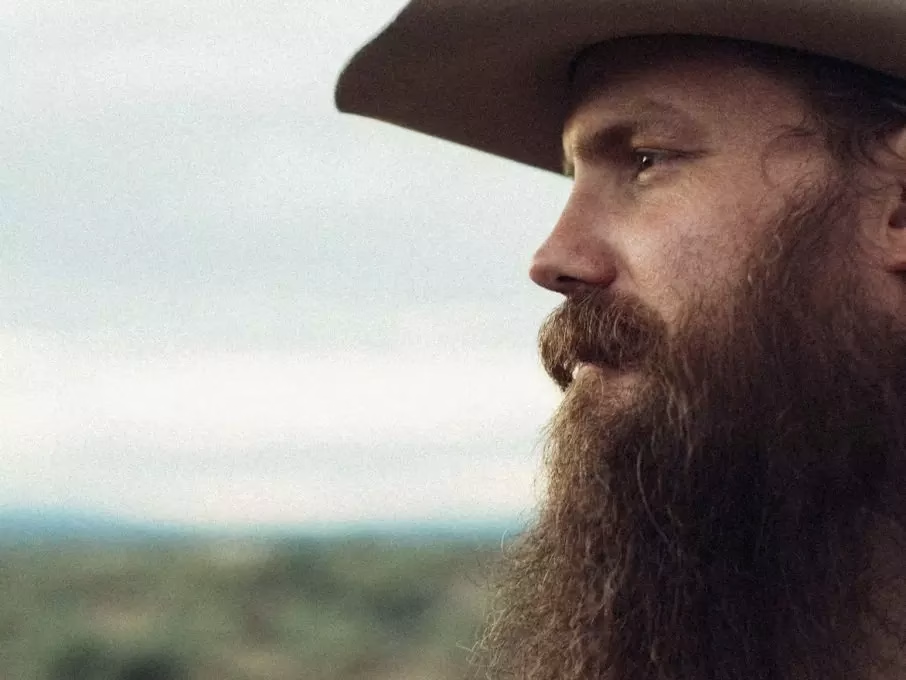
I had the pleasure of attending the 49th Country Music Association Awards on Nov. 4, where the now familiar headlines regarding Chris Stapleton's big wins were generated. Imagine my surprise when an artist ignored by country radio grabbed the new artist of the year, male vocalist of the year and album of the year prizes. Just days after Stapleton's high-voltage performance on the telecast (with GRAMMY winner Justin Timberlake) the singer's solo debut, Traveller, soared to No. 1 on the Billboard 200 — buoyed by the television exposure alone.
The other big story of the night was multiple wins for Little Big Town, who saw their song "Girl Crush" initially banned by country radio because, according to press reports, programmers thought it promoted a gay agenda. (By the way, if they actually listened to the lyrics, they would know it doesn't.) In fact, Little Big Town's Karen Fairchild noted backstage that "it speaks volumes [to have] 'Girl Crush' and Chris Stapleton … up there [winning awards], and yet we're not always hearing that music on the radio."
Adding to the sad state of radio, one lone defender of both acts, syndicated DJ Bobby Bones, appears to have been shut down by his corporate radio overlords. He tweeted, "I now have a chapter of my book with the perfect ending. First one to play 'Girl Crush.' Got in trouble for it for months. Wins all the awards," followed by "and now how the suits feel who told me to STOP PLAYING CHRIS STAPLETON. that's my boy!!!!!"
Stapleton's leapfrogging over country radio to reach fans not only had fellow artists and reporters agog, it left country radio confounded. After the CMAs many country programmers jumped on the bandwagon, putting tracks from Traveller into rotation after the fact in an effort to profit from his popularity.
People are discovering new music through so many different avenues these days that radio can no longer claim the mantle. And Stapleton's success again disproves radio's claim that they should be able to exploit artists because they promote and break acts. The time to establish a performance right at terrestrial radio is now, which is why it is part of the Fair Play Fair Pay Act Of 2015 currently building support on Capitol Hill. The multipart bill addresses a number of copyright law fixes to establish fairness for songwriters, performers and producers.
Change is never easy. But a little "Tennessee Whiskey" should lessen the pain of making things right for deserving newcomers like Stapleton and generations of great performers.
