
In a Billboard op-ed on March 9, author Robert Levine took a fresh approach in support of paying royalties to music creators who recorded pre-1972 recordings. He defended this undeniable fair concept through the lens of countering strange arguments made recently by SiriusXM CEO Jim Meyer about terrestrial radio that were also in opposition to the widely supported notion of giving legacy artists their fair share.
<iframe width="620" height="349" src="https://www.youtube.com/embed/jqfPLZY1J8o" frameborder="0" allow="autoplay; encrypted-media" allowfullscreen></iframe>
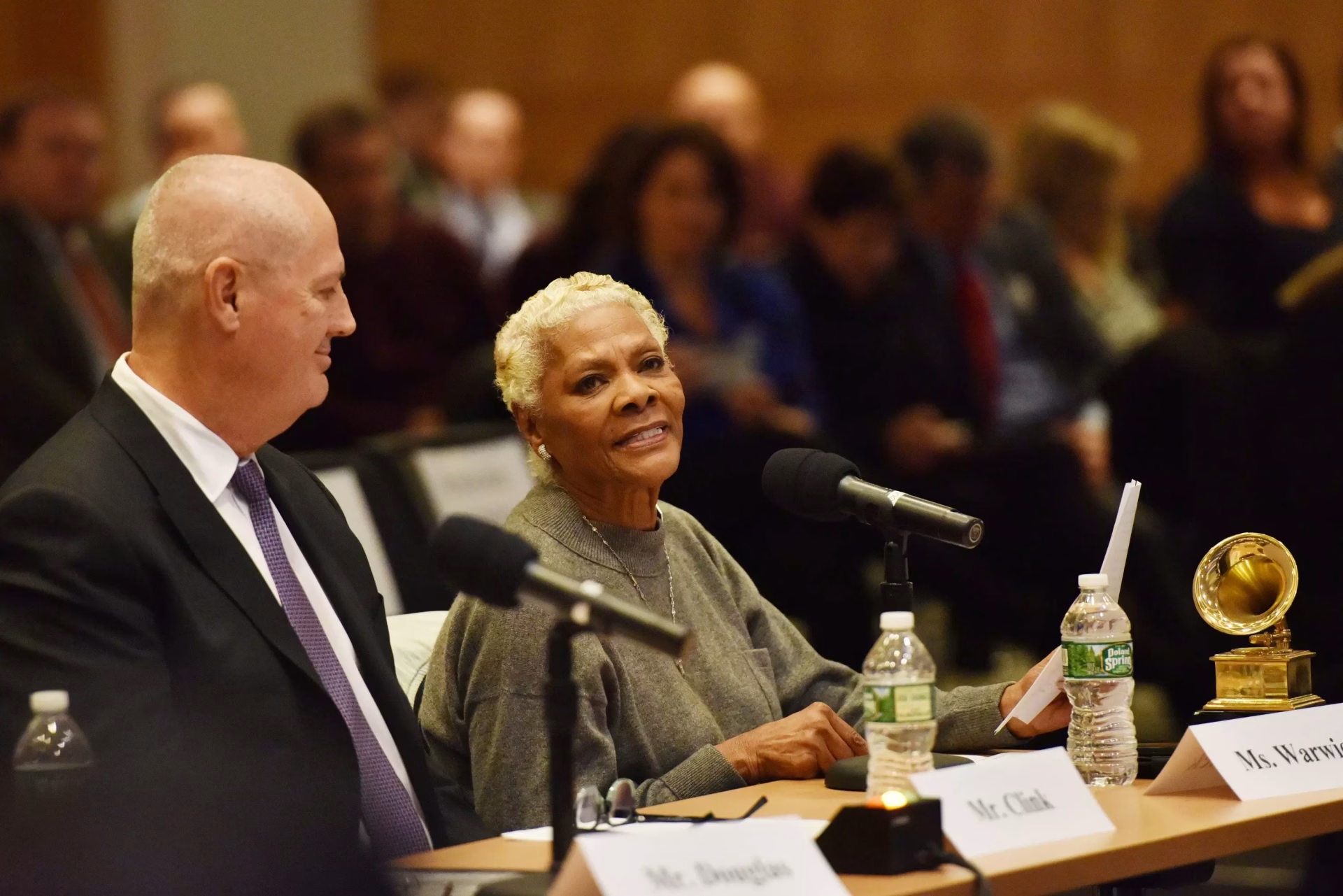
During GRAMMY Week, the House Judiciary Committee was very receptive to the need for a pre-1972 royalty as presented by the likes of Recording Academy trustee Booker T. Jones and Dionne Warwick, two artists whose songs are consistently played on digital platforms — and due to a quirk in the law, often without royalties.
As Levine outlines in his response, attacks from satellite radio on the CLASSICS Act, a bill that would fix this problem, are trying to raise a roadblock to paying pre-1972 royalties by shifting the focus to be all about terrestrial radio's unfair advantages.
"How can Congress consider passing a law that would make digital services like SiriusXM and Pandora pay royalties for their use of recordings made before 1972 — which is the main goal of the CLASSICS Act — without requiring the same from traditional radio?" wrote Levine in jest, identifying the smoke screen.
During a period of unprecedented unity, it is a petty argument brought forth by Meyer and other satellite radio principals, and thankfully Levine rebuts it.
As announced on Feb. 13, eight music industry organizations, including the Recording Academy, joined with 213 artists for an ad in Politico that read, "Dear Congress, pass the CLASSICS Act." Perhaps Meyer believed a "fair is fair" balancing between raising costs for terrestrial versus satellite radio should have been enough to stop all discussion. But why would that be?
In this period of unprecedented multi-industry unity for copyright reform, hopes that music licensing can be streamlined for all uses and platforms have never been this acute. For years, stakeholders with different notions of fairness stopped change from happening, but now come together united with few exceptions — real progress is on the table for the first time in a long-time and attempts to muddy the waters only hurt creators in need of reform.
As Levine drove home, the only reason to point the finger at terrestrial radio right now is to undermine any hopes at meaningful reform.
The "fair is fair" argument applies to all of us in society who need licensing practices updated for the ways creative works are used today. Ideas like "willing buyer/willing seller" have never been more needed, because a fair marketplace should be created that will ultimately benefit the entire creative community.
Notably, the pre-1972 recording artists that the CLASSICS Act is trying to assist are older, and some do not have decades to wait to be treated fairly.
Willing Buyer/Willing Seller Standards Will Help Build A Sustainable Music Economy
